
Heavy rain was washing gravel off a driveway in Cumming, Georgia, and overwhelming an undersized dry creek bed farther downhill. Schmitt Waterproofing installed two stone-lined creek beds, an 18-inch catch basin, and underground drainage pipe to collect runoff, carry it beneath the driveway, and discharge it into a larger channel. The project took two days and included restoring the disturbed gravel driveway.
| Project Details | |
|---|---|
| Location | Cumming, GA |
| Project Dates | September 2, 2026 - September 3, 2026 |
| Duration | 2 days |
| Project Type | Driveway Drainage, Dry Creek Beds, and Gravel Driveway Restoration |
| Lead | Josh Schmitt, Schmitt Waterproofing, LLC |
Project Overview
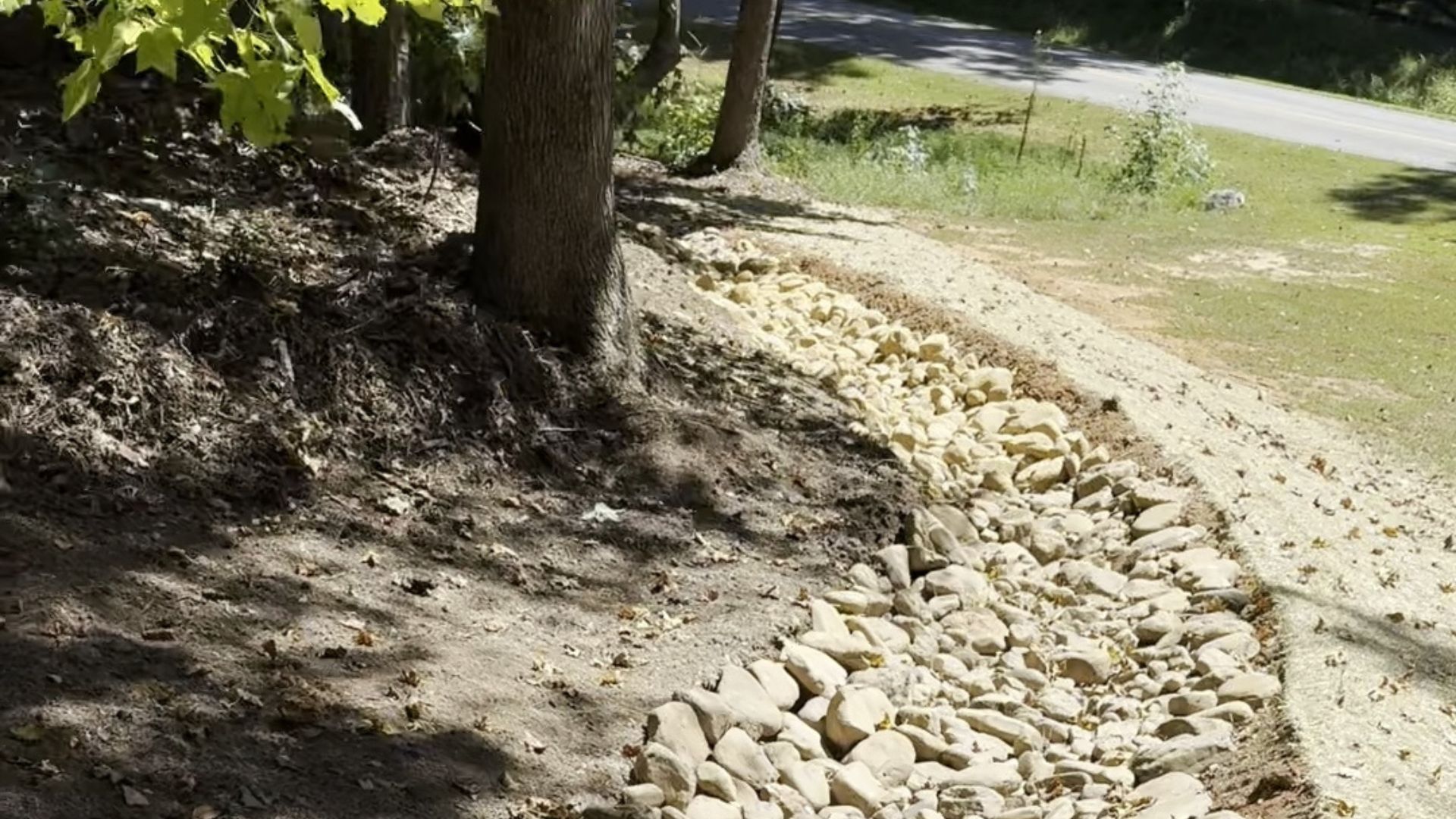
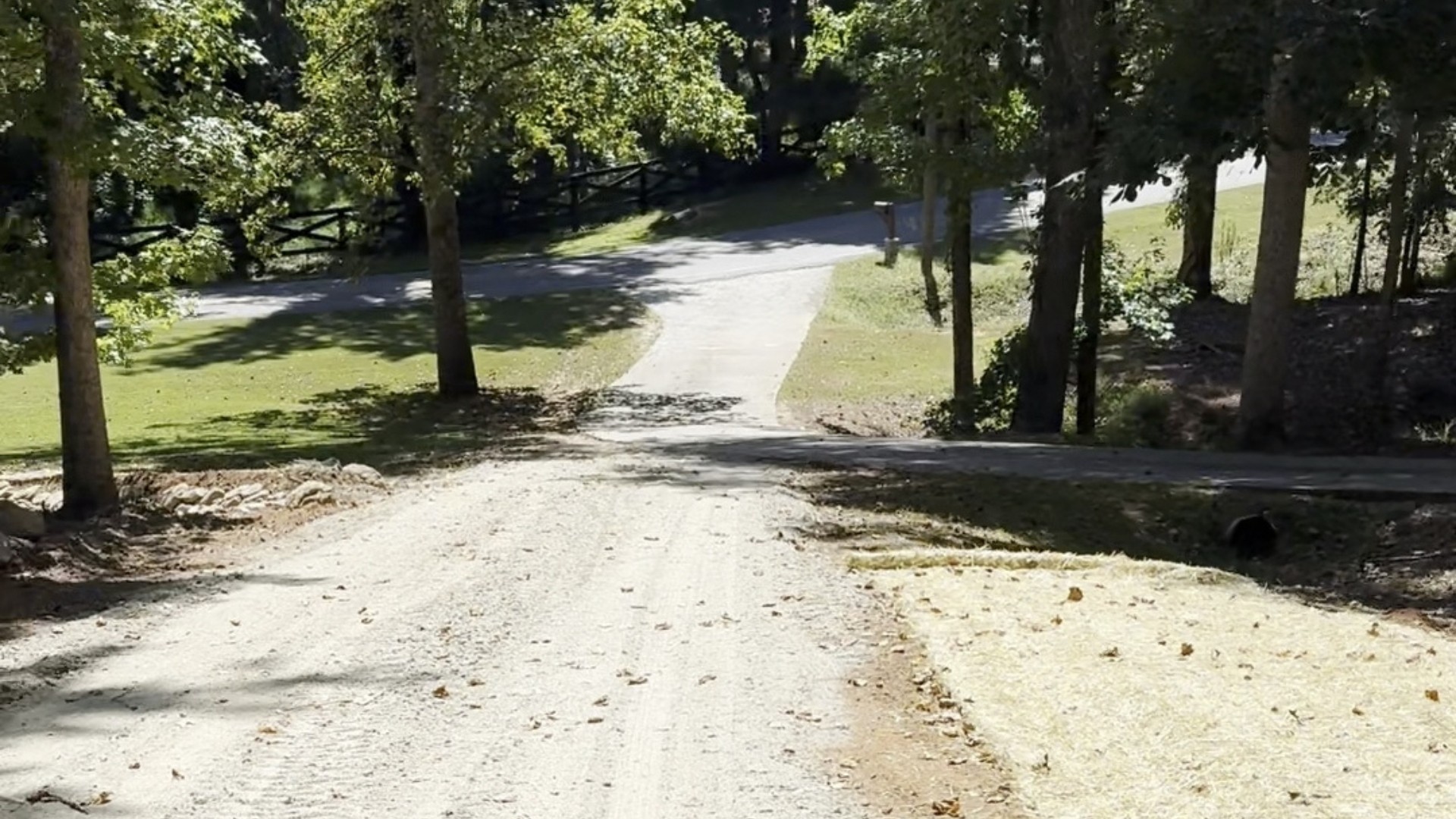
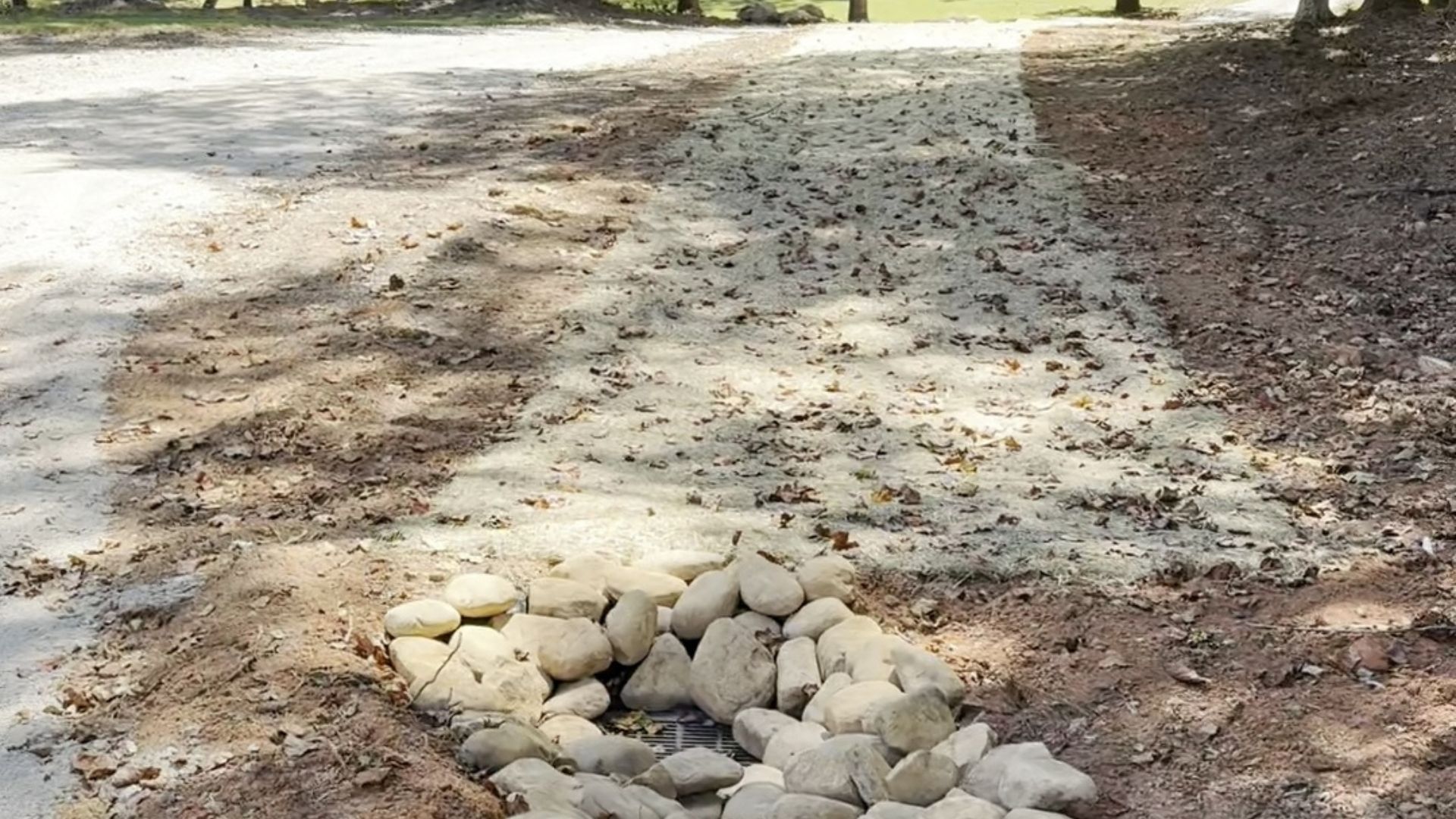
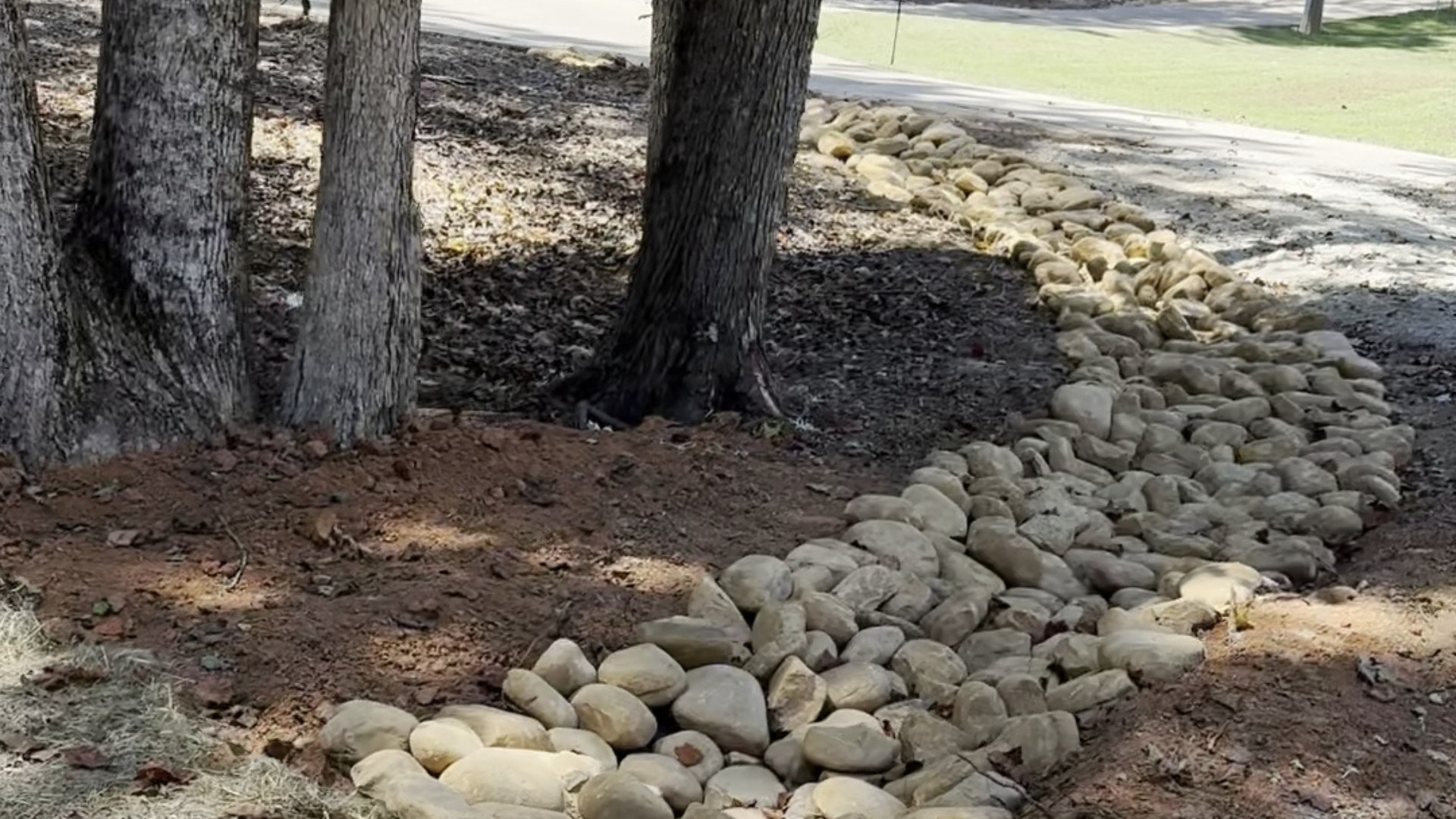
A homeowner in Cumming, Georgia contacted Schmitt Waterproofing after experiencing significant stormwater runoff and erosion around their driveway.
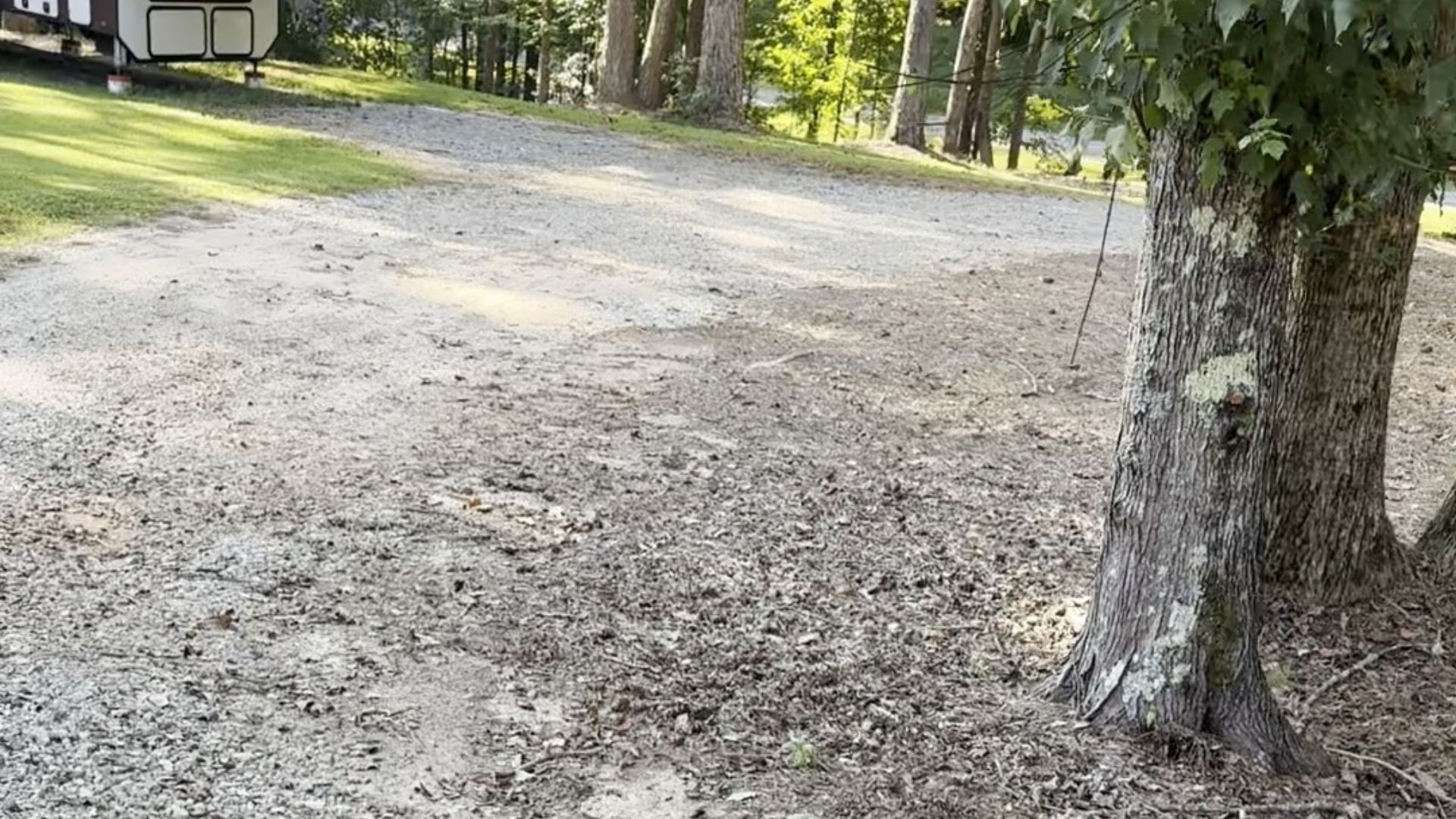
During heavy rainfall, water traveled off the concrete driveway and across the adjoining gravel driveway, repeatedly washing away stone and creating ongoing maintenance and erosion problems. Farther downhill, an existing dry creek bed was also undersized for the amount of runoff moving through the property. During larger storms, water would overwhelm the creek bed and jump outside of the intended drainage path.
The property needed a more comprehensive solution capable of collecting the concentrated surface runoff, moving a large volume of water safely beneath the driveway, and creating a properly sized discharge channel farther downhill.
Over the course of two days, Schmitt Waterproofing constructed two new dry creek bed sections totaling approximately 125 linear feet, installed an 18-inch drainage basin, and installed approximately 150 linear feet of 6-inch SDR-35 to create a high-capacity underground connection between the upper and lower portions of the property.
The Challenge
The primary challenge was the volume and concentration of stormwater moving downhill across the property.
The concrete driveway created a large impervious surface, meaning rainfall could not absorb into the ground. Instead, runoff traveled across the concrete and concentrated along the adjoining gravel driveway.
During heavy storms, this concentrated flow was powerful enough to wash out portions of the gravel driveway and carry stone and soil farther downhill.
At the bottom of the property, the existing dry creek bed presented another problem. It was too small to reliably contain the volume of water reaching it. During larger rain events, stormwater would leave the creek bed and create additional erosion outside the intended drainage path.
Our drainage plan needed to:
- Capture surface runoff coming from the upper portion of the property.
- Reduce erosion and washout along the driveway.
- Provide sufficient capacity for larger storm events.
- Move collected water underground across the property and beneath the existing driveway.
- Replace the undersized drainage path with a larger, stabilized discharge area.
- Allow the lower creek bed to manage both piped discharge and additional surface runoff.
- Restore the driveway and disturbed landscape after construction.
Rather than simply making the existing creek bed larger, we designed a system to manage the water throughout its entire path across the property.
Our Solution
Upper 50-Foot Dry Creek Bed
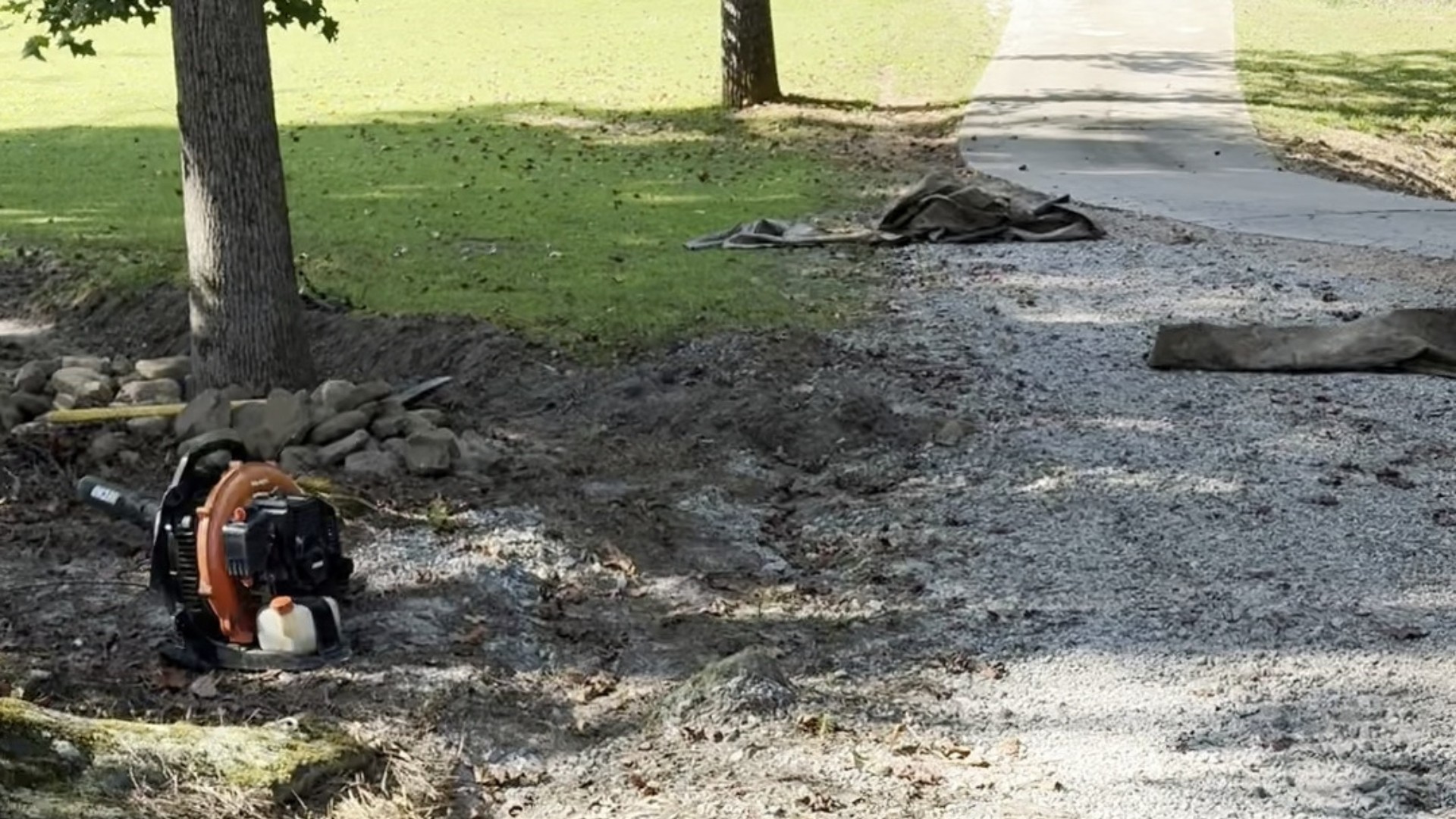
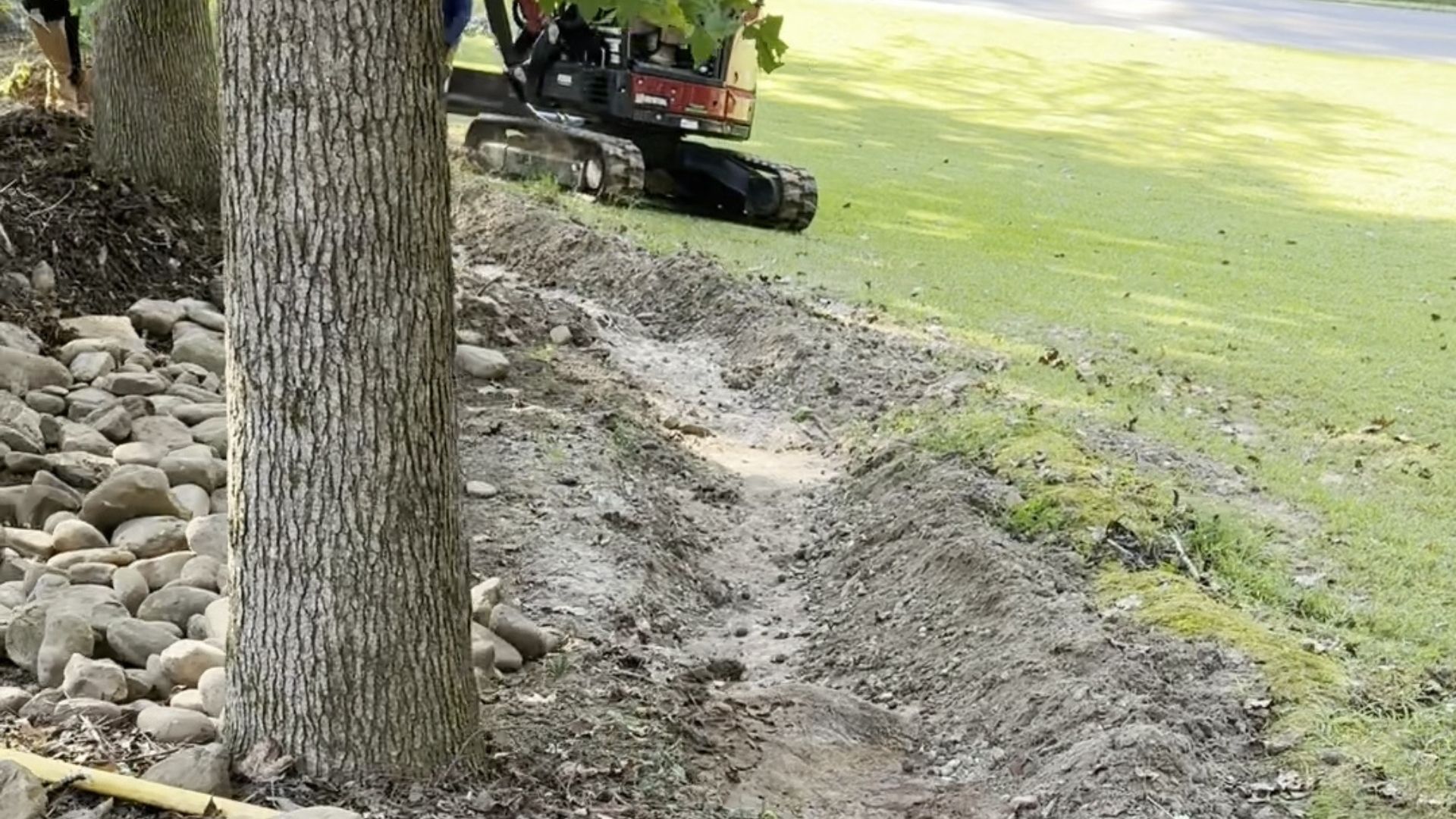
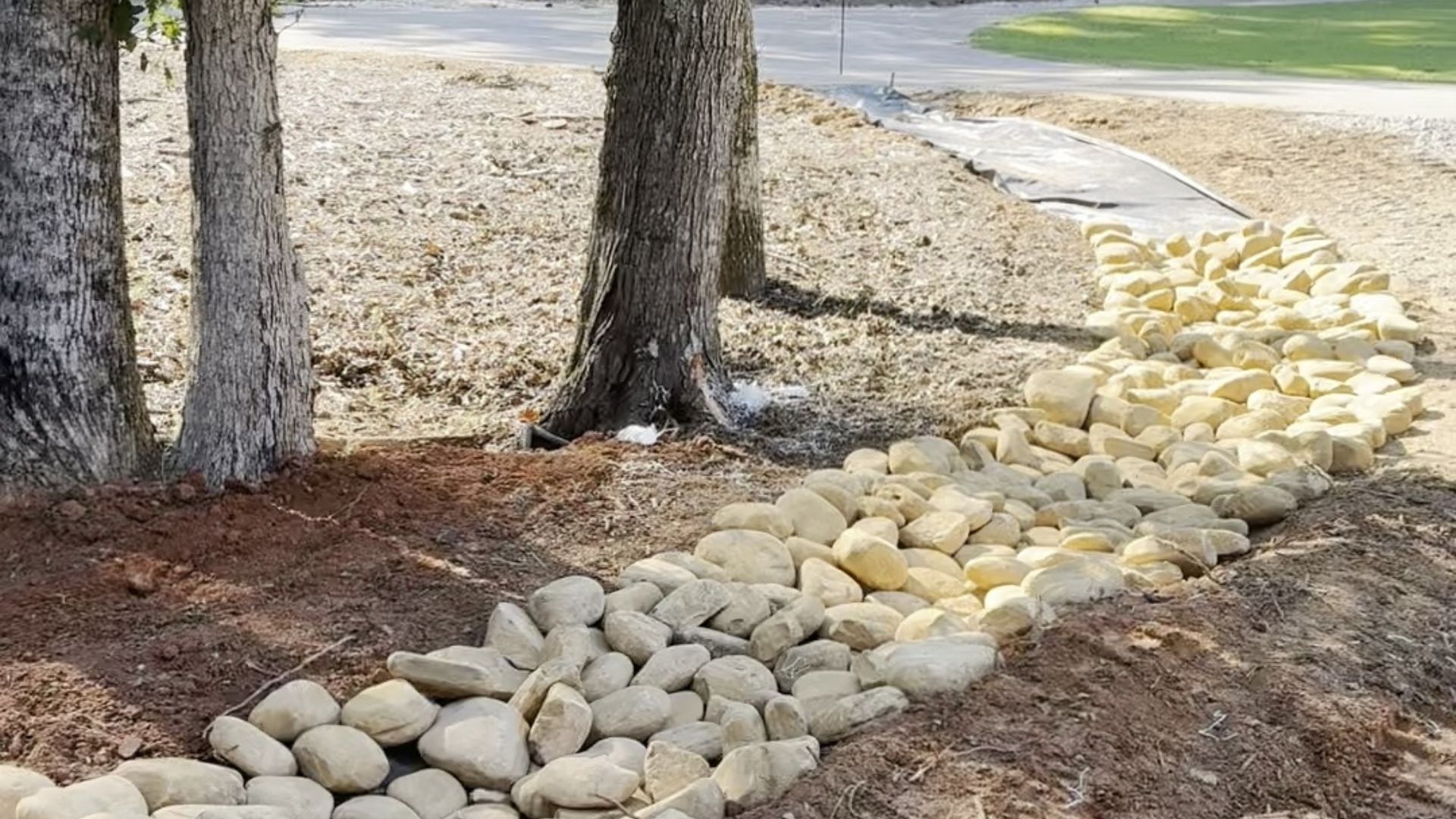
We began by excavating, shaping, and constructing approximately 50 linear feet of dry creek bed averaging 4 feet wide.
The creek bed was positioned to collect and direct surface runoff from the affected upper portions of the property.
A durable underlayment was installed beneath appropriately sized stone to create a defined, erosion-resistant drainage channel. Instead of allowing runoff to spread across the landscape and gravel driveway, the new creek bed directs the water toward a centralized collection point.
18-Inch High-Capacity Drainage Basin
At the termination of the upper dry creek bed, we installed an 18-inch drainage basin.
The basin serves as the transition between the surface drainage system and the underground piping.
Stormwater traveling through the upper creek bed enters the large collection basin before being redirected underground. This allows a significant amount of surface water to be collected at one centralized location rather than continuing uncontrolled down the property.
150 Feet of 6-Inch Underground Drainage
From the new 18-inch basin, we installed approximately 150 linear feet of 6-inch solid SDR-35 PVC.
The larger 6-inch pipe provides increased capacity for the volume of stormwater being collected from the upper portion of the property.
The drainage line was routed underground and beneath the existing driveway, allowing water to bypass the areas where uncontrolled surface flow had previously contributed to washout and erosion.
Instead of allowing stormwater to continue traveling across the driveway at the surface, the new system carries it through a protected underground route to the lower portion of the property.
75-Foot Lower Dry Creek Bed
At the discharge of the underground drainage system, we constructed a second dry creek bed approximately 75 feet long and averaging 4 feet wide.
This lower creek bed serves two purposes.
First, it receives the concentrated discharge from the 6-inch underground drainage system. Second, it collects additional surface runoff naturally reaching the lower portion of the property.
The extended stone-lined channel provides a larger and more controlled path than the previous undersized creek bed, allowing stormwater to continue downhill while helping reduce concentrated flow and erosion.
This transition is particularly important because simply terminating a high-capacity underground pipe onto an unprotected slope could create a new erosion problem at the discharge point.
By combining the underground system with a properly sized lower creek bed, the water remains controlled as it transitions back to surface flow.
Driveway & Landscape Restoration
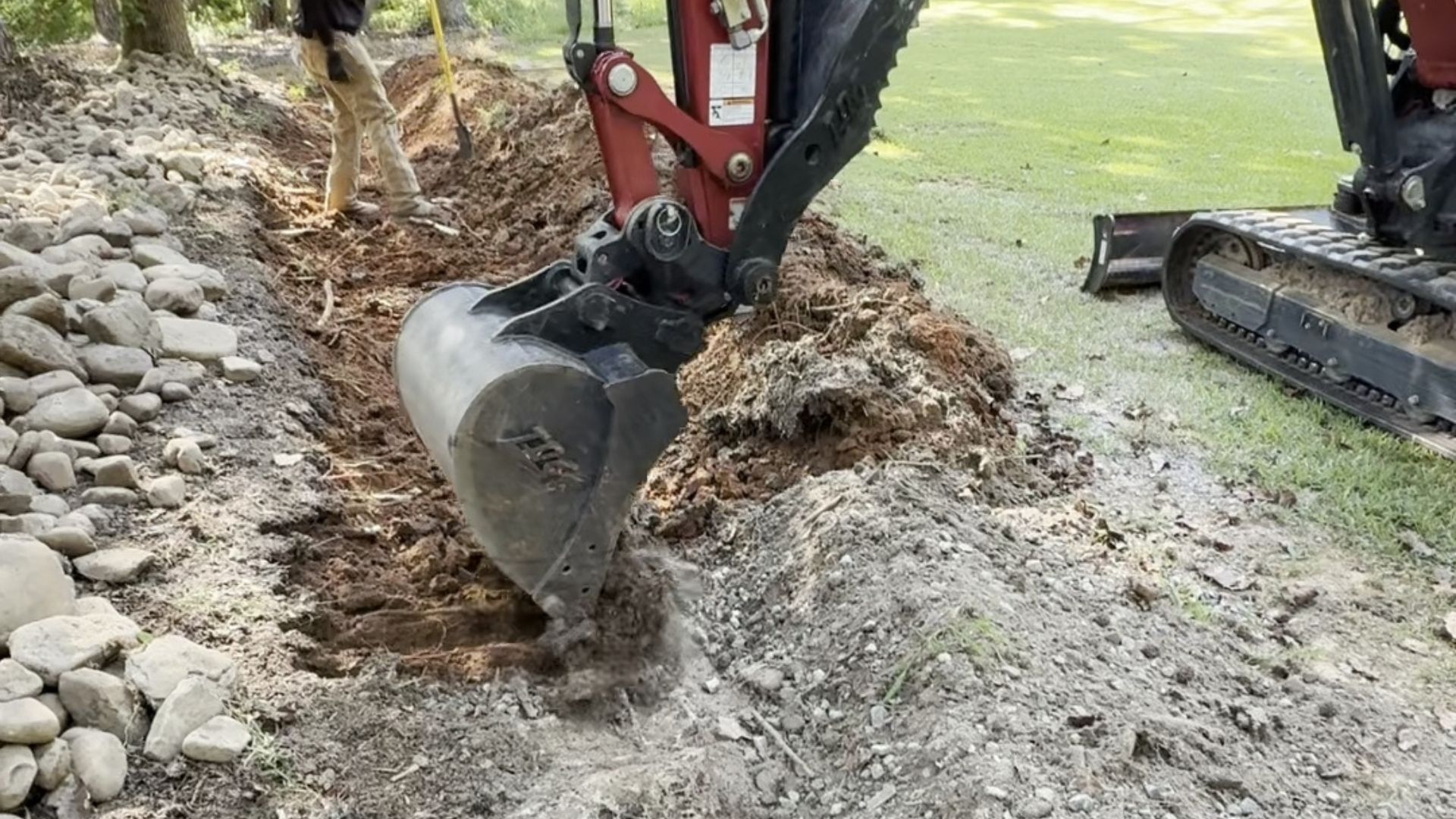
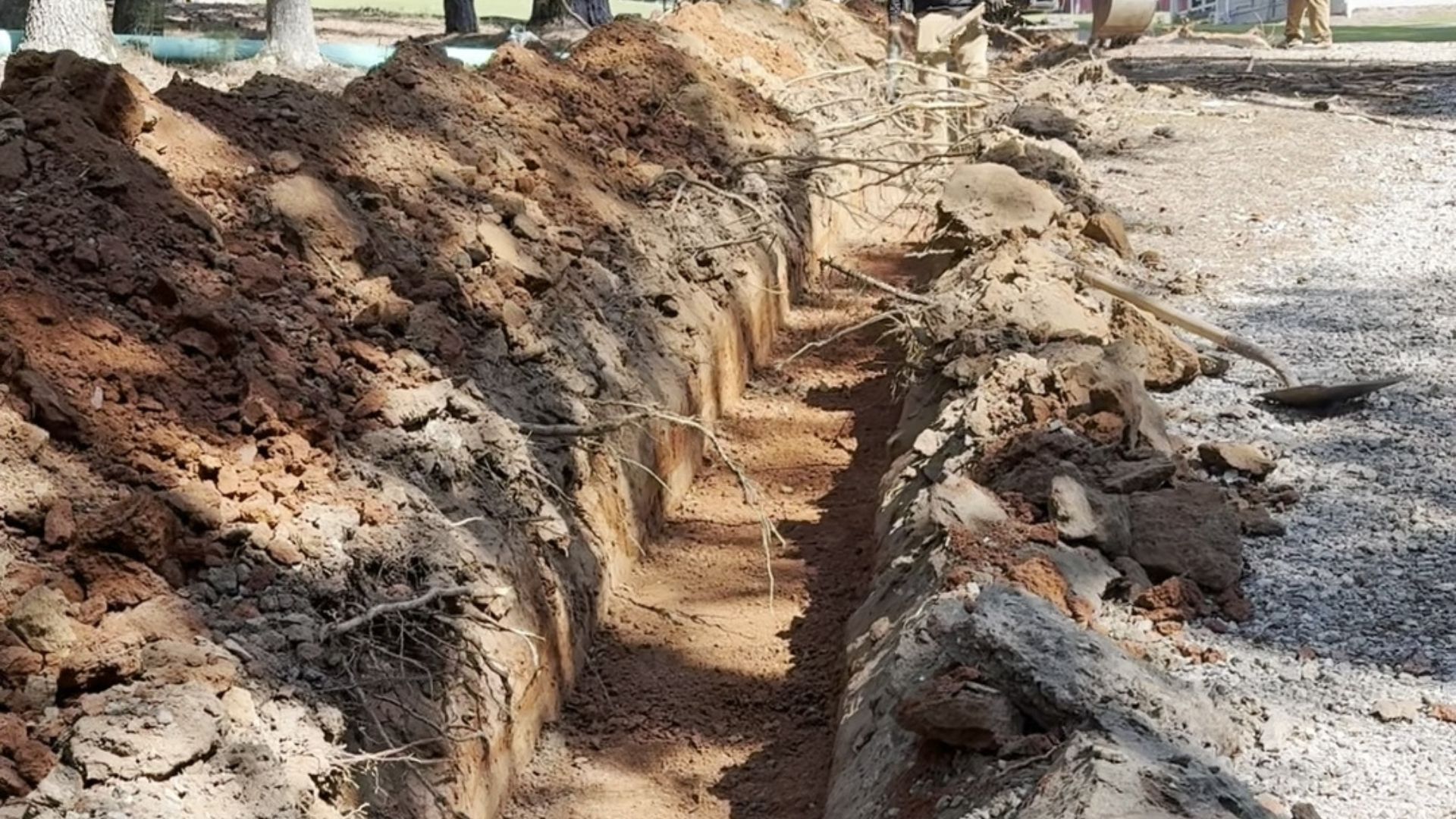
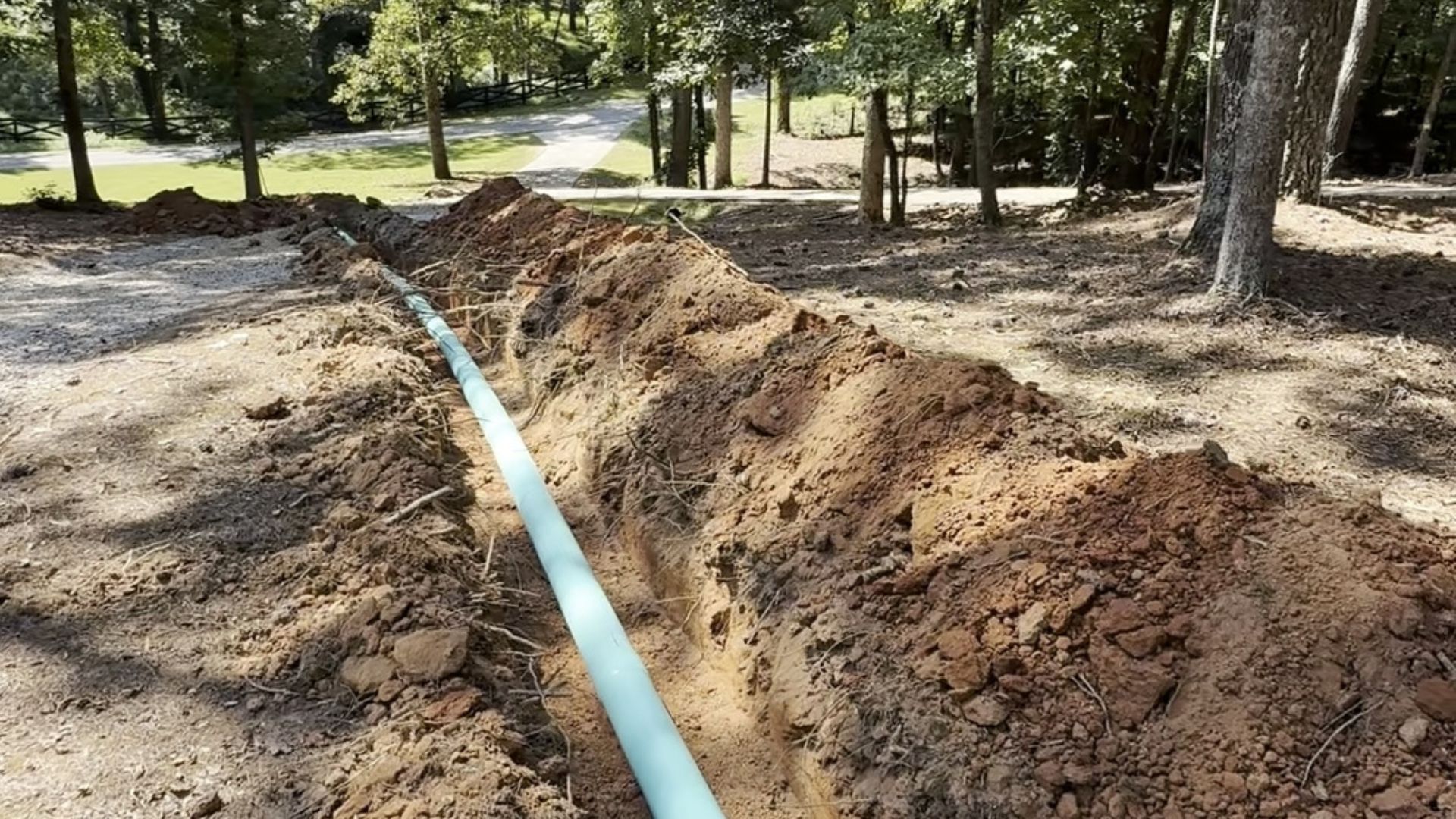
Installing the underground drainage system required excavation through a portion of the existing driveway.
After the drainage pipe was installed, approximately one tandem load of crusher run was delivered, spread, and compacted to rebuild the disturbed driveway area.
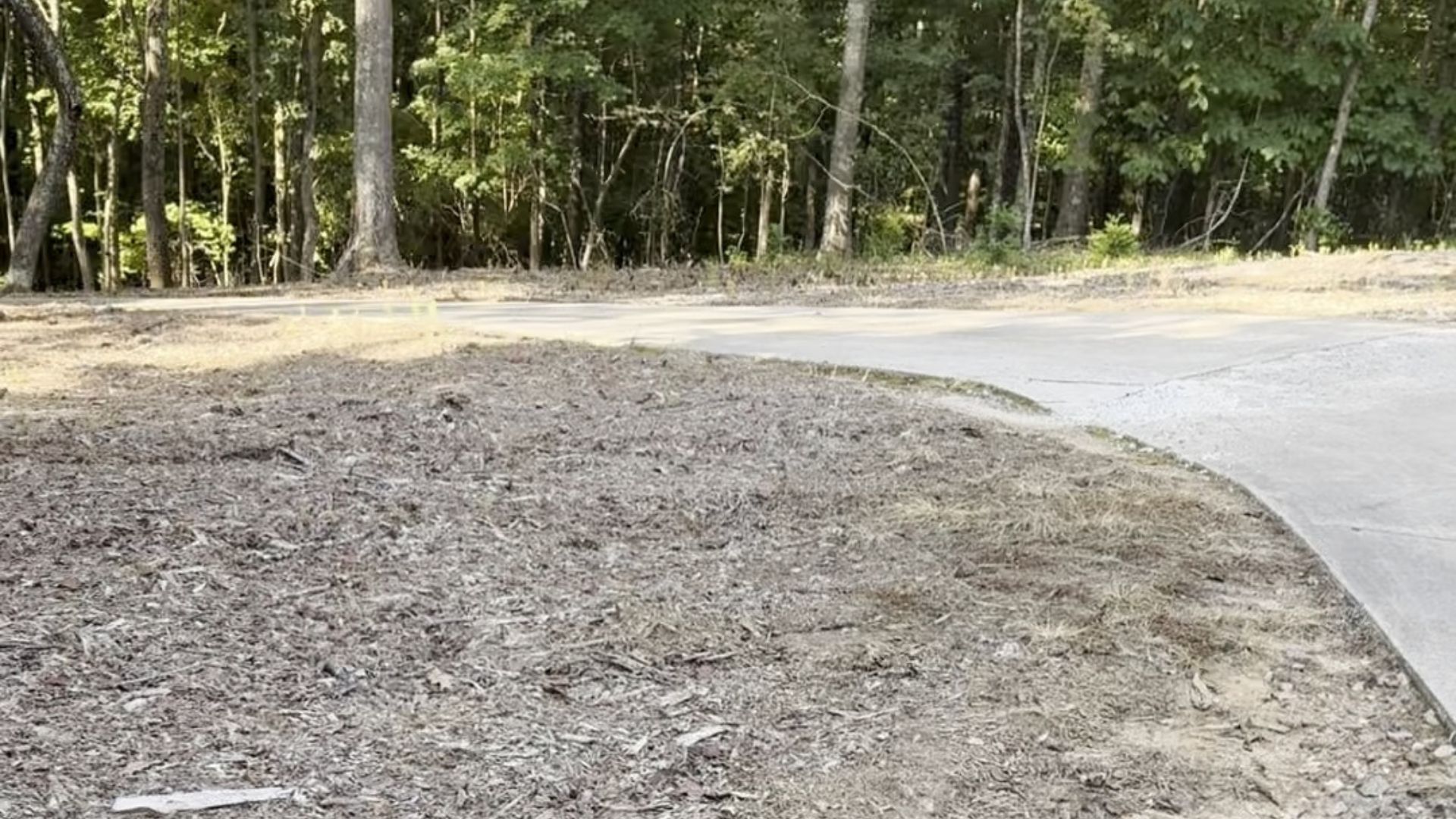
Disturbed portions of the surrounding yard were final graded, and grass seed and straw were applied to help stabilize exposed soil and encourage vegetation recovery.
The goal was not only to correct the drainage problem but also to leave the affected areas properly restored following construction.
The Results
Runoff from the upper driveway now follows a defined route. The 50-foot upper dry creek bed directs surface water into an 18-inch catch basin. From there, approximately 150 feet of 6-inch SDR-35 pipe carries the collected water beneath the driveway and into the 75-foot lower creek bed. The larger lower channel also collects surface runoff from farther downhill.
We restored the disturbed gravel driveway with crusher run and finished the affected yard areas with grading, seed, and straw. By collecting runoff uphill and giving it a larger channel at the outlet, the system is designed to reduce washout along the driveway and erosion farther downhill.
Need Driveway or Yard Drainage in Cumming, GA?
If heavy rain keeps washing gravel off your driveway or cutting channels through your yard, we can help you find where the runoff is concentrating and plan a route for it. Explore our Cumming yard drainage services to see how we handle runoff, erosion, and drainage problems on sloped properties.