
Heavy stormwater runoff was washing gravel from a Dawsonville, Georgia driveway and overwhelming the property’s existing drainage paths, creating ongoing erosion and maintenance concerns. Schmitt Waterproofing designed and installed a comprehensive drainage and erosion-control solution featuring two heavy-duty driveway channel drains, approximately 145 feet of 6-inch SDR-35 underground piping, a reinforced dry creek bed, and driveway restoration with compacted crusher run. The completed system was designed to intercept concentrated runoff, safely redirect stormwater, and protect the driveway from continued washout during heavy rainfall.
| Location | Dawsonville, GA |
|---|---|
| Project Dates | September 8 to September 10, 2026 |
| Duration | 3 days |
| Project Type | Dry Creek Bed, Storm Water System |
| Lead | Josh Schmitt, Schmitt Waterproofing, LLC |
Project Overview
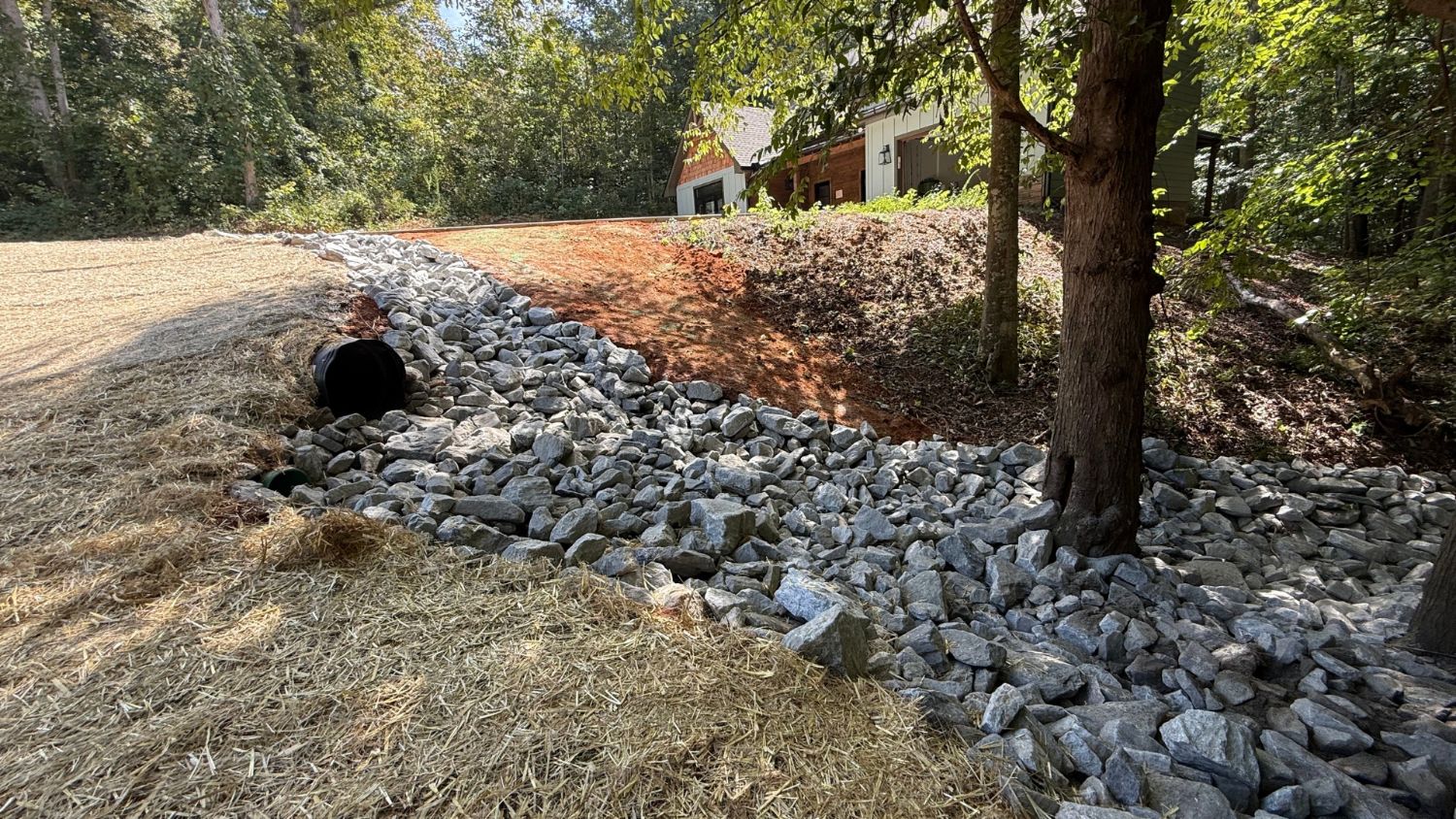
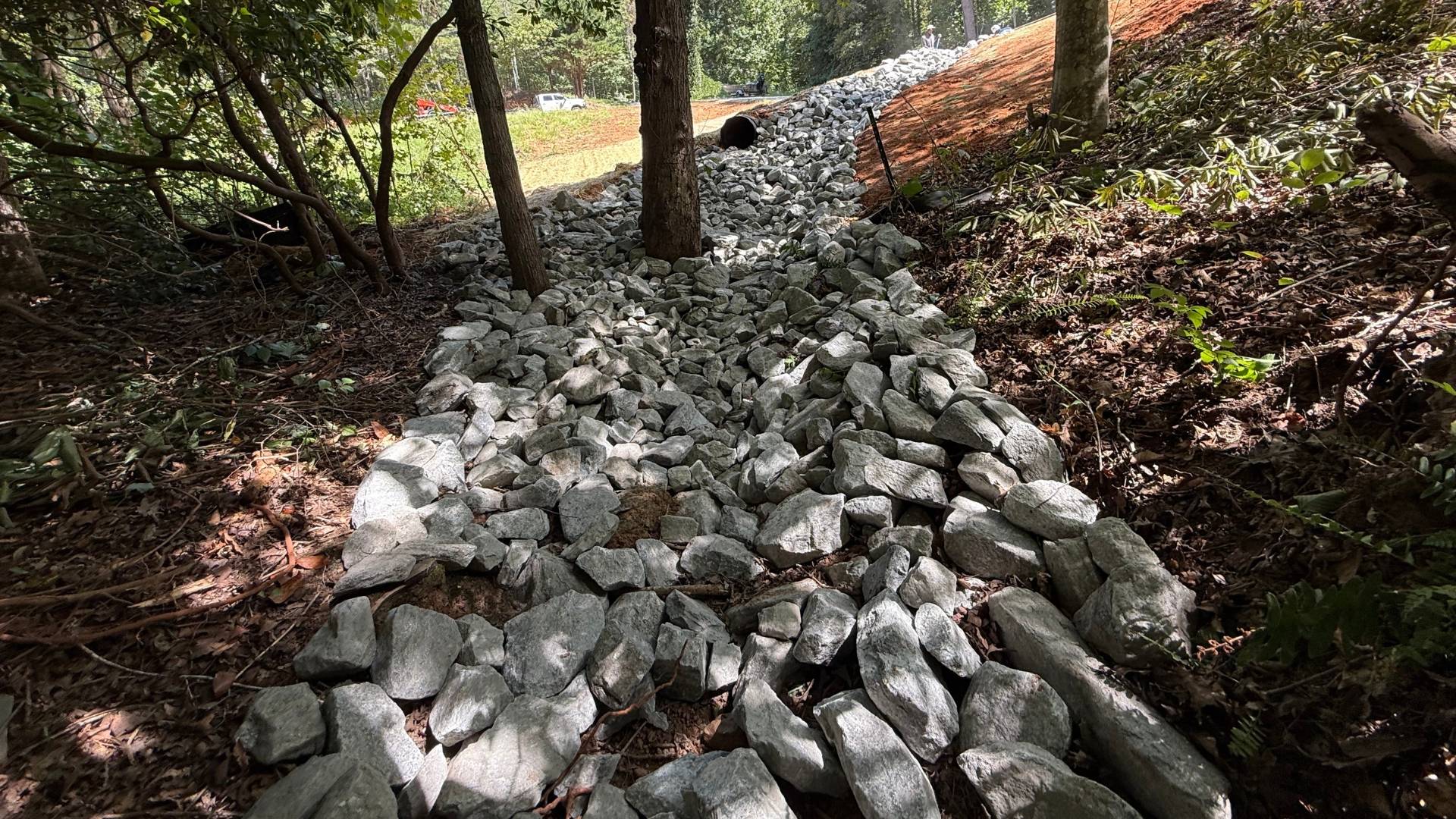
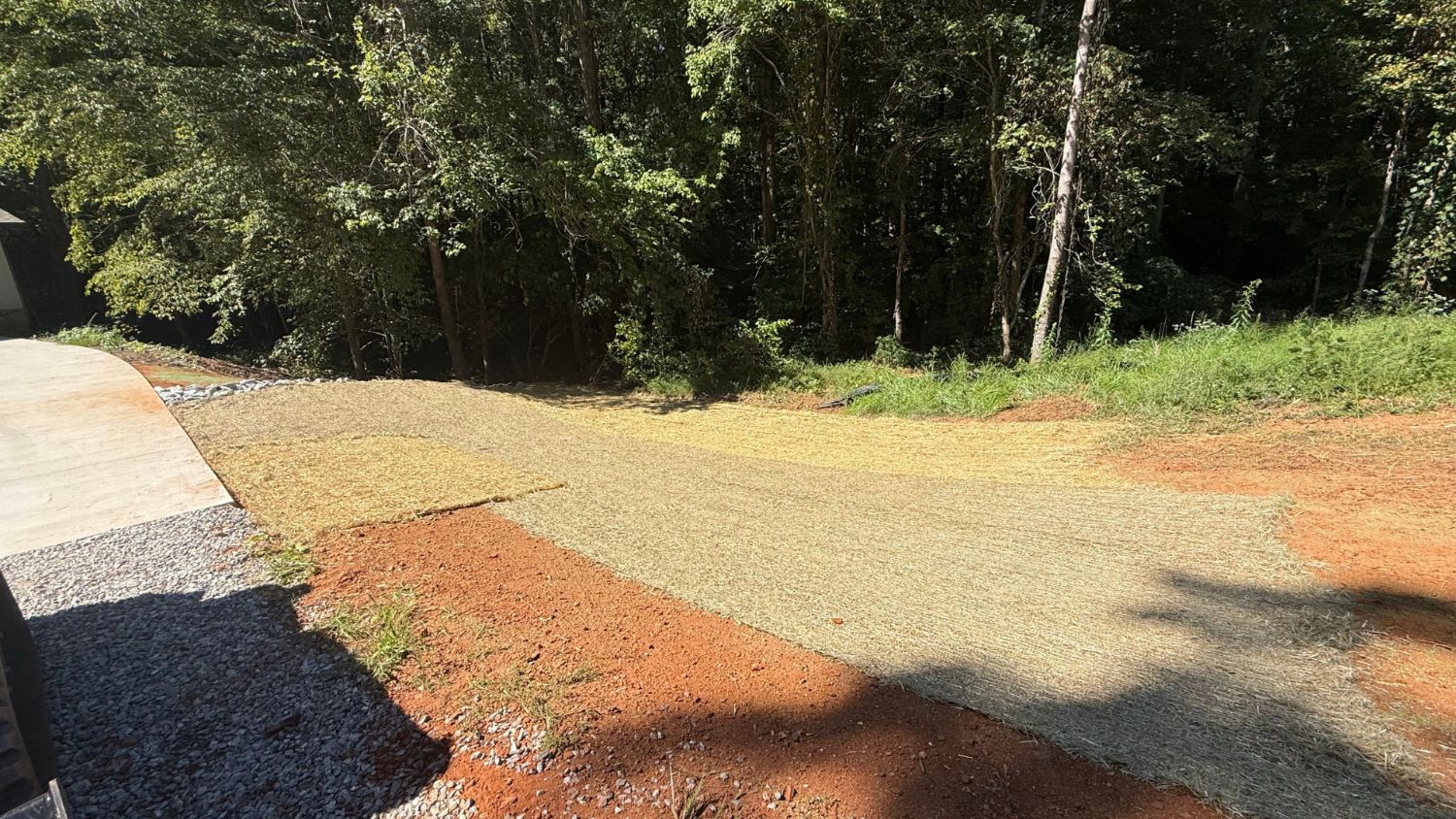
A homeowner in Dawsonville, Georgia contacted Schmitt Waterproofing after experiencing significant drainage and erosion problems around their newer home. During heavy rainfall, stormwater traveled down the driveway and across the surrounding hillside, washing away soil and beginning to undermine areas around the concrete.
The problem required more than simply redirecting surface water. Existing erosion needed to be repaired, a high-capacity drainage route needed to be established for future stormwater collection, and the hillside needed to be stabilized to prevent concentrated discharge from creating additional erosion.
Over the course of three days, Schmitt Waterproofing installed an 18-inch culvert extension, approximately 50 linear feet of 8-inch SDR-35 drainage pipe, two rip rap dry creek bed sections, and three tandem loads of fill dirt to rebuild and stabilize the affected hillside.
The Challenge
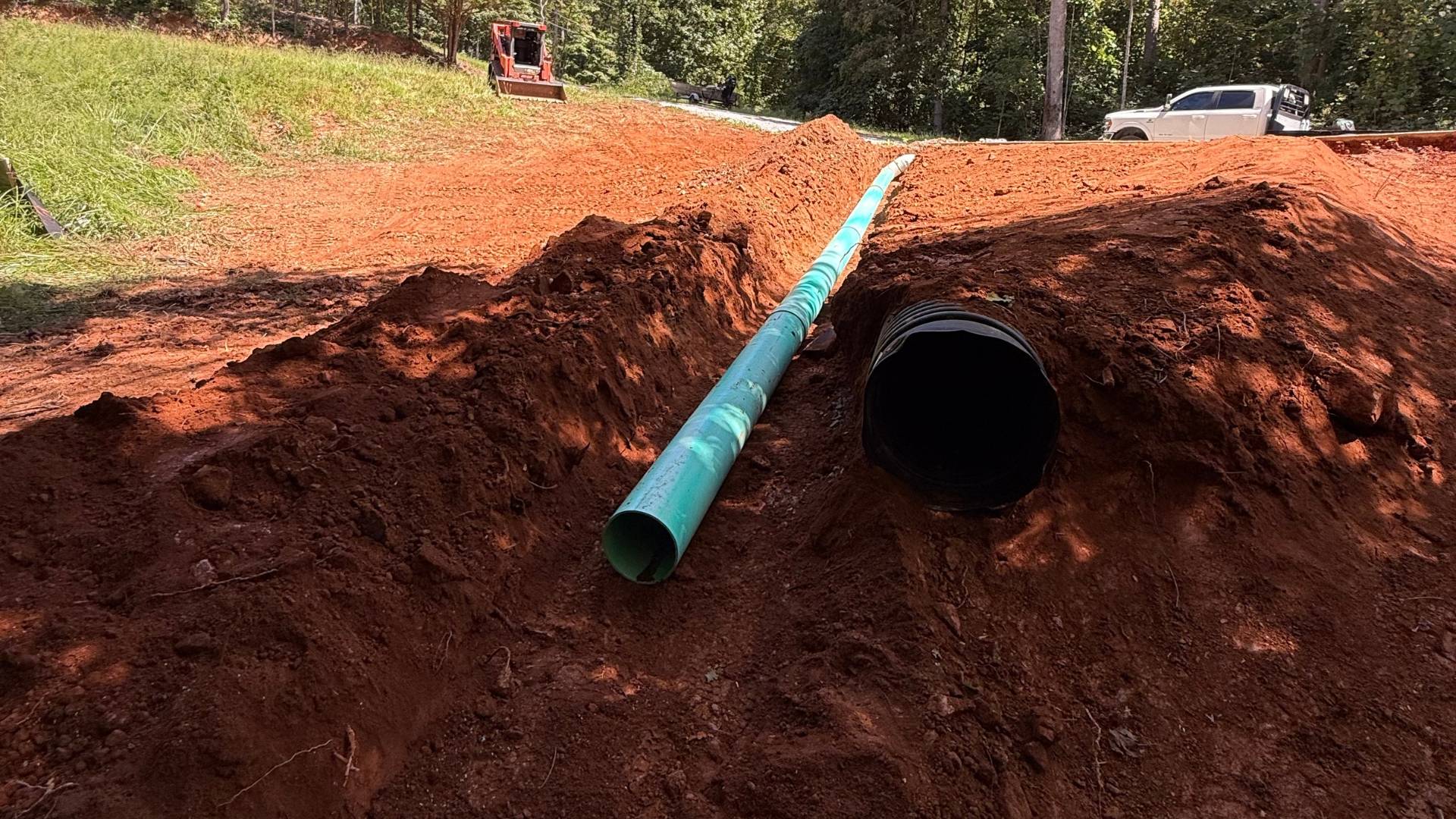
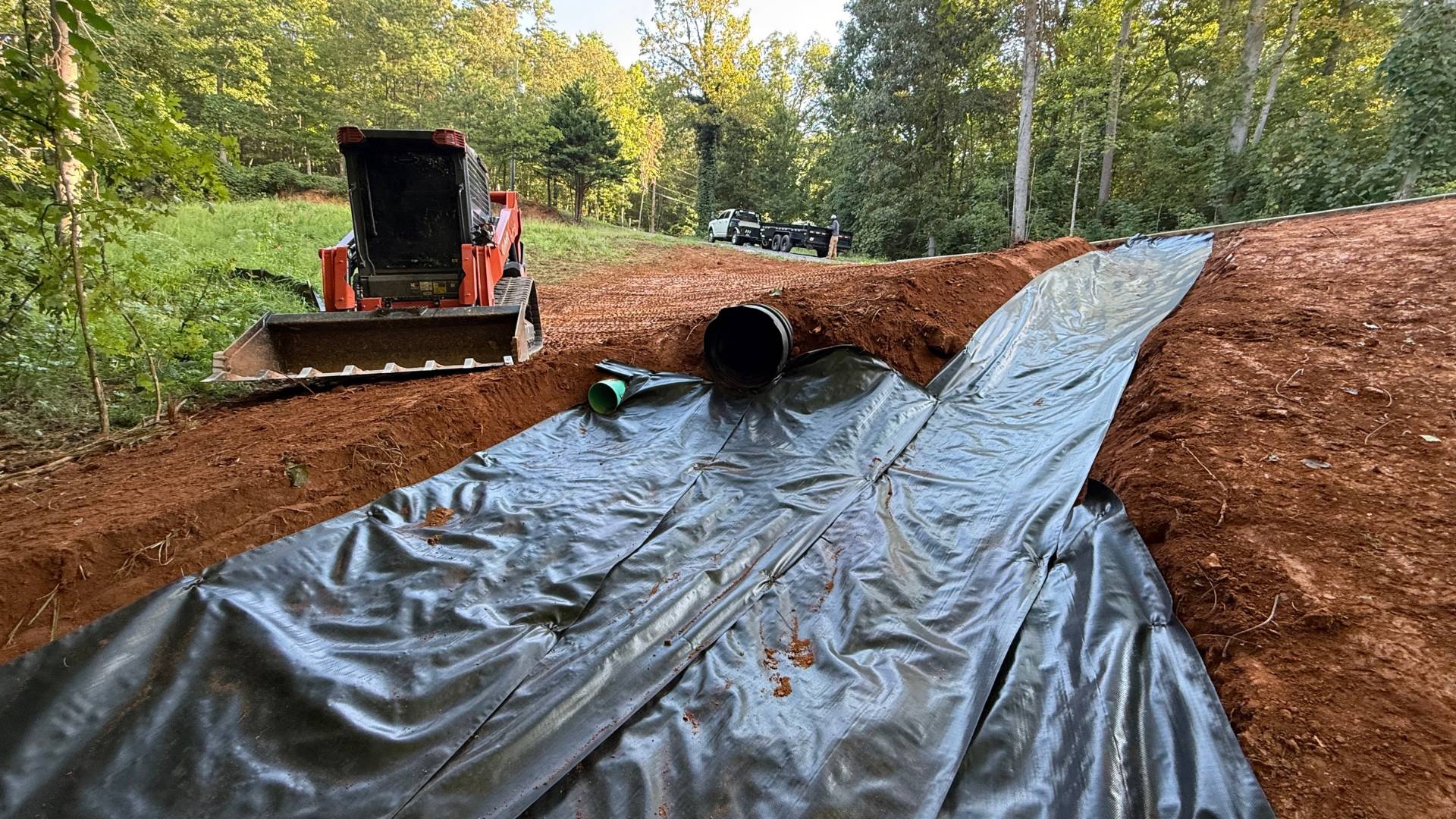
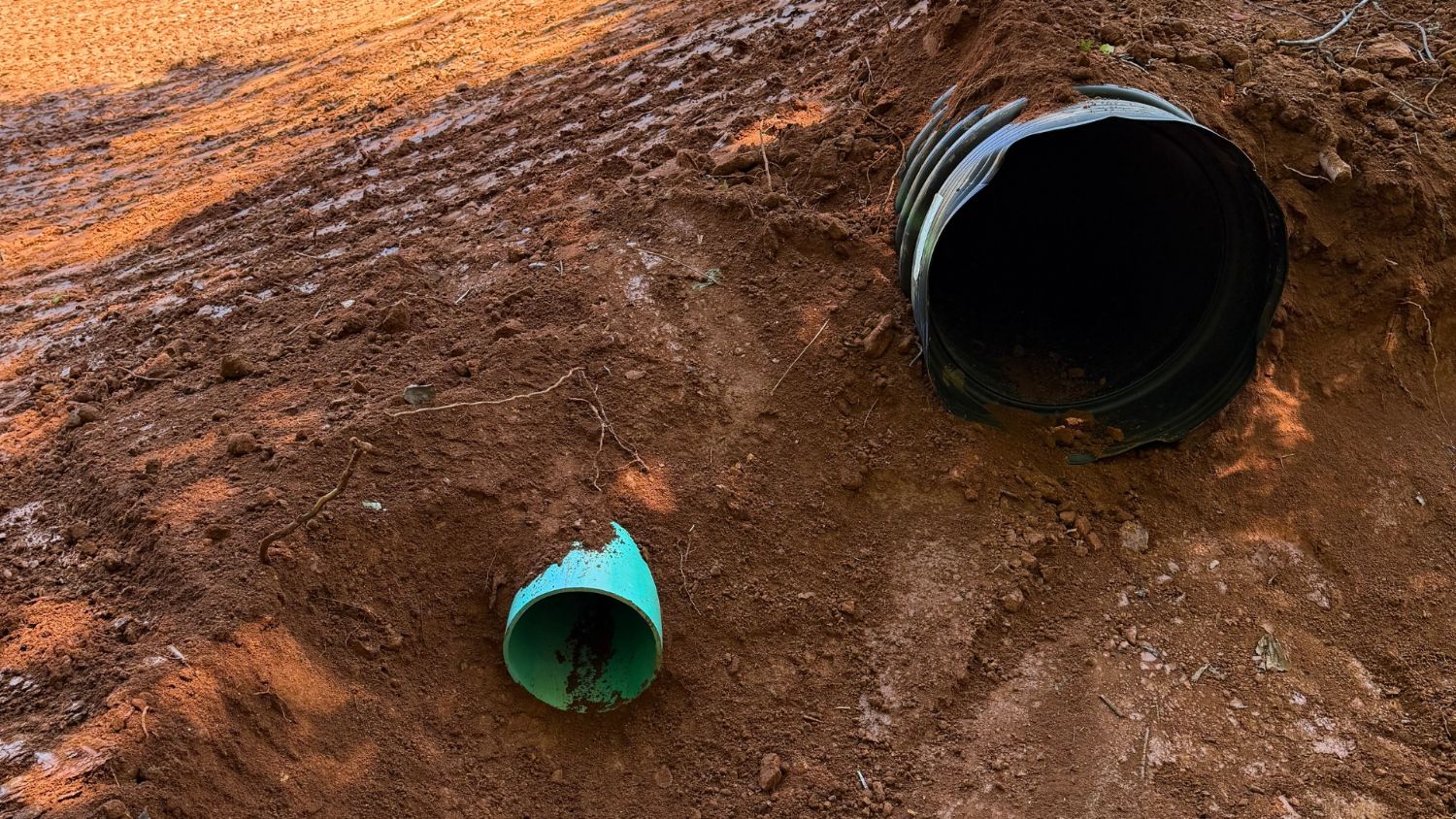
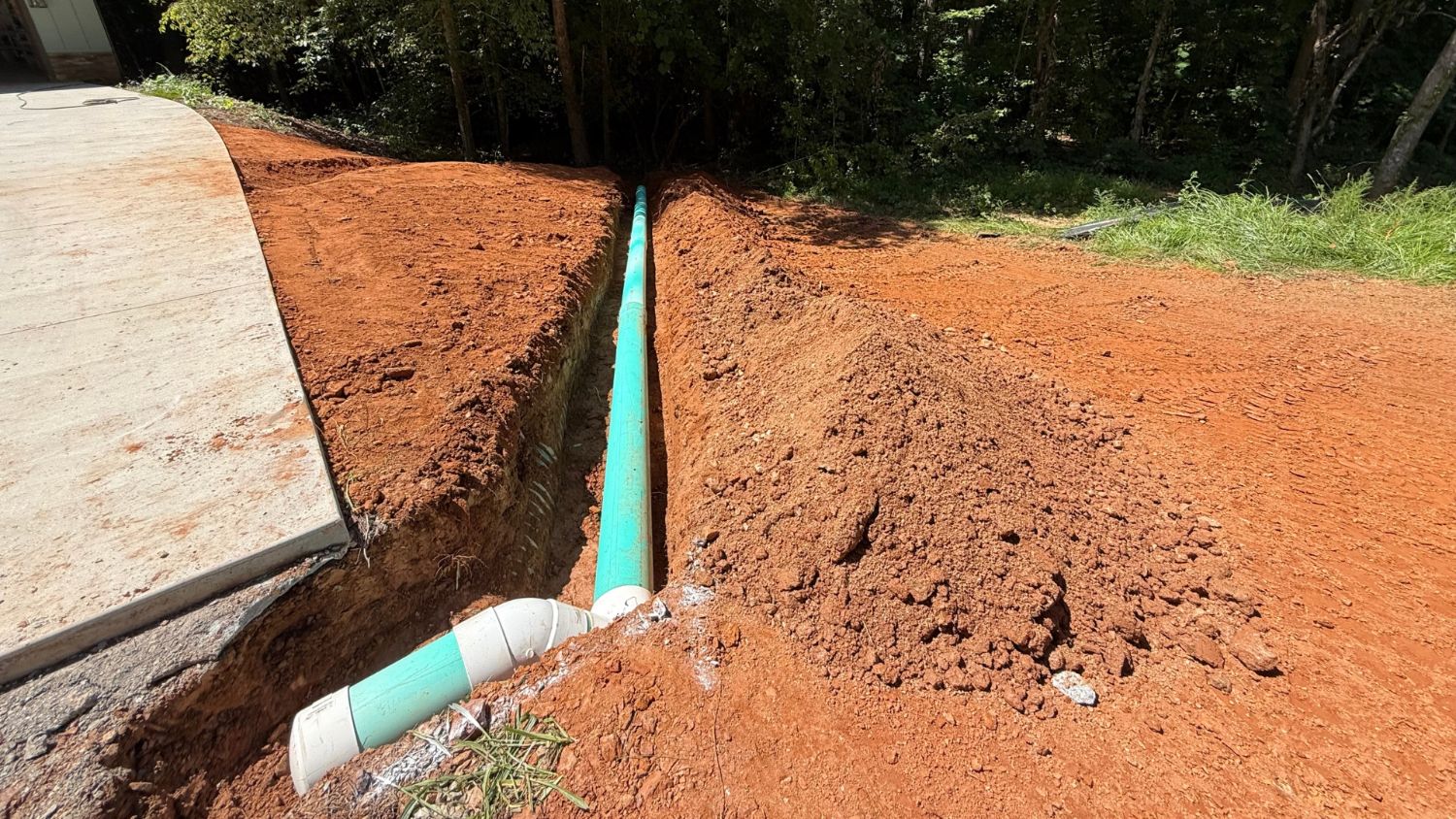
Although the home was relatively new, the property was already experiencing substantial erosion from uncontrolled stormwater runoff.
During heavy rain, water traveled down the driveway and concentrated along the surrounding landscape. Over time, the force and volume of this runoff had washed away soil and begun undermining areas adjacent to the concrete.
Left unaddressed, continued erosion could result in additional soil loss and compromise support around portions of the driveway.
The drainage plan needed to accomplish several things:
- Provide a high-capacity route for stormwater collected near the driveway.
- Extend the existing culvert and properly integrate it into the surrounding grade.
- Repair areas of the hillside already damaged by erosion.
- Control concentrated discharge as water traveled down the slope.
- Stabilize the upper and lower discharge areas with erosion-resistant materials.
- Prepare the drainage system for a future channel drain to be installed by others.
Rather than addressing only the visible erosion, our goal was to create a system that managed how stormwater would move through the property going forward.
The Solution
18-Inch Culvert Extension
We began by excavating and installing approximately 20 linear feet of 18-inch culvert pipe.
The culvert extension provided a controlled route through the affected area while allowing the surrounding hillside to be rebuilt and properly graded.
Once the drainage components were installed, fill dirt was placed and compacted around the culvert to restore the previously eroded portions of the property.
High-Capacity 8-Inch Drainage Line
Approximately 50 linear feet of 8-inch SDR-35 pipe was installed to provide an underground drainage route for a channel drain planned near the driveway.
The larger 8-inch pipe was selected to provide additional capacity for the volume of stormwater affecting this area of the property.
The underground line was positioned and stubbed for connection to a channel drain to be installed separately by others.
By establishing the underground conveyance system as part of the erosion repair, the property is prepared to collect driveway runoff and move it away from the areas where it had previously been causing damage.
Hillside Restoration
Years of runoff were not the concern on this newer property, but significant erosion had already occurred in a relatively short period of time.
To rebuild the damaged hillside and restore soil lost to stormwater, approximately three tandem loads of fill dirt were delivered to the property.
The material was spread throughout the affected areas to rebuild the grade, bury and stabilize the new culvert extension, and restore portions of the hillside that had washed away.
Correcting the existing erosion was an important part of the project. Installing drainage without rebuilding the damaged grade would have left the property vulnerable even after the water was redirected.
Upper Dry Creek Bed
A dry creek bed was constructed along the upper portion of the hillside to create a reinforced path for surface water.
The upper creek bed measures approximately 30 feet long by 4 feet wide.
After excavating and shaping the channel, we installed a pinned silt fabric underlayment followed by heavy rip rap. This creates a durable surface capable of handling concentrated stormwater without allowing it to continue washing away the underlying soil.
Lower Rip Rap Discharge Area
A second, larger dry creek section was constructed at the lower pipe discharge.
This area measures approximately 20 feet long by 6 feet wide and provides additional stabilization where concentrated water exits the drainage system.
Discharging a large underground drainage pipe directly onto an unprotected hillside can simply relocate an erosion problem. The wider rip rap channel helps protect the soil at the discharge point and provides a reinforced path for water as it continues through the property.
Approximately six tons of rip rap were used between the two erosion-control areas.
Landscape Restoration
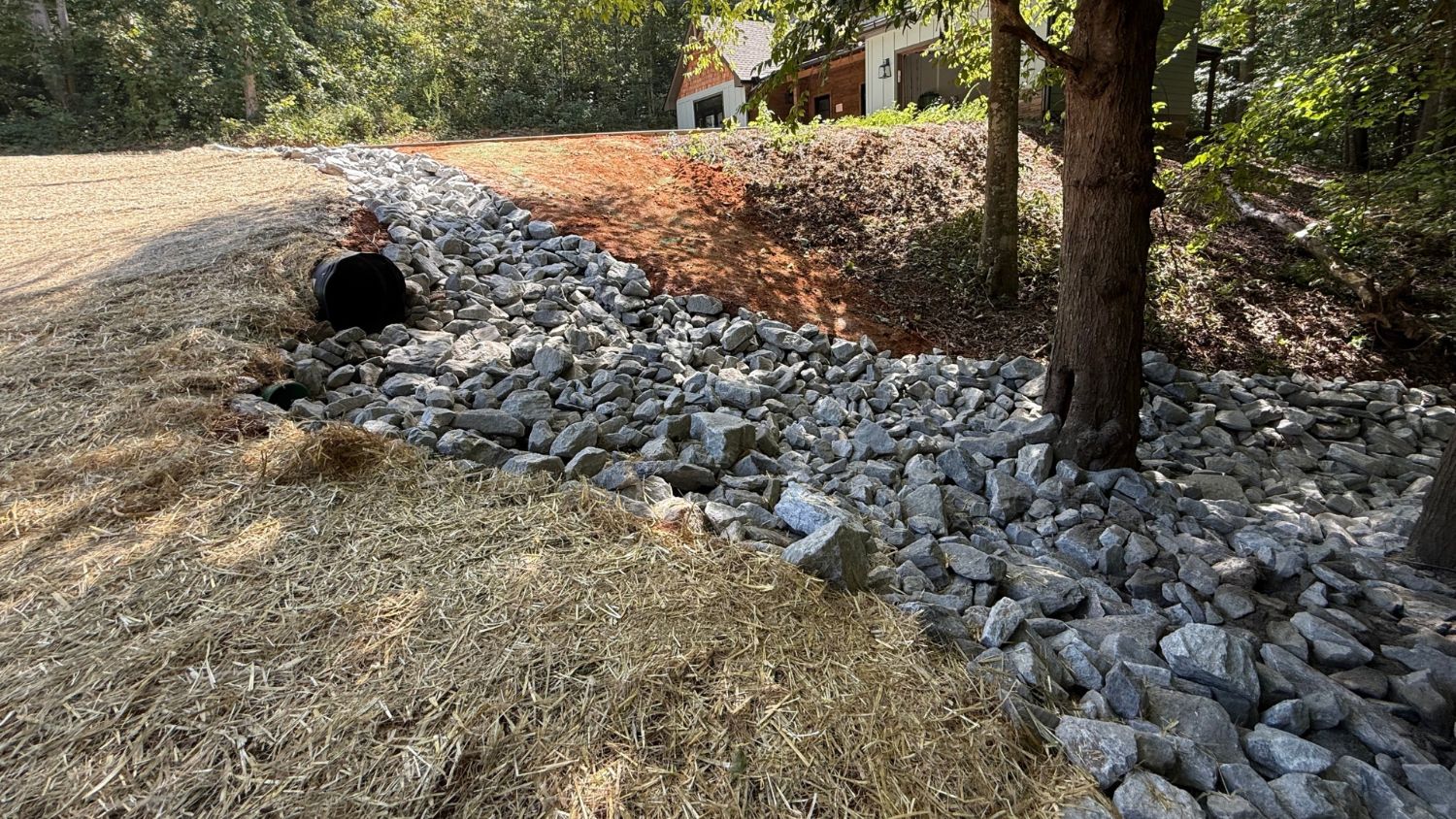
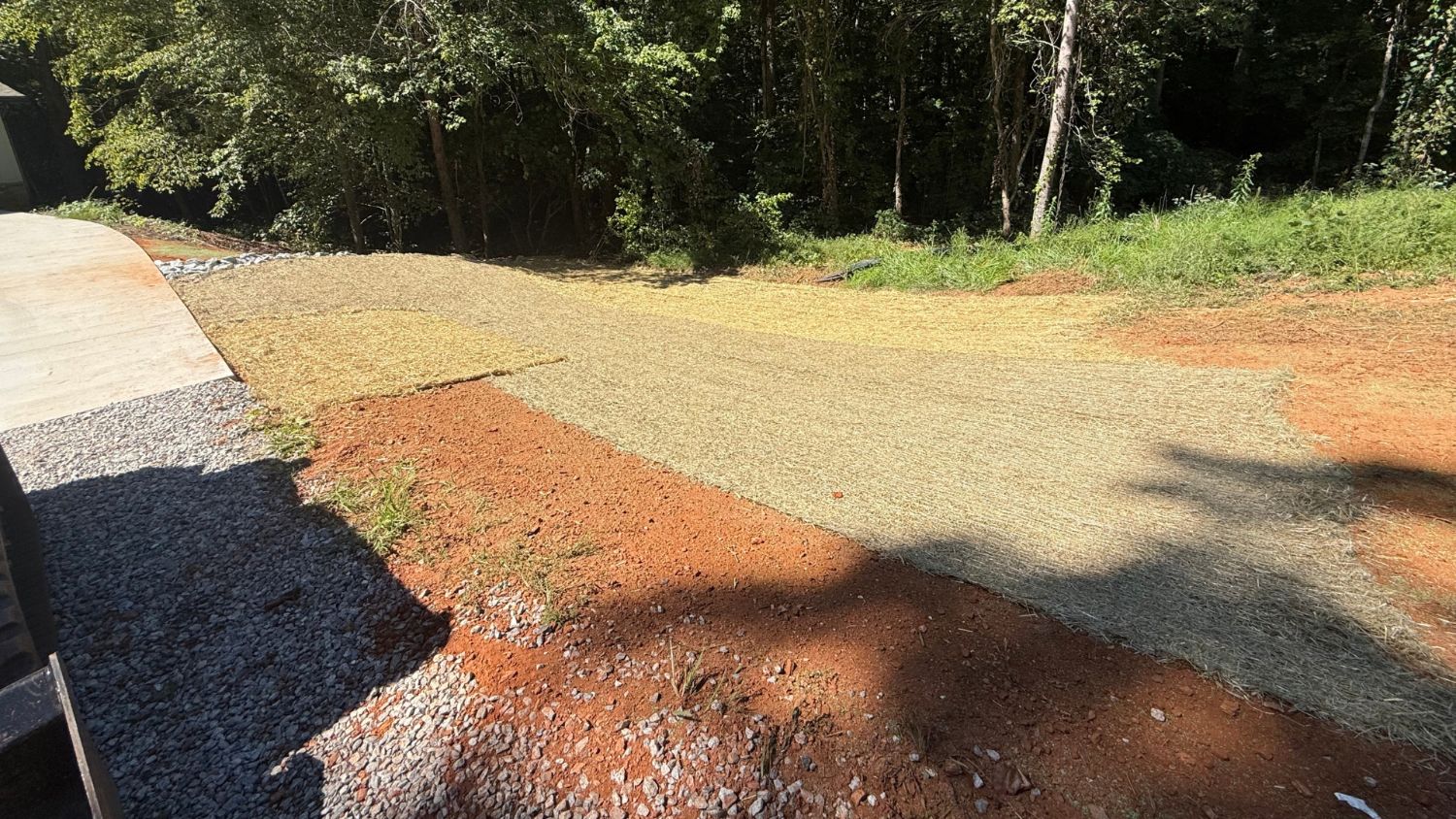
Once the drainage system, culvert extension, and erosion-control measures were complete, the disturbed portions of the hillside were prepared for restoration.
Grass seed and straw were spread throughout the work area to help establish vegetation and protect exposed soil while the landscape recovers.
The finished project combines underground stormwater conveyance with above-ground erosion protection rather than relying on either method alone.
The Results
In just three days, the property went from an actively eroding hillside with stormwater threatening areas around the driveway to a structured drainage and erosion-control system.
The completed project provides several layers of protection:
- A 20-foot 18-inch culvert extension provides controlled stormwater conveyance.
- Approximately 50 feet of 8-inch SDR-35 provides a high-capacity drainage route for the future channel drain.
- Three tandem loads of fill dirt rebuild and restore previously eroded portions of the hillside.
- An upper 30-foot dry creek bed stabilizes surface runoff.
- A lower 20-foot rip rap channel protects the primary discharge area.
- Approximately six tons of rip rap protect vulnerable soil from concentrated water flow.
- Seed and straw provide final erosion protection while vegetation becomes established.
Instead of allowing stormwater to continue carving its own path through the property, the completed system establishes a controlled route designed to protect the hillside and reduce the risk of continued erosion around the driveway.
Primary Services:
- Driveway stormwater drainage
- Erosion repair and hillside restoration
- 20-foot 18-inch culvert extension
- 50 feet of 8-inch SDR-35 drainage pipe
- 30-foot by 4-foot upper dry creek bed
- 20-foot by 6-foot lower rip rap discharge area
- Fill dirt installation and grading
- Seed and straw restoration
Major Materials:
- 3 tandem loads of fill dirt
- Approximately 6 tons of rip rap
- 20 feet of 18-inch culvert pipe
- 50 feet of 8-inch SDR-35
- Silt fabric and anchoring staples
- 8-inch drainage fittings
Why Driveway Erosion Should Be Addressed Early
Water traveling down a driveway can become a significant erosion problem because the hard surface concentrates runoff instead of allowing rainfall to absorb naturally into the soil.
When that concentrated water reaches the edge of the concrete, it can rapidly wash away surrounding soil. Over time, erosion can extend beneath the driveway and remove material supporting the concrete.
A complete solution requires more than filling the areas that have already washed away. The stormwater itself must be collected or redirected, provided with sufficient drainage capacity, and discharged into an area capable of handling the flow without creating another erosion problem.
For this Dawsonville property, combining large-capacity underground drainage, an extended culvert, hillside restoration, and rip rap-lined dry creek beds created a comprehensive solution designed around both the cause of the erosion and the damage it had already created.
Customer Experience
This project also continued an existing relationship with the homeowner's extended family, who had previously used Schmitt Waterproofing for another project.
Following completion, the homeowner shared:
“This is the second time our extended family has used Schmitt Waterproofing Services, both with exceptional results. Josh will come to your home, gather information, analyze the problem and communicate a clear plan to resolve it. He goes above and beyond to satisfy his customers. We highly recommend this company.”