
Heavy stormwater runoff was repeatedly washing gravel from a Cumming, Georgia driveway, while an undersized dry creek bed farther downhill struggled to contain the water during larger storms. Simply replacing the washed-out gravel or enlarging the existing creek bed would not address the underlying drainage problems. Over two days, Schmitt Waterproofing installed a comprehensive drainage and erosion-control system featuring two reinforced dry creek beds totaling approximately 125 feet, an 18-inch collection basin, and 150 linear feet of high-capacity 6-inch SDR-35 underground piping routed beneath the driveway. The completed system provides a controlled path for stormwater while helping protect the driveway and surrounding landscape from continued erosion.
| Location | [City, State (County)] |
|---|---|
| Project Dates | September 2 to September 3, 2026 |
| Duration | 2 days |
| Location | Cumming, GA |
| Project Type | Dry Creek Bed, Drainage System, Resurface Gravel Driveway |
| Lead | Josh Schmitt, Schmitt Waterproofing, LLC |
Project Overview
A homeowner in Cumming, Georgia contacted Schmitt Waterproofing after experiencing significant stormwater runoff and erosion around their driveway.
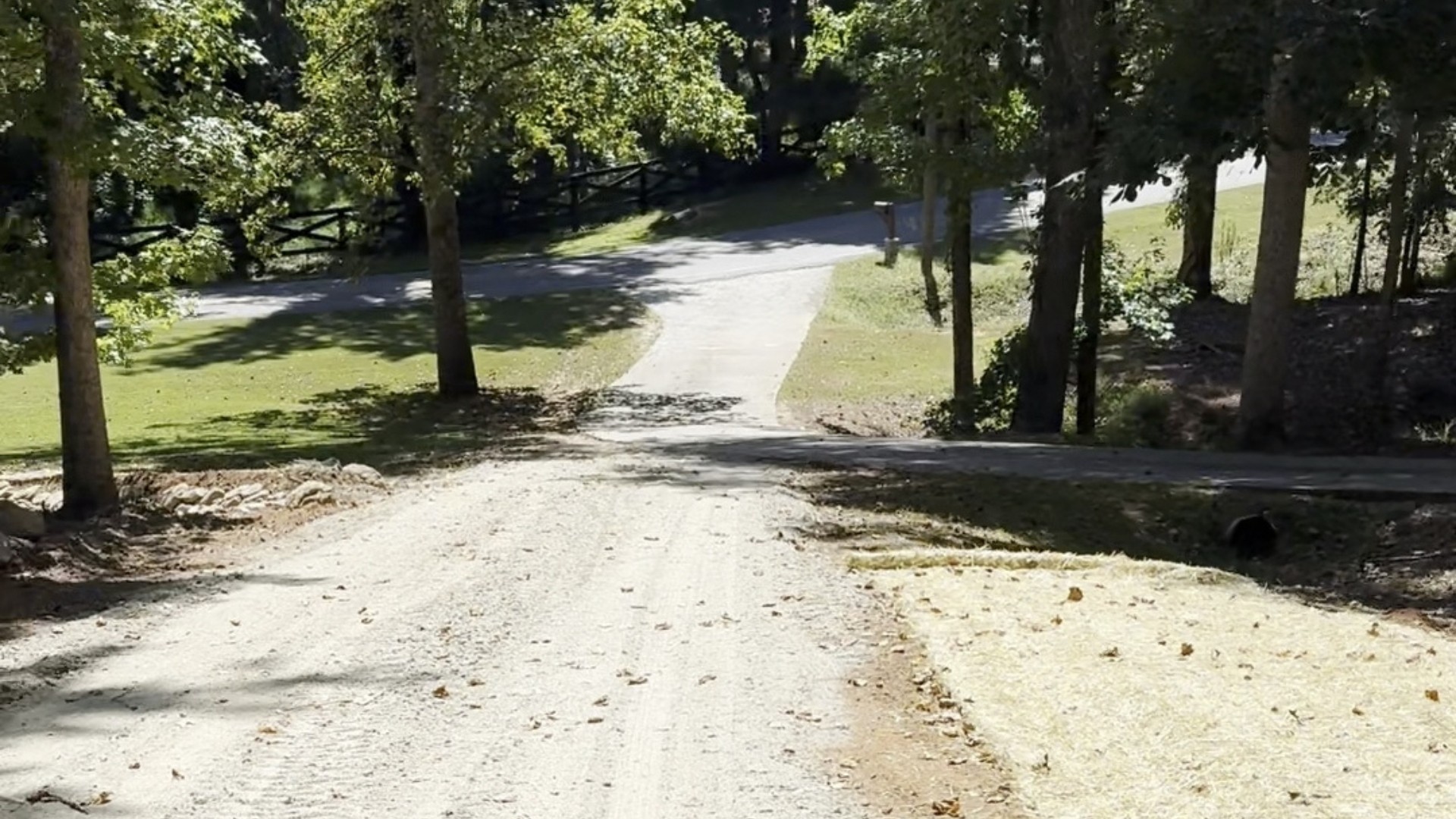
During heavy rainfall, water traveled off the concrete driveway and across the adjoining gravel driveway, repeatedly washing away stone and creating ongoing maintenance and erosion problems. Farther downhill, an existing dry creek bed was also undersized for the amount of runoff moving through the property. During larger storms, water would overwhelm the creek bed and jump outside of the intended drainage path.
The property needed a more comprehensive solution capable of collecting the concentrated surface runoff, moving a large volume of water safely beneath the driveway, and creating a properly sized discharge channel farther downhill.
Over the course of two days, Schmitt Waterproofing constructed two new dry creek bed sections totaling approximately 125 linear feet, installed an 18-inch drainage basin, and installed approximately 150 linear feet of 6-inch SDR-35 to create a high-capacity underground connection between the upper and lower portions of the property.
The Challenge
The primary challenge was the volume and concentration of stormwater moving downhill across the property.
The concrete driveway created a large impervious surface, meaning rainfall could not absorb into the ground. Instead, runoff traveled across the concrete and concentrated along the adjoining gravel driveway.
During heavy storms, this concentrated flow was powerful enough to wash out portions of the gravel driveway and carry stone and soil farther downhill.
At the bottom of the property, the existing dry creek bed presented another problem. It was too small to reliably contain the volume of water reaching it. During larger rain events, stormwater would leave the creek bed and create additional erosion outside the intended drainage path.
Our drainage plan needed to:
- Capture surface runoff coming from the upper portion of the property.
- Reduce erosion and washout along the driveway.
- Provide sufficient capacity for larger storm events.
- Move collected water underground across the property and beneath the existing driveway.
- Replace the undersized drainage path with a larger, stabilized discharge area.
- Allow the lower creek bed to manage both piped discharge and additional surface runoff.
- Restore the driveway and disturbed landscape after construction.
Rather than simply making the existing creek bed larger, we designed a system to manage the water throughout its entire path across the property.
Our Solution
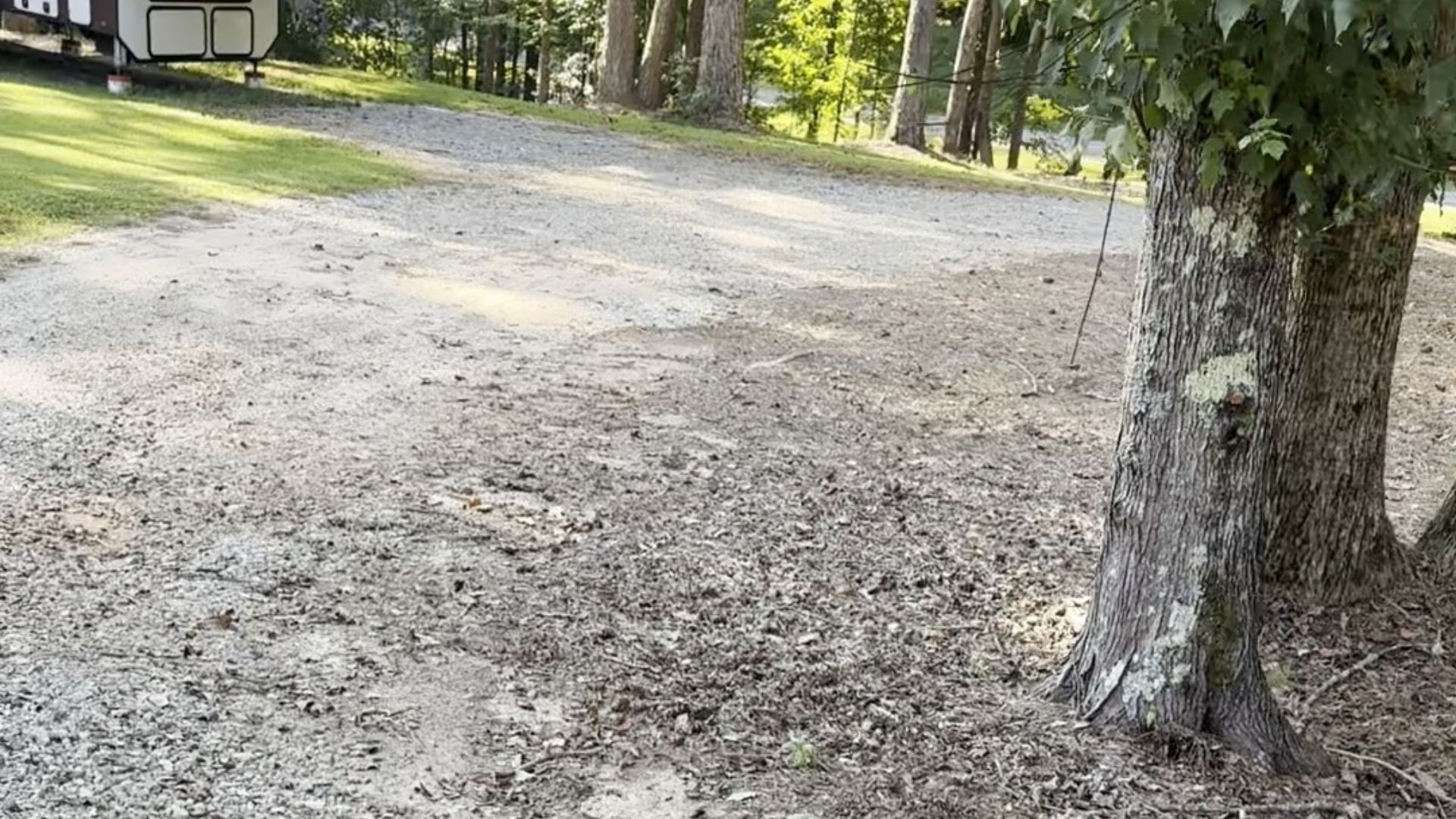
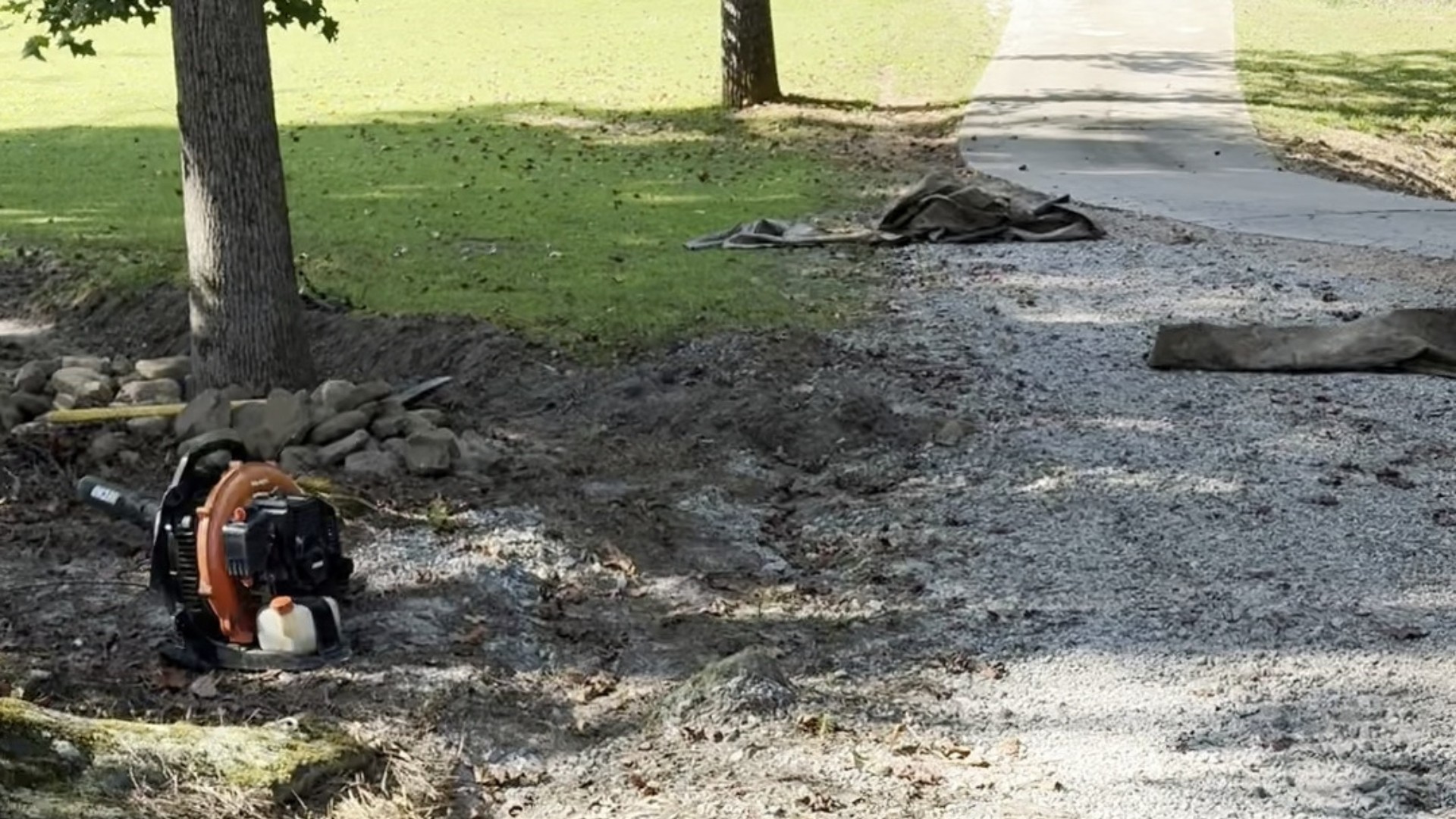
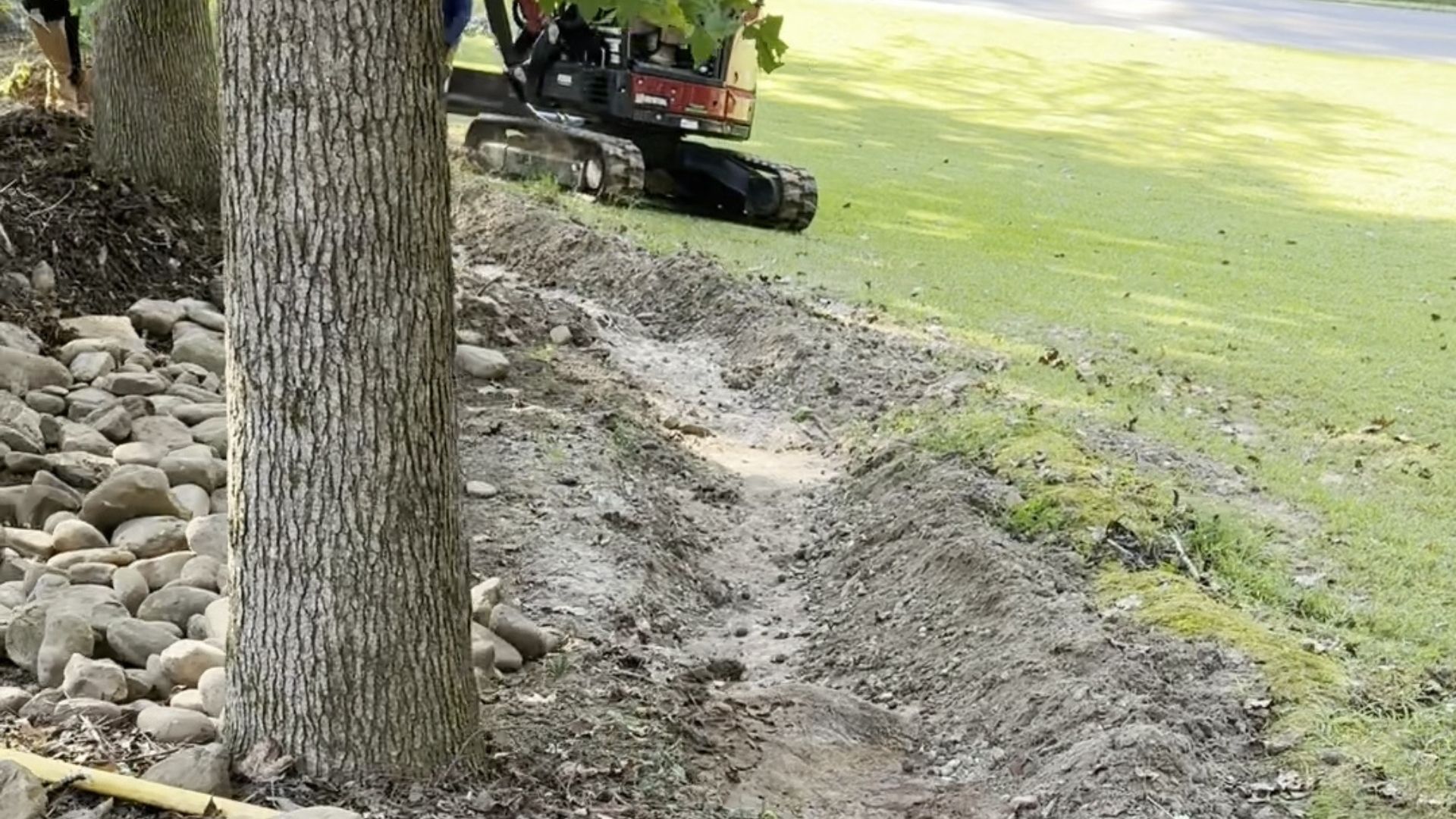
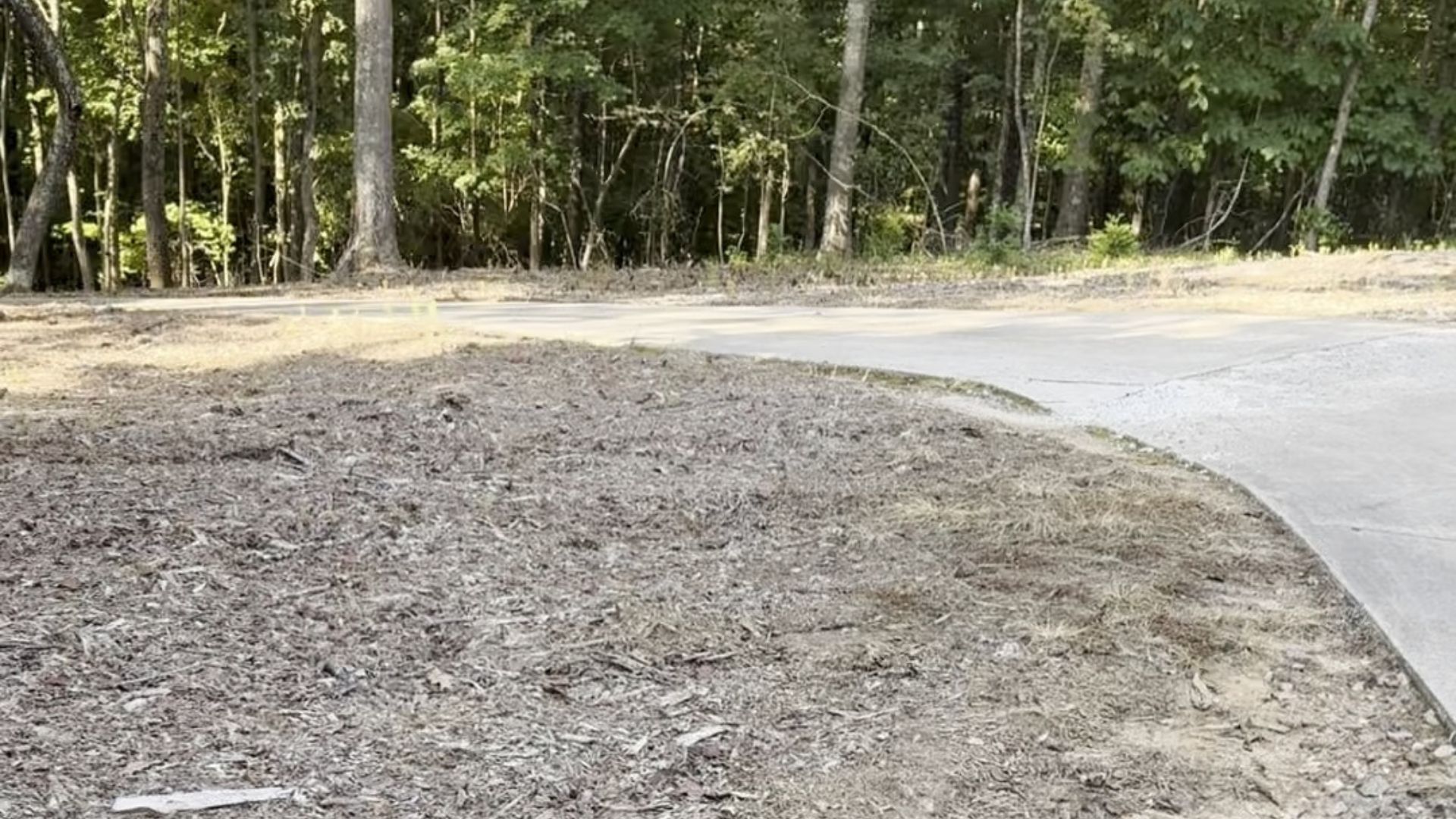
Upper 50-Foot Dry Creek Bed
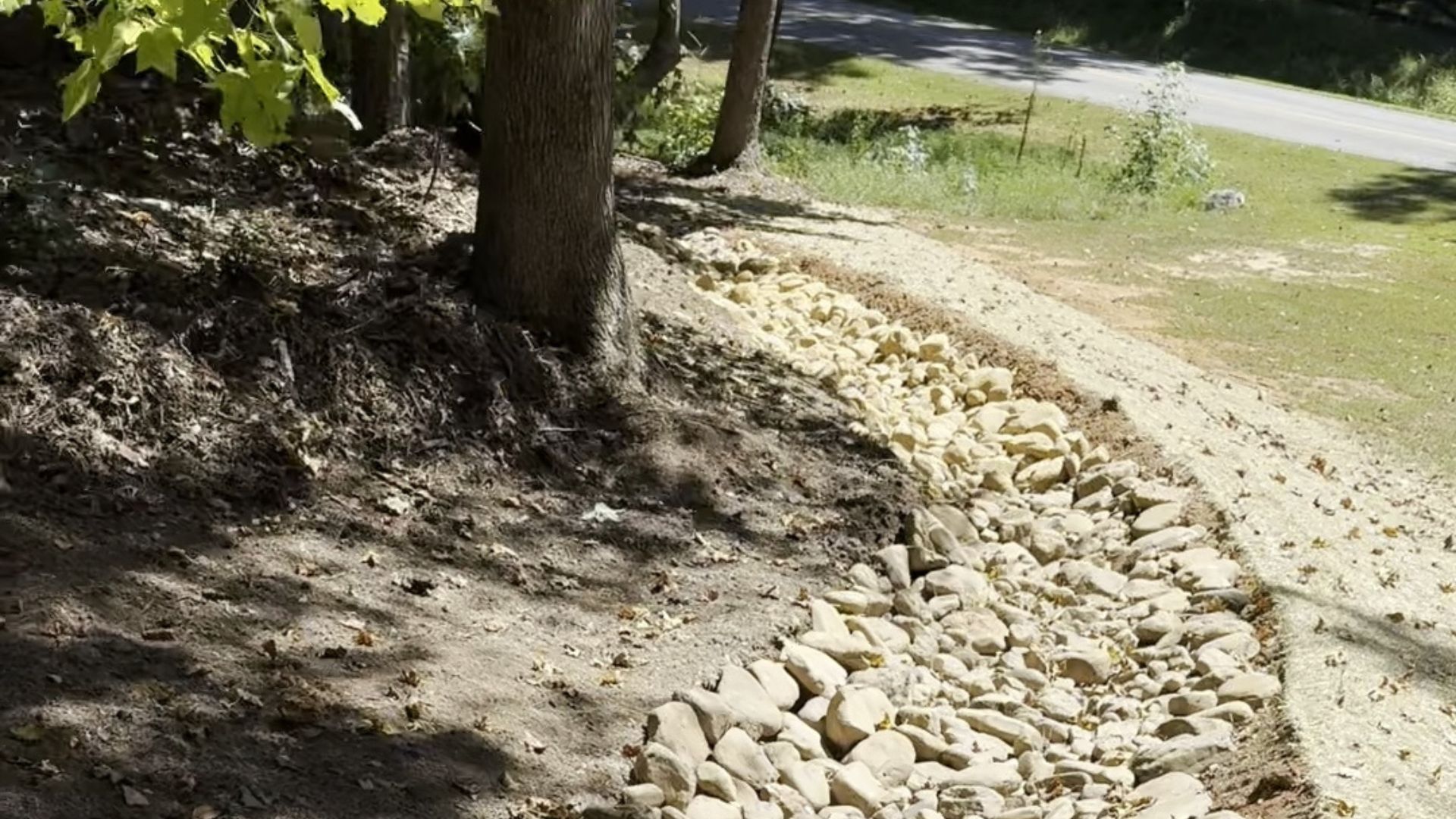
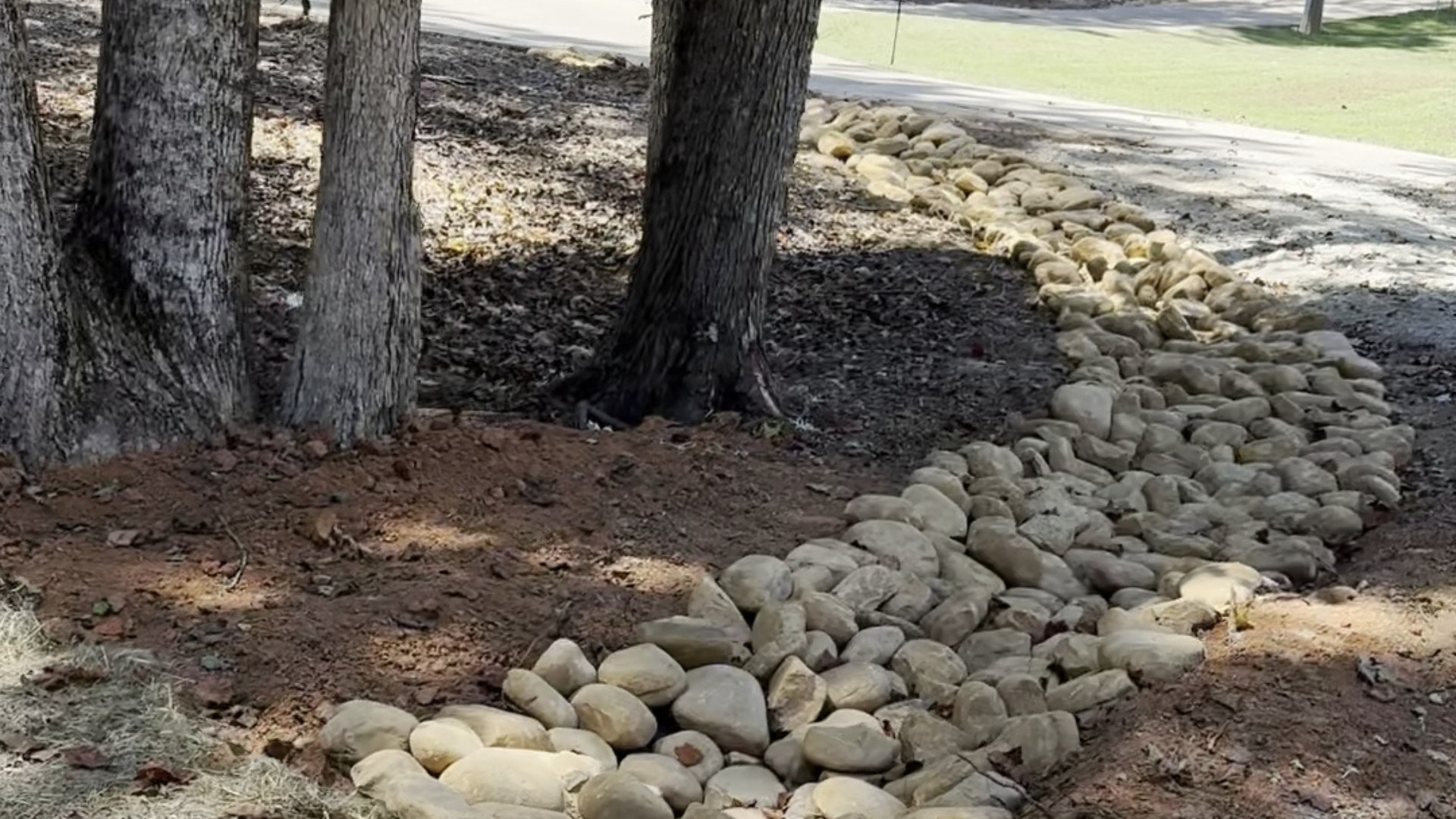
We began by excavating, shaping, and constructing approximately 50 linear feet of dry creek bed averaging 4 feet wide.
The creek bed was positioned to collect and direct surface runoff from the affected upper portions of the property.
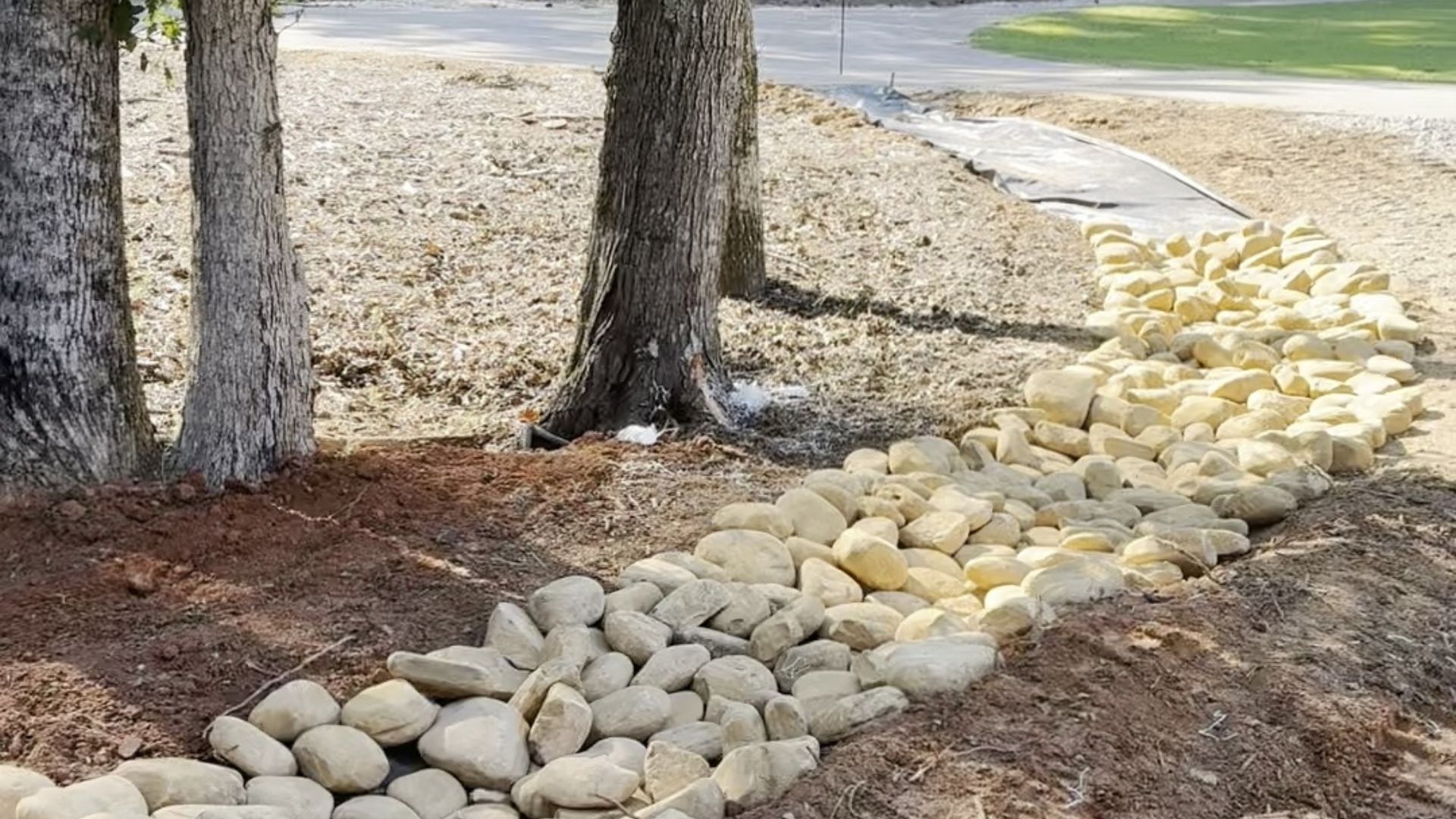
A durable underlayment was installed beneath appropriately sized stone to create a defined, erosion-resistant drainage channel. Instead of allowing runoff to spread across the landscape and gravel driveway, the new creek bed directs the water toward a centralized collection point.
18-Inch High-Capacity Drainage Basin
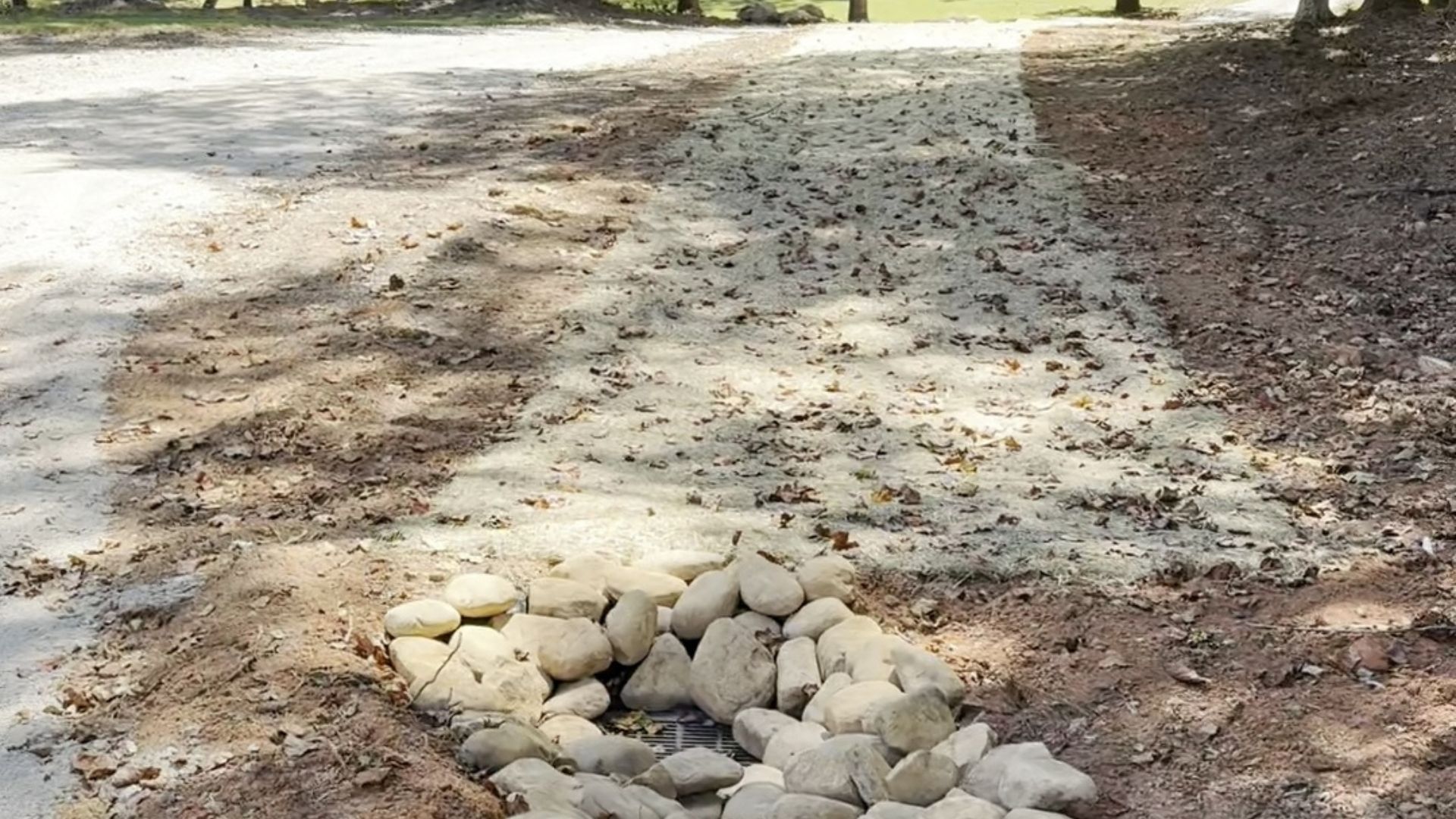
At the termination of the upper dry creek bed, we installed an 18-inch drainage basin.
The basin serves as the transition between the surface drainage system and the underground piping.
Stormwater traveling through the upper creek bed enters the large collection basin before being redirected underground. This allows a significant amount of surface water to be collected at one centralized location rather than continuing uncontrolled down the property.
150 Feet of 6-Inch Underground Drainage
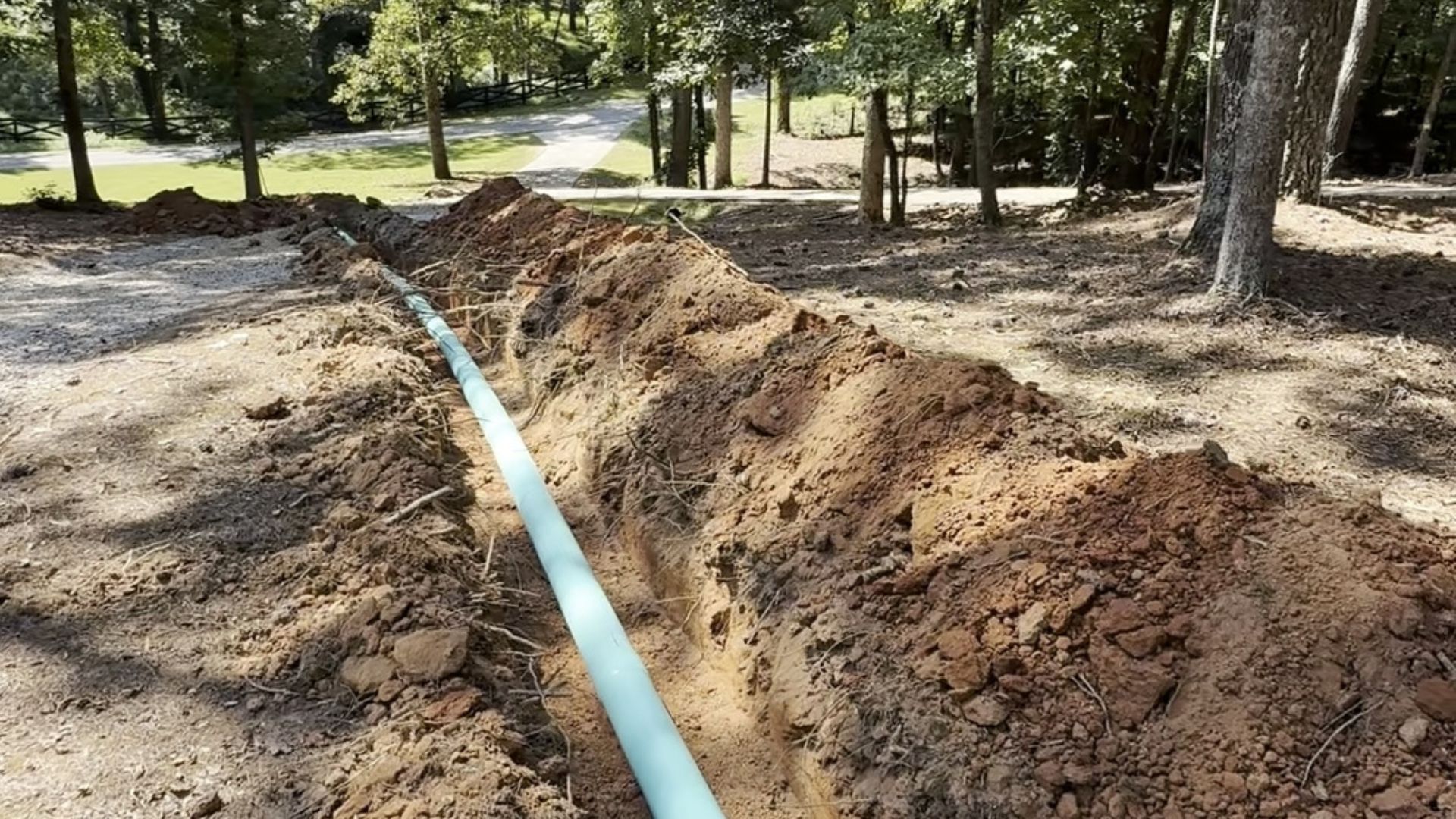
From the new 18-inch basin, we installed approximately 150 linear feet of 6-inch solid SDR-35 PVC.
The larger 6-inch pipe provides increased capacity for the volume of stormwater being collected from the upper portion of the property.
The drainage line was routed underground and beneath the existing driveway, allowing water to bypass the areas where uncontrolled surface flow had previously contributed to washout and erosion.
Instead of allowing stormwater to continue traveling across the driveway at the surface, the new system carries it through a protected underground route to the lower portion of the property.
75-Foot Lower Dry Creek Bed
At the discharge of the underground drainage system, we constructed a second dry creek bed approximately 75 feet long and averaging 4 feet wide.
This lower creek bed serves two purposes.
First, it receives the concentrated discharge from the 6-inch underground drainage system. Second, it collects additional surface runoff naturally reaching the lower portion of the property.
The extended stone-lined channel provides a larger and more controlled path than the previous undersized creek bed, allowing stormwater to continue downhill while helping reduce concentrated flow and erosion.
This transition is particularly important because simply terminating a high-capacity underground pipe onto an unprotected slope could create a new erosion problem at the discharge point.
By combining the underground system with a properly sized lower creek bed, the water remains controlled as it transitions back to surface flow.
Driveway & Landscape Restoration
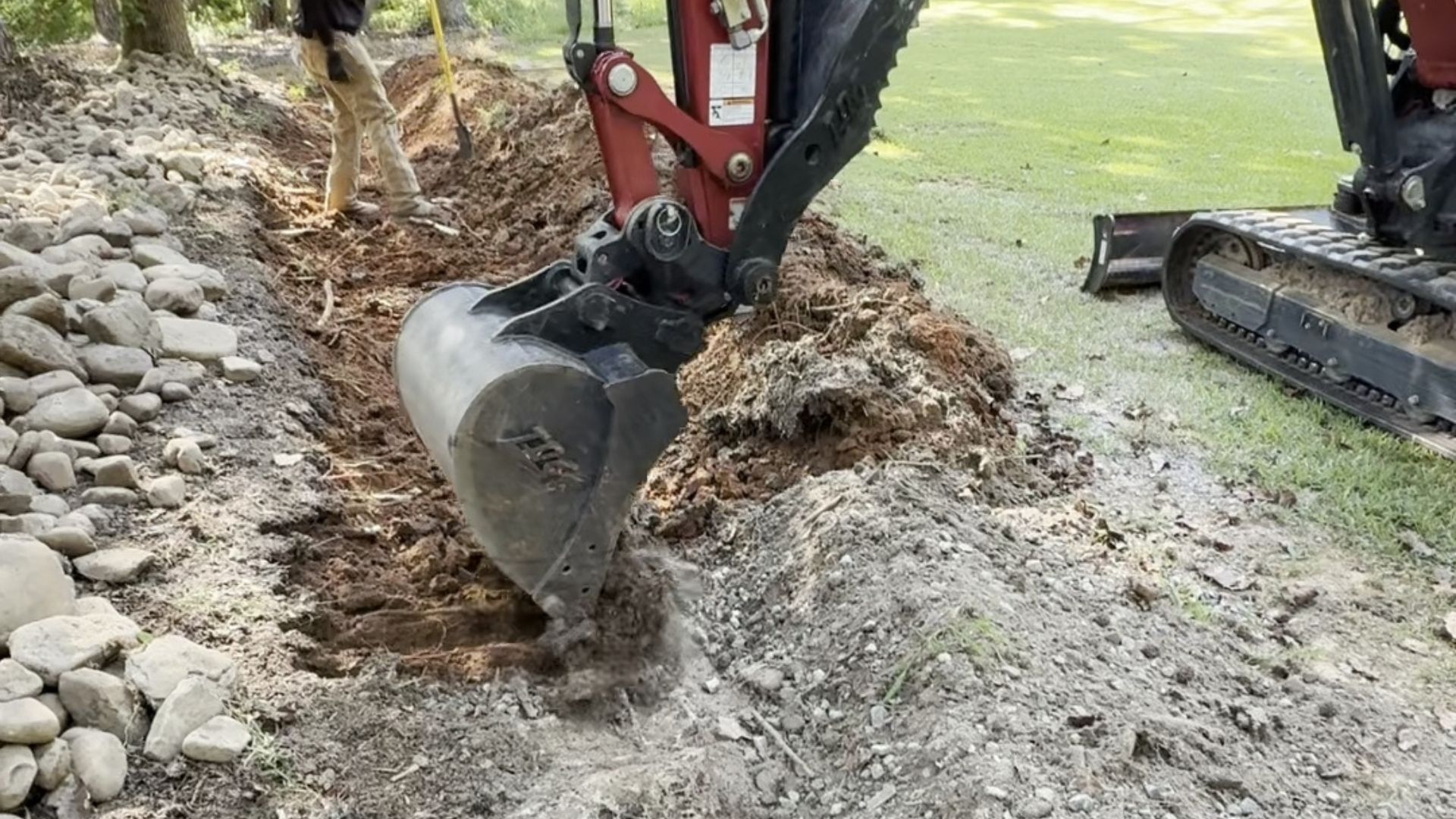
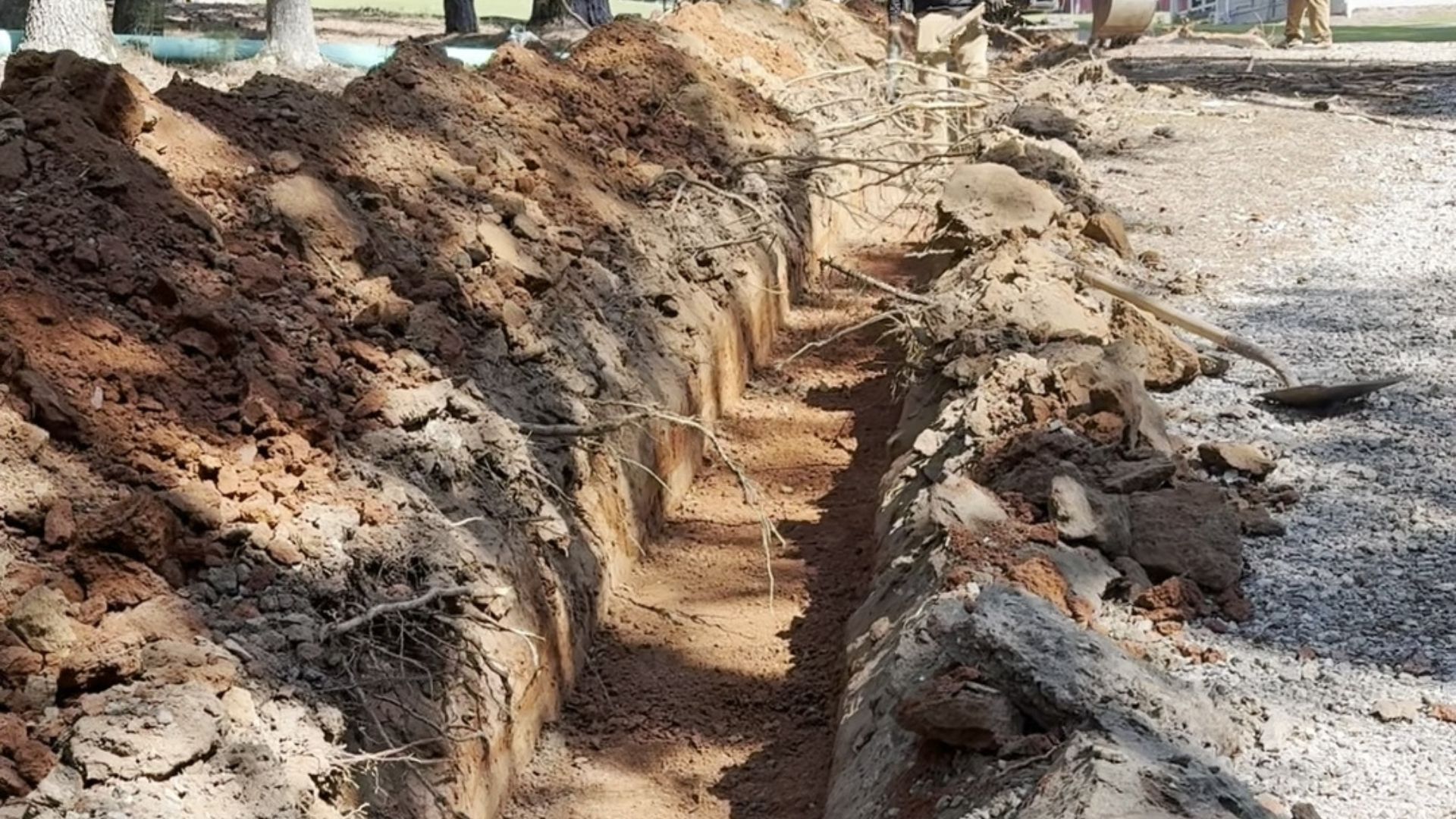
Installing the underground drainage system required excavation through a portion of the existing driveway.
After the drainage pipe was installed, approximately one tandem load of crusher run was delivered, spread, and compacted to rebuild the disturbed driveway area.
Disturbed portions of the surrounding yard were final graded, and grass seed and straw were applied to help stabilize exposed soil and encourage vegetation recovery.
The goal was not only to correct the drainage problem but also to leave the affected areas properly restored following construction.
The Results
In just two days, the property received a comprehensive stormwater-management system designed to control runoff from the upper driveway all the way through its final discharge farther downhill.
The completed system provides multiple layers of protection:
- Approximately 50 feet of upper dry creek bed collects and directs surface runoff.
- An 18-inch basin provides a centralized, high-capacity collection point.
- Approximately 150 feet of 6-inch SDR-35 carries collected stormwater underground.
- The underground system bypasses the driveway areas previously affected by surface runoff.
- Approximately 75 feet of lower dry creek bed receives the underground discharge while collecting additional surface water.
- The larger lower drainage channel replaces the previous undersized creek bed that was being overwhelmed during heavy rainfall.
- Crusher run restores the disturbed gravel driveway.
- Final grading, seed, and straw help stabilize disturbed landscape areas.
Instead of repeatedly repairing gravel and erosion after each major rain event, the property now has a defined drainage route designed to collect, convey, and discharge stormwater throughout the affected area.
Project Details
Location: Cumming, GA
Project Duration: 2 Days
Primary Services:
- Comprehensive stormwater drainage
- Approximately 125 feet of dry creek bed
- 18-inch high-capacity drainage basin
- Approximately 150 feet of 6-inch SDR-35
- Underground driveway crossing
- Gravel driveway restoration
- Erosion control
- Final grading
- Seed and straw restoration
Major Materials:
- 18-inch drainage basin
- Approximately 150 feet of 6-inch SDR-35
- Stone for approximately 125 feet of dry creek bed
- Durable creek bed underlayment
- Approximately one tandem load of crusher run
- Grass seed and straw
Why Managing the Entire Path of Stormwater Matters
Drainage problems often occur in multiple locations because the same water creates different problems as it travels across a property.
On this Cumming property, runoff from the concrete driveway contributed to erosion and gravel washout near the top of the system. Farther downhill, the same concentrated stormwater overwhelmed an undersized dry creek bed and escaped the intended drainage path.
Addressing only one of those areas would have left the other problem unresolved.
The solution was to look at the property as one complete drainage system: collect the water where it concentrates, provide sufficient underground capacity to safely move it through vulnerable areas, and create a stabilized discharge path capable of managing the water once it returns to the surface.
By combining two dry creek beds, a large collection basin, and 6-inch underground drainage, Schmitt Waterproofing created a controlled stormwater route designed around the property's natural elevation and the volume of runoff affecting it.