
Heavy rain sent runoff down a Dawsonville driveway and across the hillside, washing away soil along the edge of the concrete. Schmitt Waterproofing extended the existing culvert, installed an underground drainage line for a future channel drain, and built two rip rap-lined channels to help protect the slope from further erosion. We also rebuilt the washed-out hillside and covered the disturbed soil with seed and straw.
| Project Details | |
|---|---|
| Location | Dawsonville, GA |
| Project Dates | September 8 - September 10, 2026 |
| Duration | 3 days |
| Project Type | Driveway Drainage, Culvert Extension, and Hillside Erosion Control |
| Lead | Josh Schmitt, Schmitt Waterproofing, LLC |
Project Overview
A homeowner in Dawsonville, Georgia contacted Schmitt Waterproofing after experiencing significant drainage and erosion problems around their newer home. During heavy rainfall, stormwater traveled down the driveway and across the surrounding hillside, washing away soil and beginning to undermine areas around the concrete.
The problem required more than simply redirecting surface water. Existing erosion needed to be repaired, a high-capacity drainage route needed to be established for future stormwater collection, and the hillside needed to be stabilized to prevent concentrated discharge from creating additional erosion.
Over the course of three days, Schmitt Waterproofing installed an 18-inch culvert extension, approximately 50 linear feet of 8-inch SDR-35 drainage pipe, two rip rap dry creek bed sections, and three tandem loads of fill dirt to rebuild and stabilize the affected hillside.
The Challenge
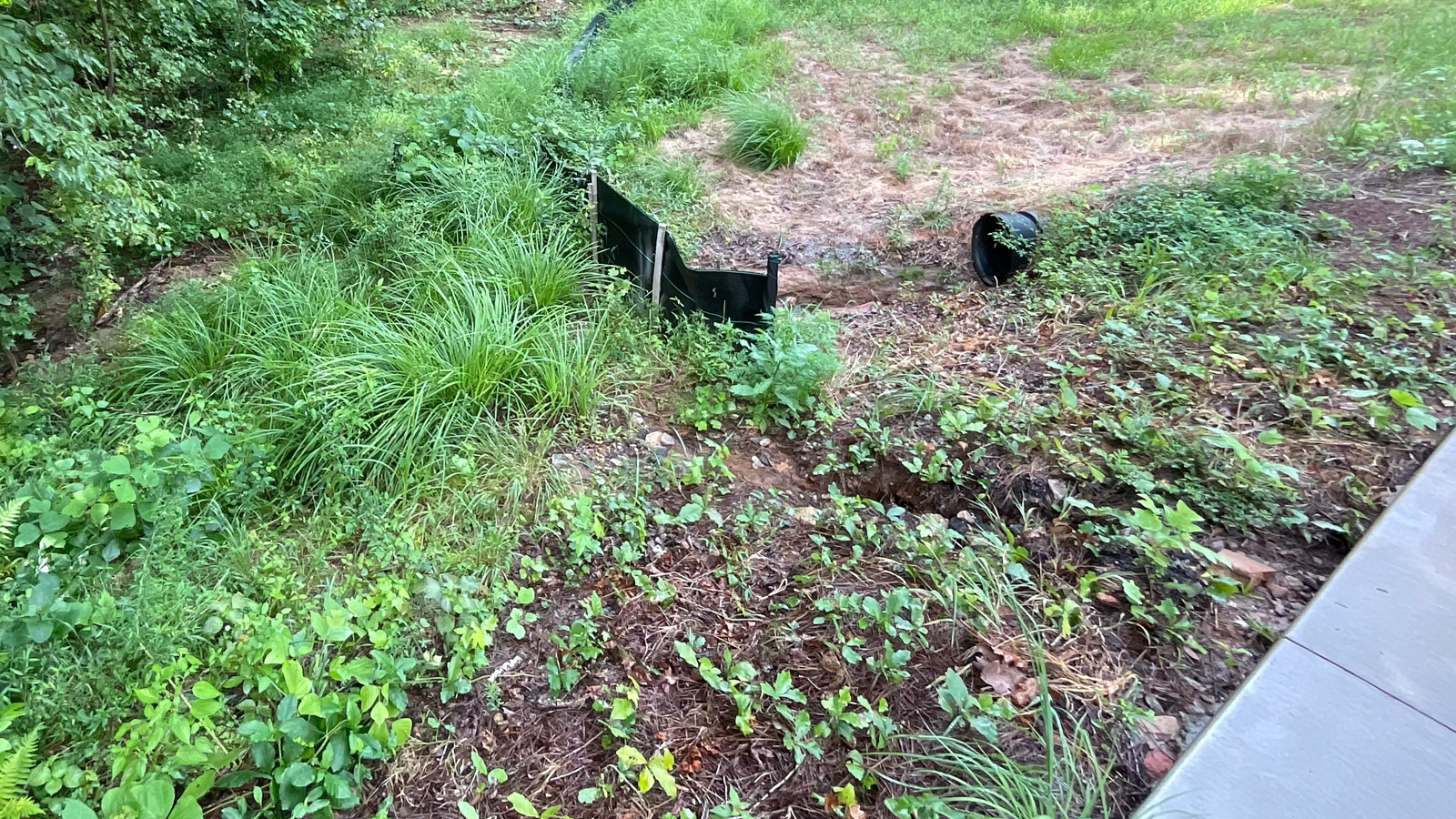
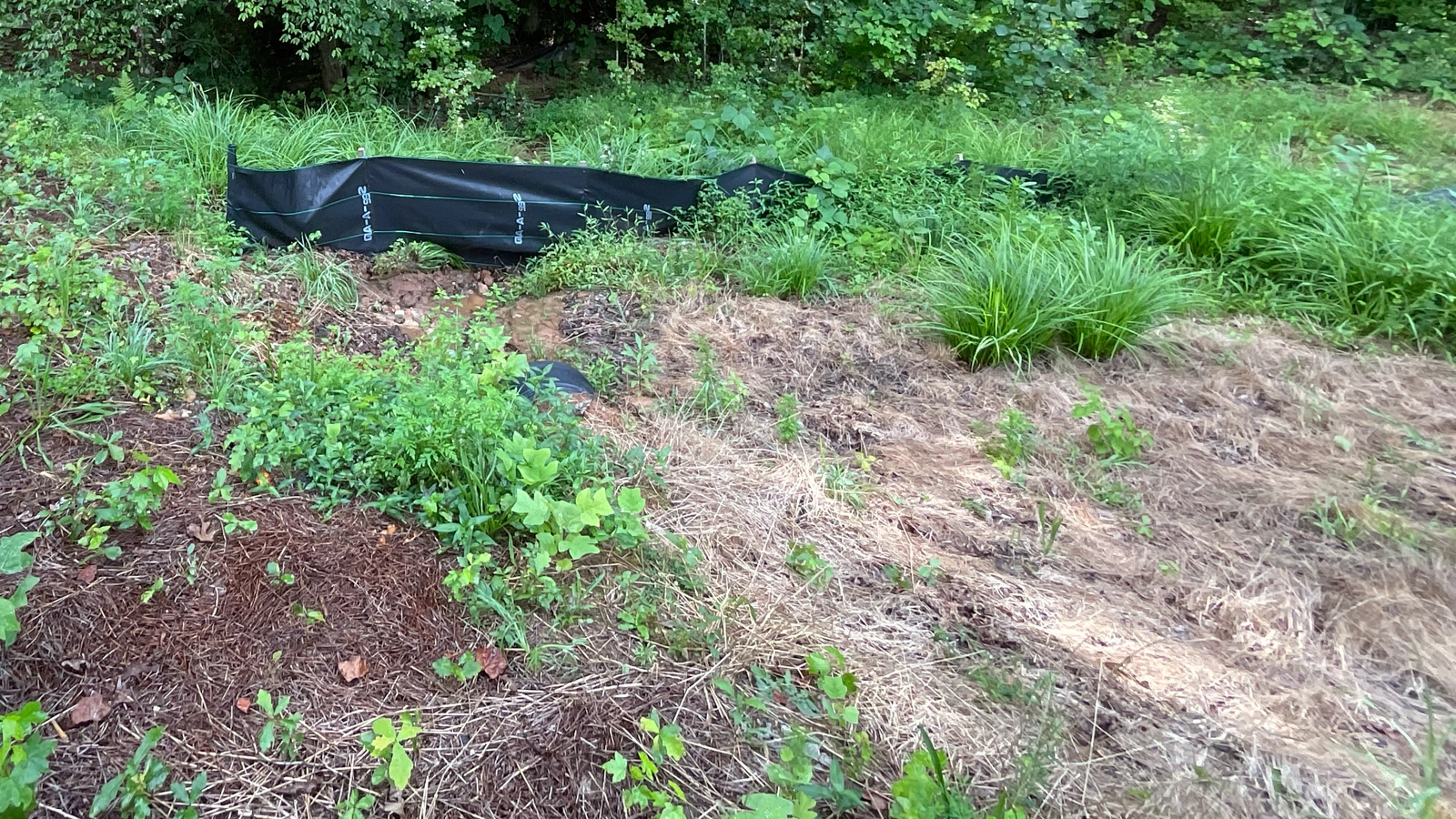
Although the home was relatively new, the property was already experiencing substantial erosion from uncontrolled stormwater runoff.
During heavy rain, water traveled down the driveway and concentrated along the surrounding landscape. Over time, the force and volume of this runoff had washed away soil and begun undermining areas adjacent to the concrete.
Left unaddressed, continued erosion could result in additional soil loss and compromise support around portions of the driveway.
The drainage plan needed to accomplish several things:
- Provide a high-capacity route for stormwater collected near the driveway.
- Extend the existing culvert and properly integrate it into the surrounding grade.
- Repair areas of the hillside already damaged by erosion.
- Control concentrated discharge as water traveled down the slope.
- Stabilize the upper and lower discharge areas with erosion-resistant materials.
- Prepare the drainage system for a future channel drain to be installed by others.
Rather than addressing only the visible erosion, our goal was to create a system that managed how stormwater would move through the property going forward.
Our Solution
18-Inch Culvert Extension
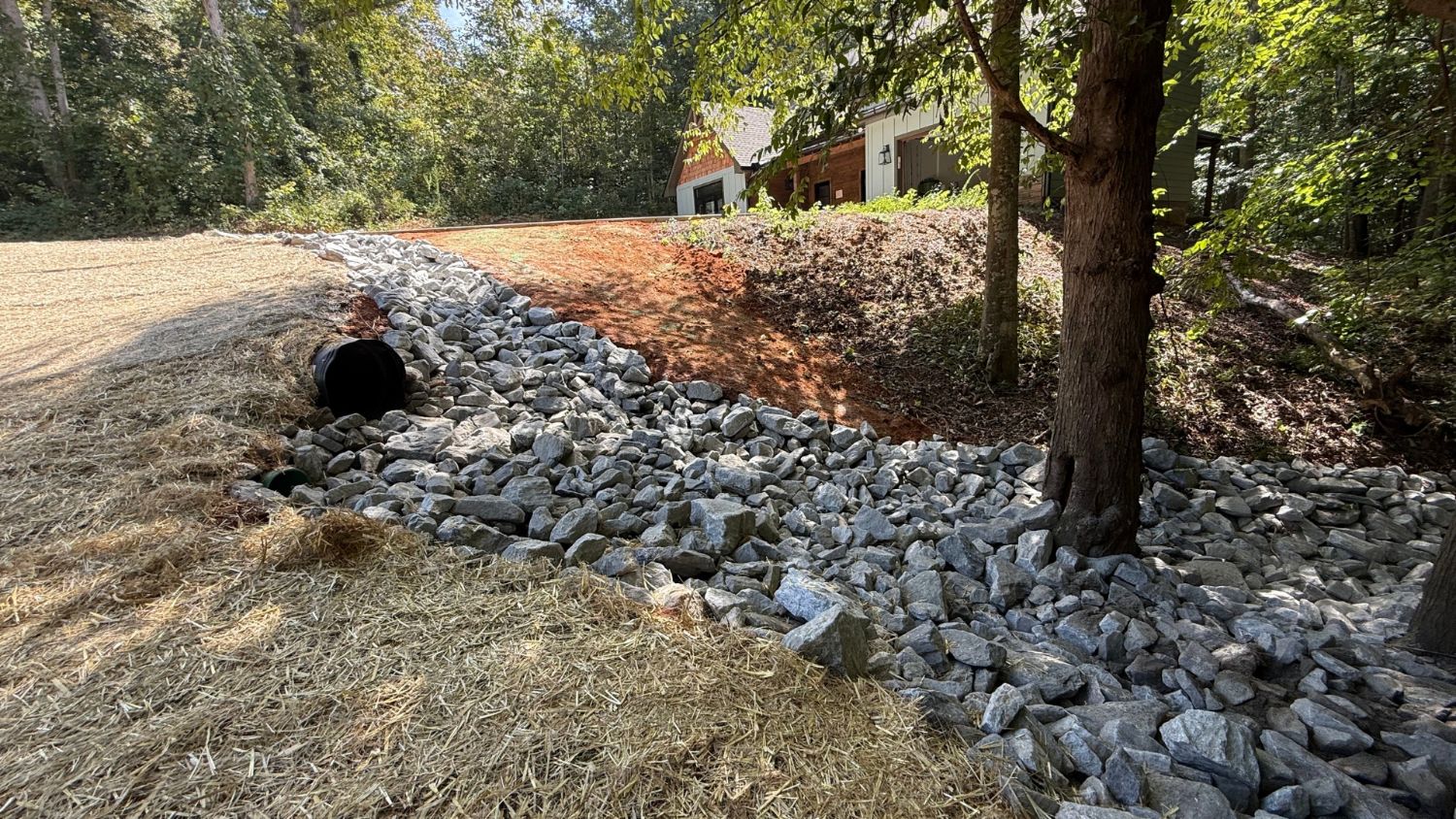
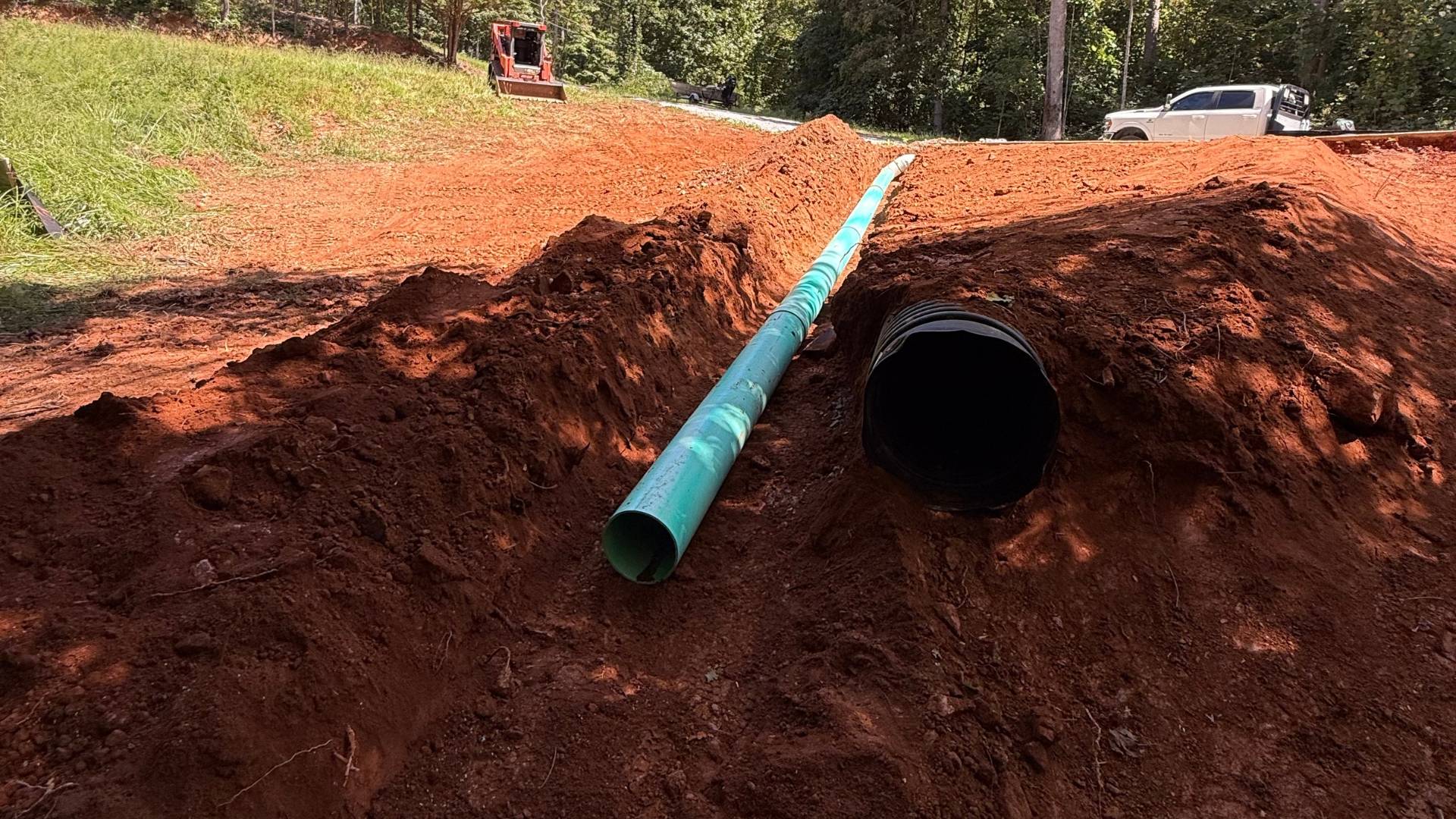
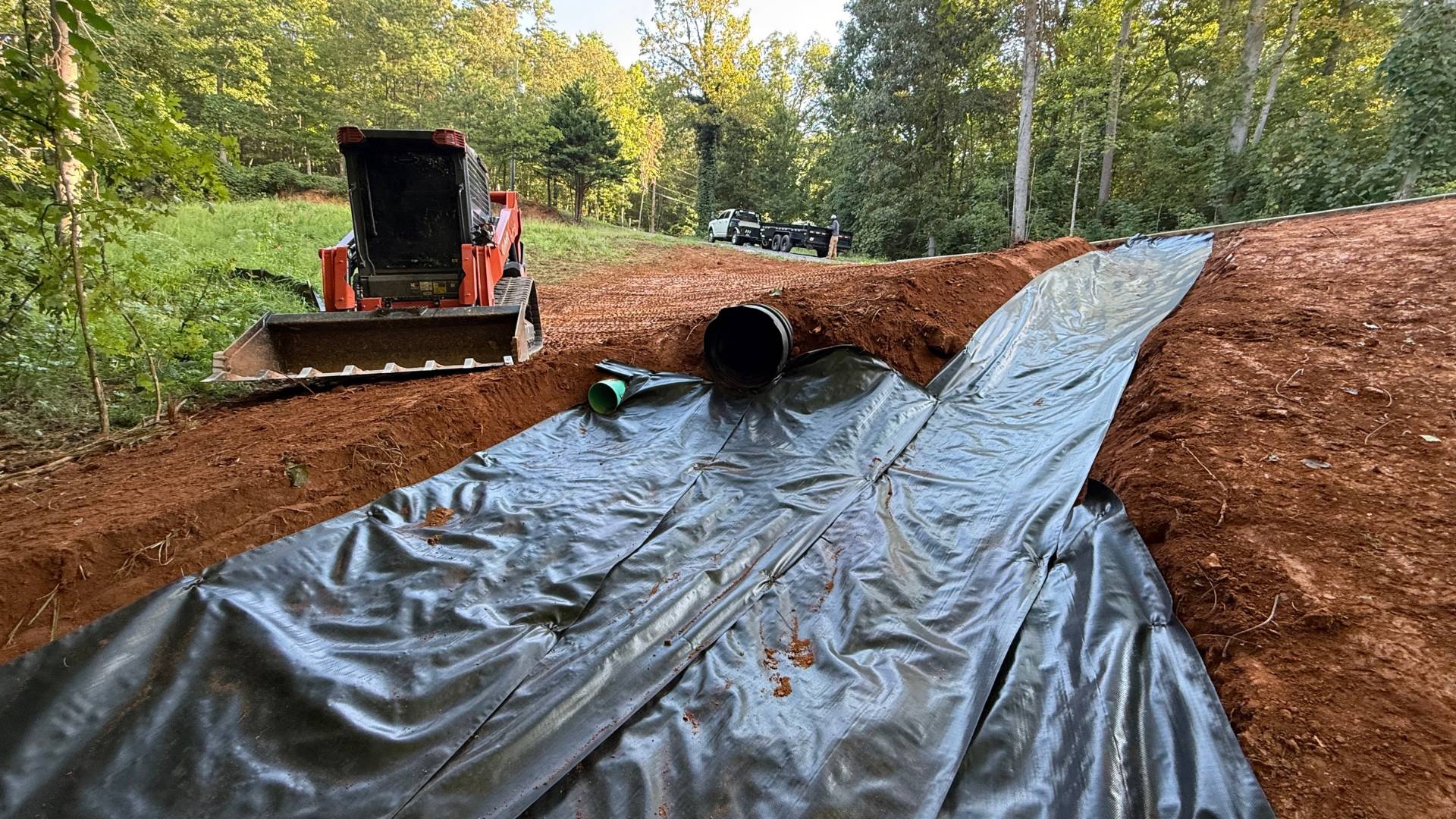
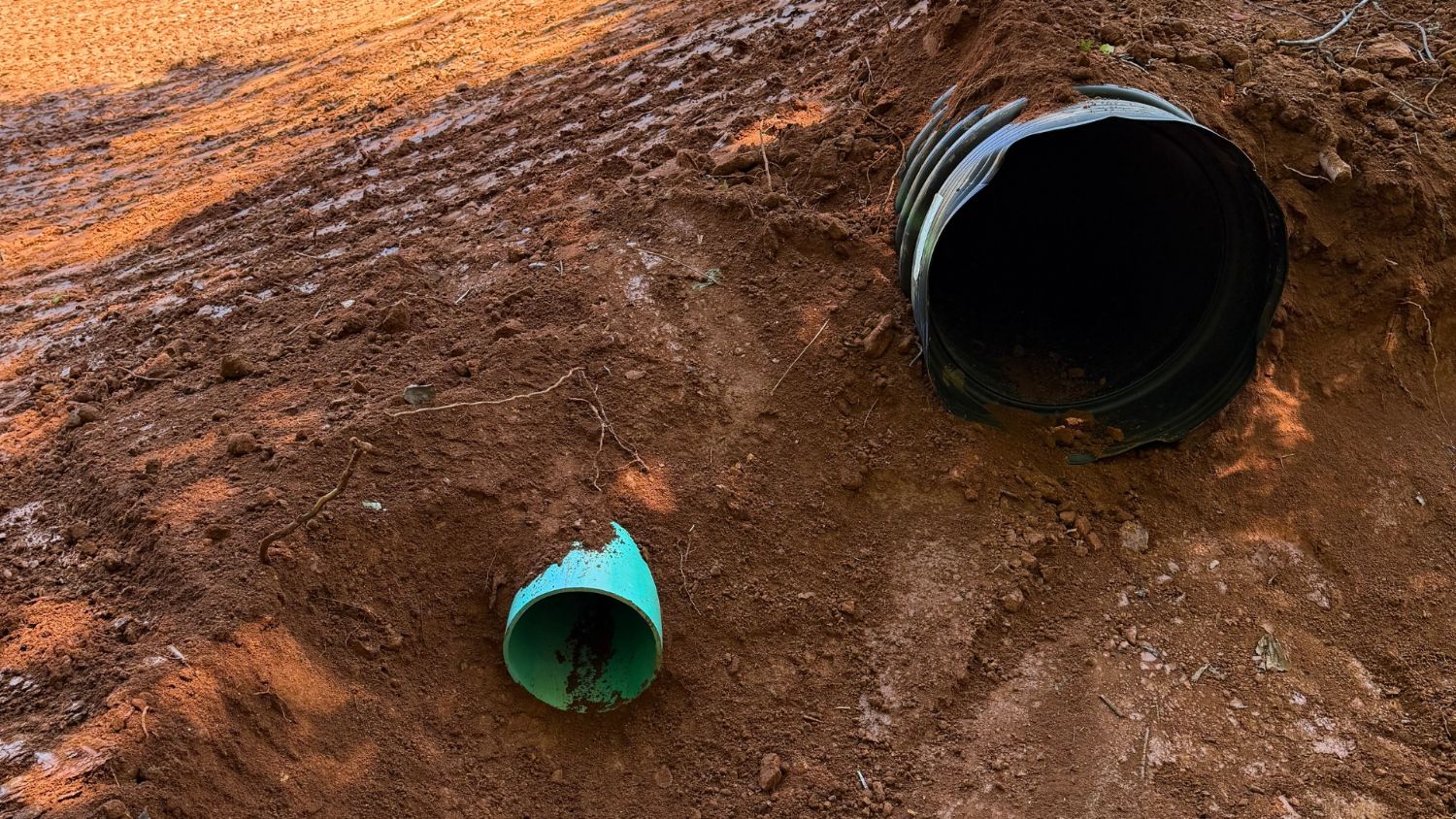
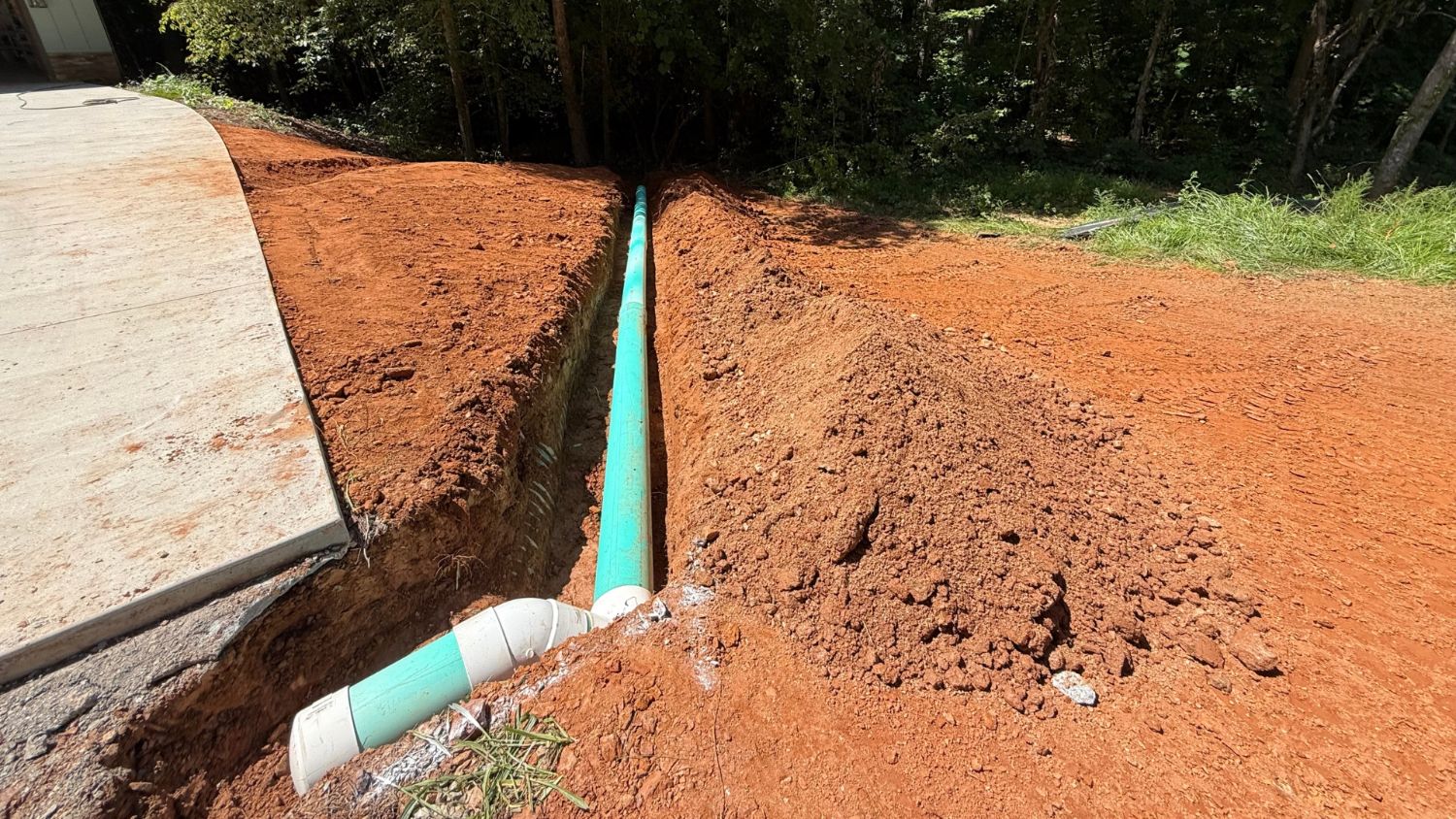
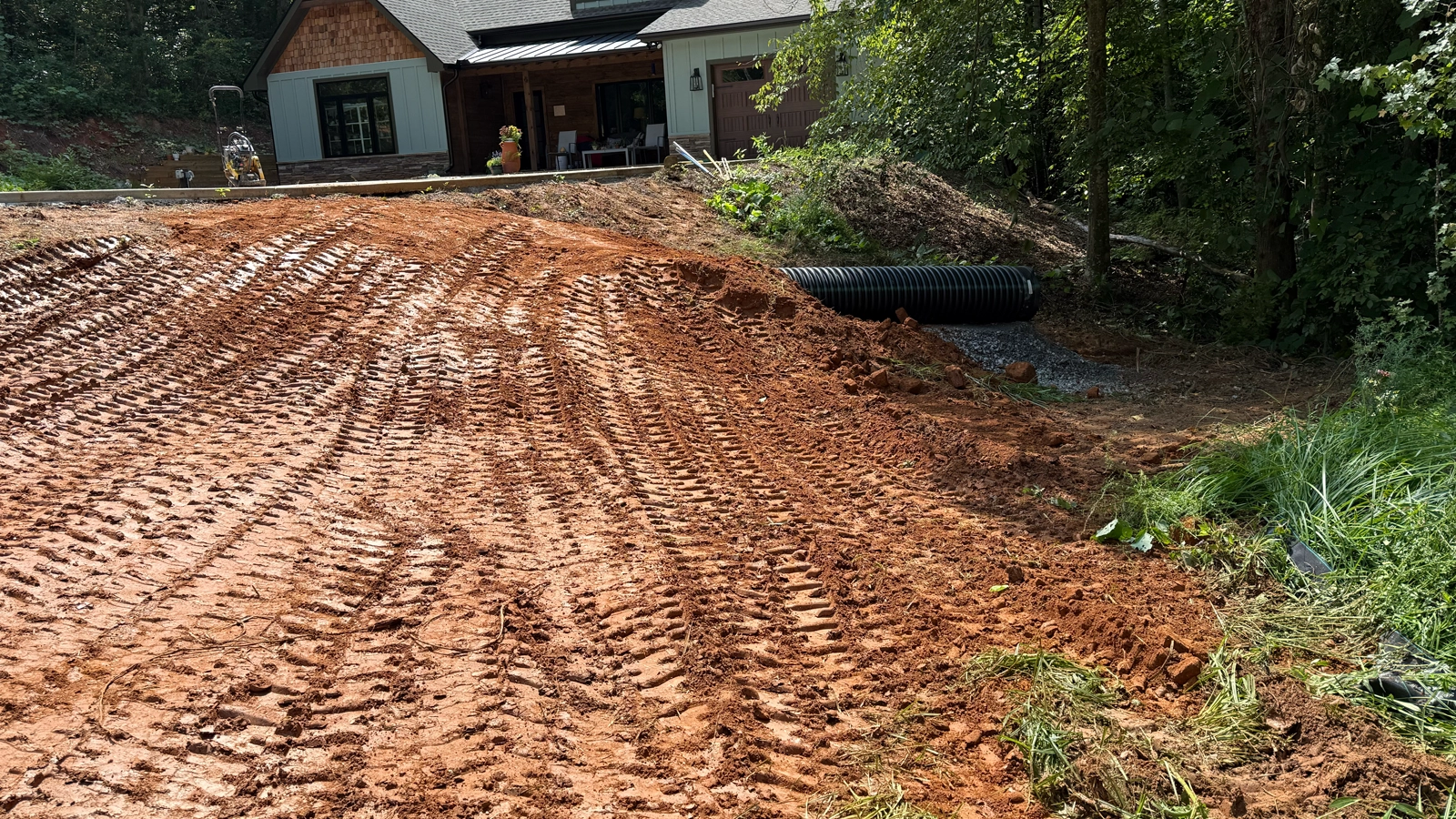
We began by excavating and installing approximately 20 linear feet of 18-inch culvert pipe.
The culvert extension provided a controlled route through the affected area while allowing the surrounding hillside to be rebuilt and properly graded.
Once the drainage components were installed, fill dirt was placed and compacted around the culvert to restore the previously eroded portions of the property.
Underground Drainage for a Future Channel Drain
We installed approximately 50 feet of 8-inch SDR-35 pipe and left it stubbed for a future driveway channel drain. The channel drain itself was outside our scope and was to be installed separately by others.
Hillside Restoration
Years of runoff were not the concern on this newer property, but significant erosion had already occurred in a relatively short period of time.
We used three tandem loads of fill dirt for yard grading, rebuilding the washed-out slope and covering the culvert extension.
The material was spread throughout the affected areas to rebuild the grade, bury and stabilize the new culvert extension, and restore portions of the hillside that had washed away.
Correcting the existing erosion was an important part of the project. Installing drainage without rebuilding the damaged grade would have left the property vulnerable even after the water was redirected.
Upper Dry Creek Bed
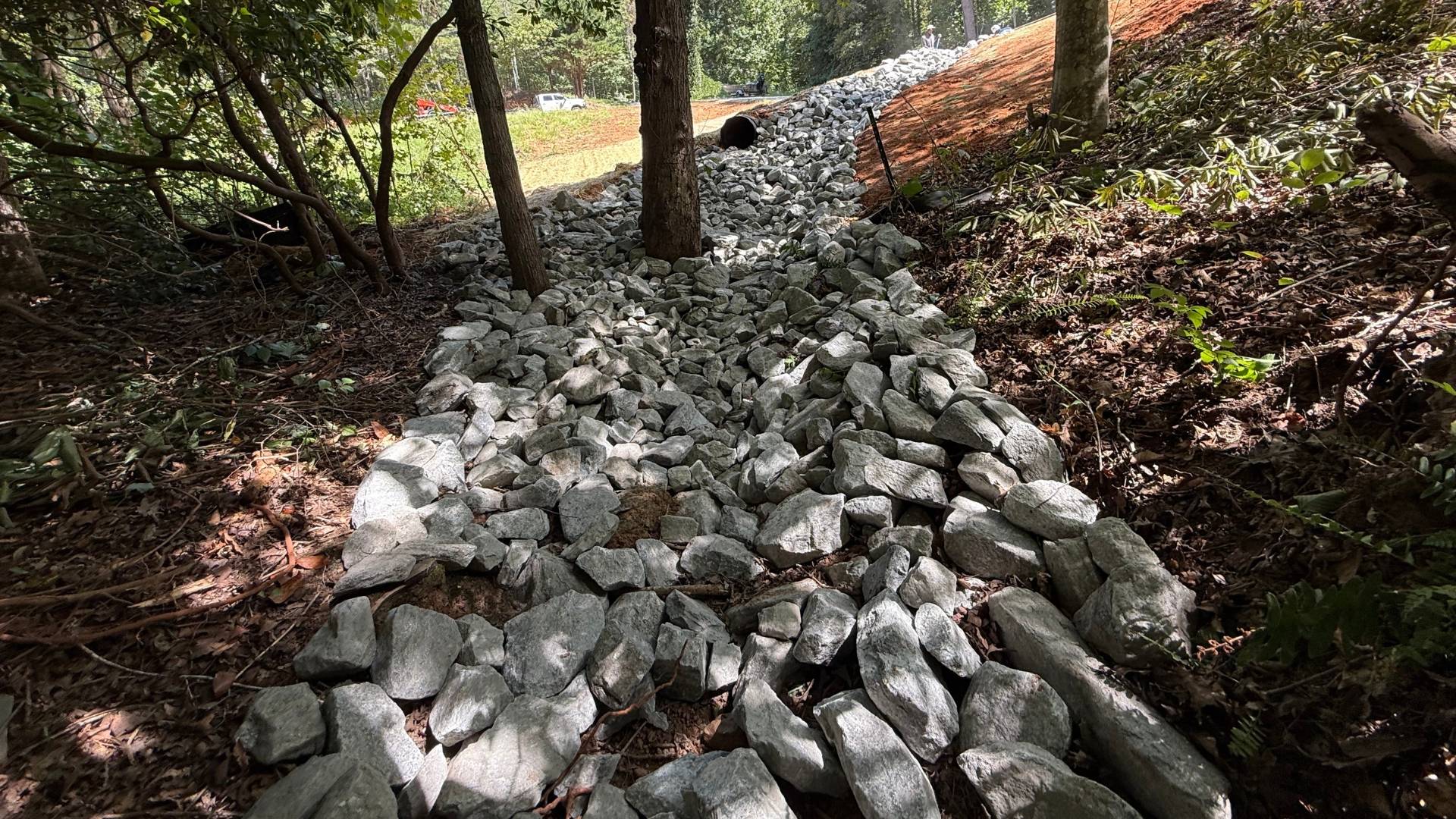
We built a dry creek bed along the upper hillside to give surface runoff a stone-lined path downhill.
The upper creek bed measures approximately 30 feet long by 4 feet wide.
After excavating and shaping the channel, we installed a pinned silt fabric underlayment followed by heavy rip rap. This creates a durable surface capable of handling concentrated stormwater without allowing it to continue washing away the underlying soil.
Lower Rip Rap Discharge Area
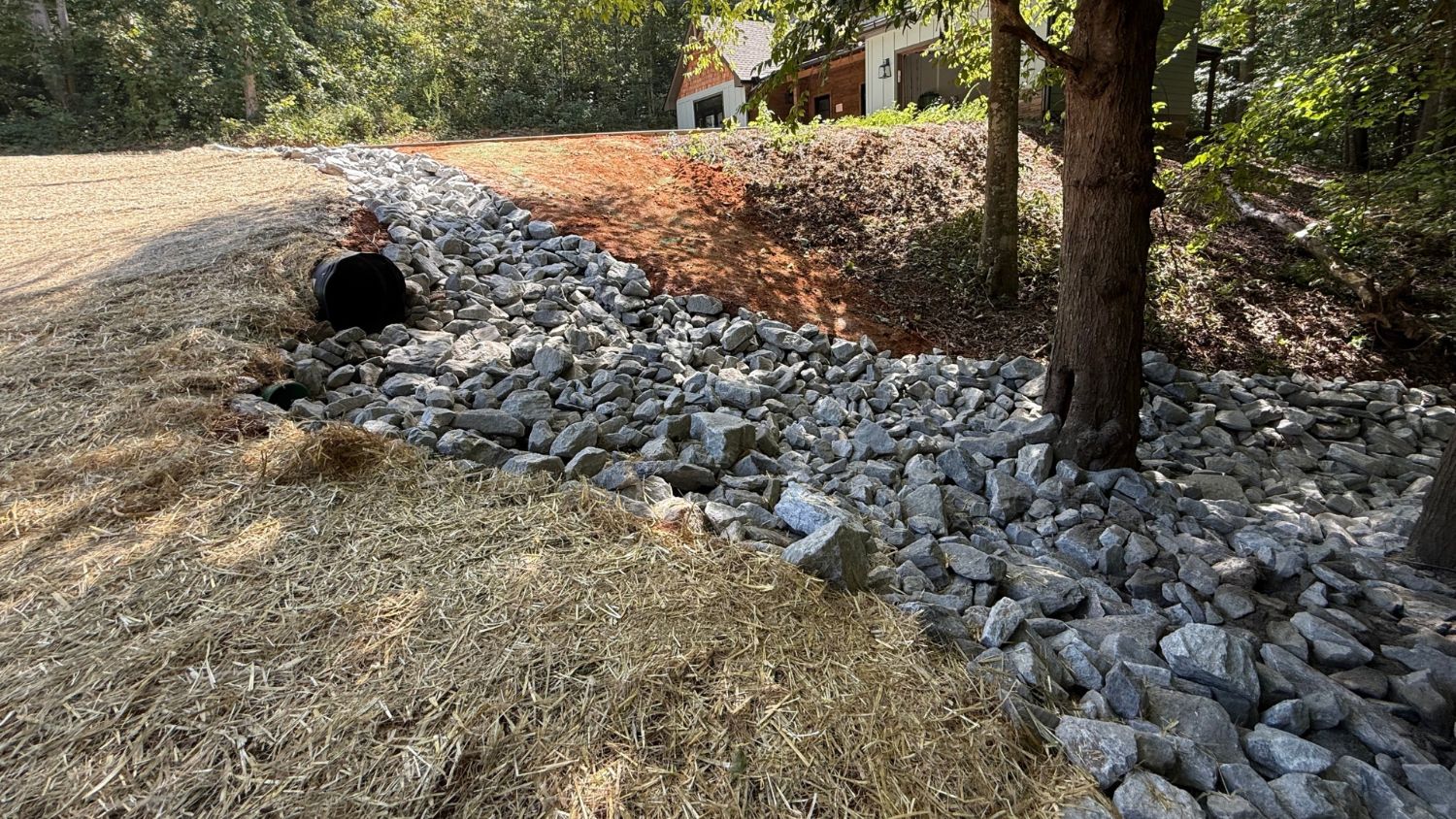
A second, larger dry creek section was constructed at the lower pipe discharge.
This area measures approximately 20 feet long by 6 feet wide and provides additional stabilization where concentrated water exits the drainage system.
Discharging a large underground drainage pipe directly onto an unprotected hillside can simply relocate an erosion problem. The wider rip rap channel helps protect the soil at the discharge point and provides a reinforced path for water as it continues through the property.
Approximately six tons of rip rap were used between the two erosion-control areas.
Landscape Restoration
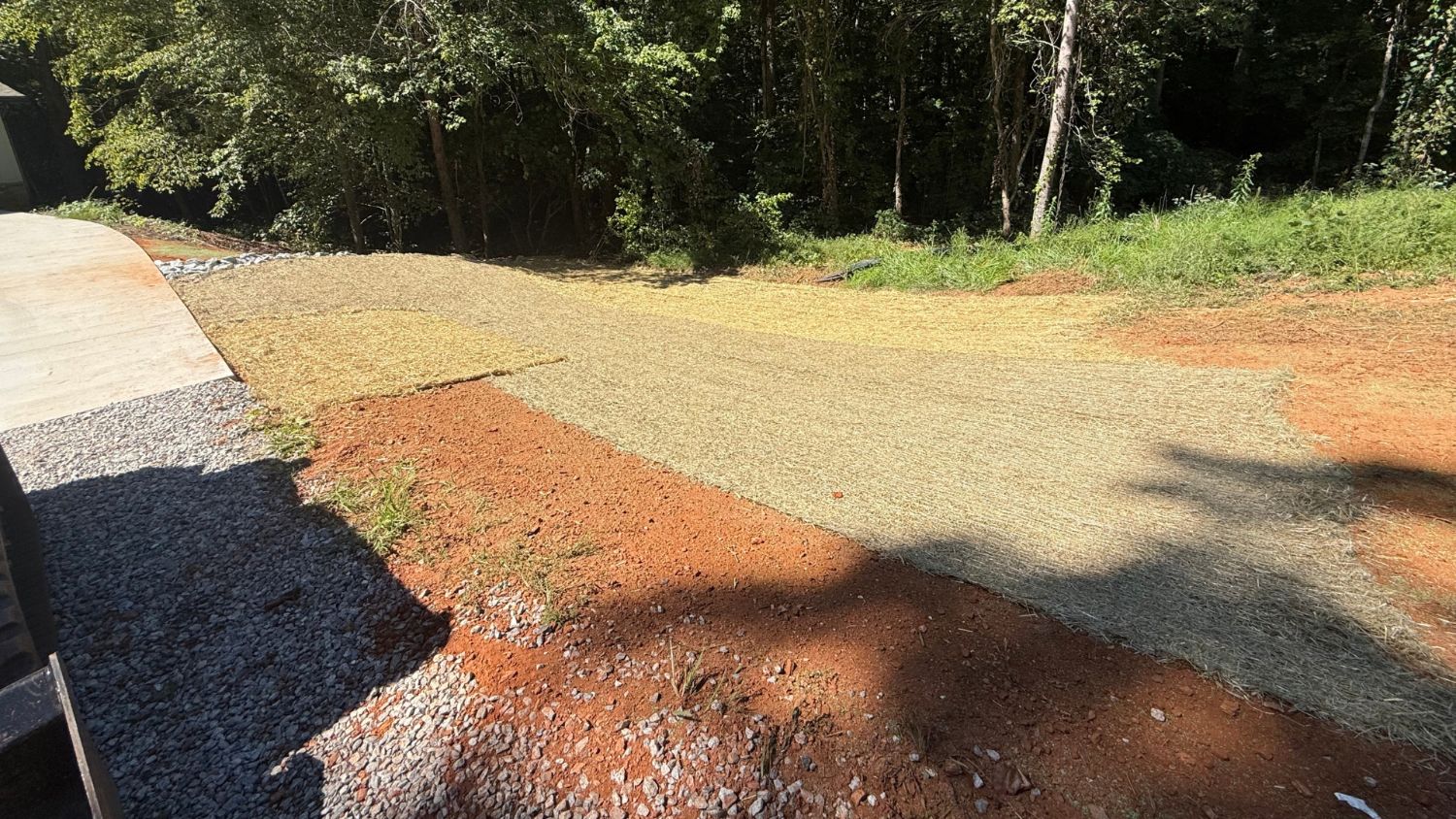
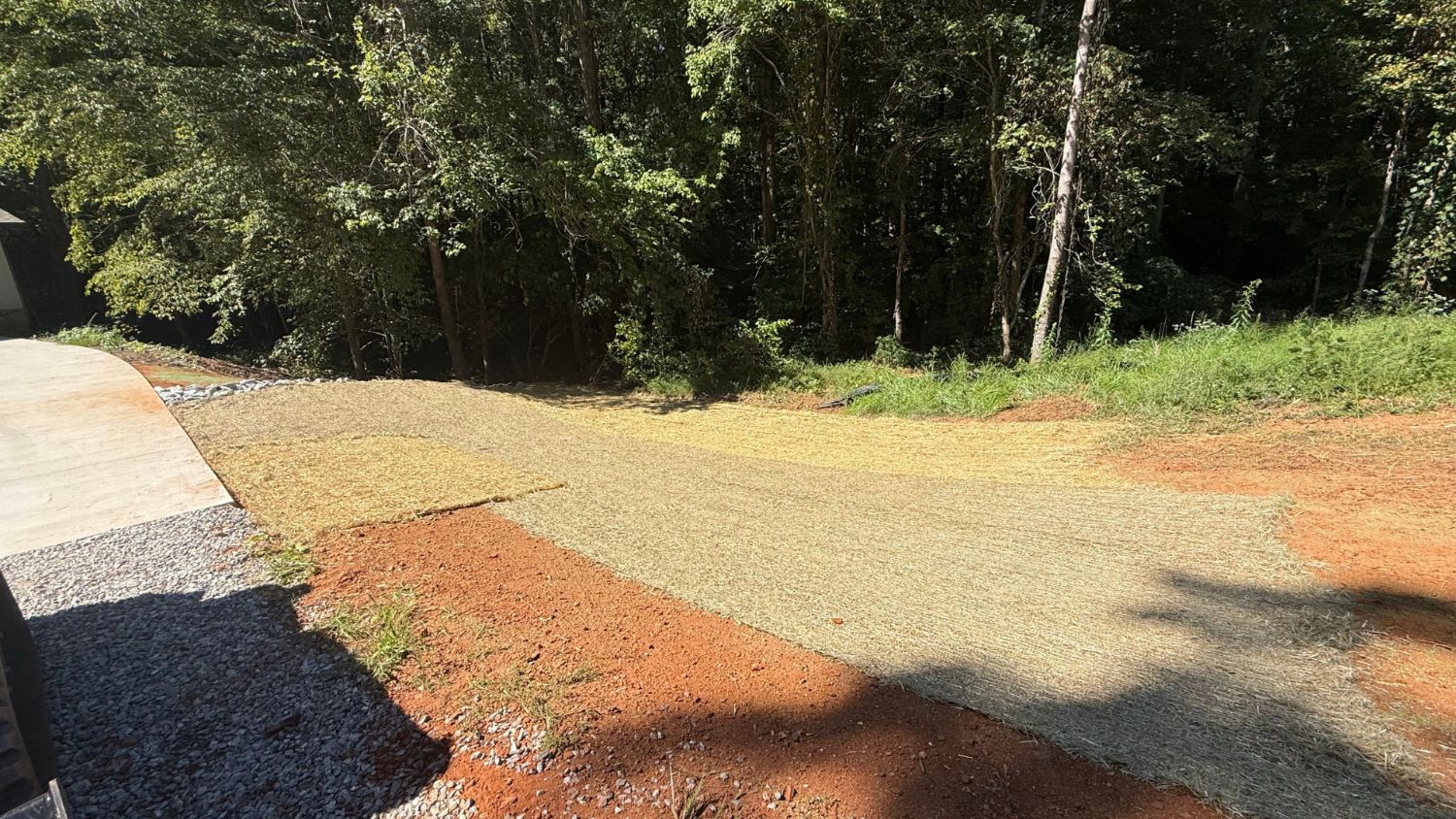
Once the drainage system, culvert extension, and erosion-control measures were complete, the disturbed portions of the hillside were prepared for restoration.
Grass seed and straw were spread throughout the work area to help establish vegetation and protect exposed soil while the landscape recovers.
The finished project combines underground stormwater conveyance with above-ground erosion protection rather than relying on either method alone.
The Results
The extended culvert and stone-lined channels give stormwater a defined route down the hillside. The upper dry creek bed, approximately 30 feet long by 4 feet wide, provides a reinforced path for surface runoff. At the pipe outlet, a second rip rap section, approximately 20 feet long by 6 feet wide, protects the soil where concentrated water is discharged.
We used three tandem loads of fill dirt to rebuild the washed-out slope and cover the culvert extension. Seed and straw were spread over the disturbed areas to protect exposed soil while grass establishes.
Customer Experience
This project also continued an existing relationship with the homeowner's extended family, who had previously used Schmitt Waterproofing for another project.
Following completion, the homeowner shared:
“This is the second time our extended family has used Schmitt Waterproofing Services, both with exceptional results. Josh will come to your home, gather information, analyze the problem and communicate a clear plan to resolve it. He goes above and beyond to satisfy his customers. We highly recommend this company.”
Need Driveway or Yard Drainage in Dawsonville, GA?
If runoff is washing soil away along your driveway or cutting channels into your hillside, we can help you trace where it’s concentrating and plan a route to a suitable discharge area. Learn more about our Dawsonville yard drainage services.