
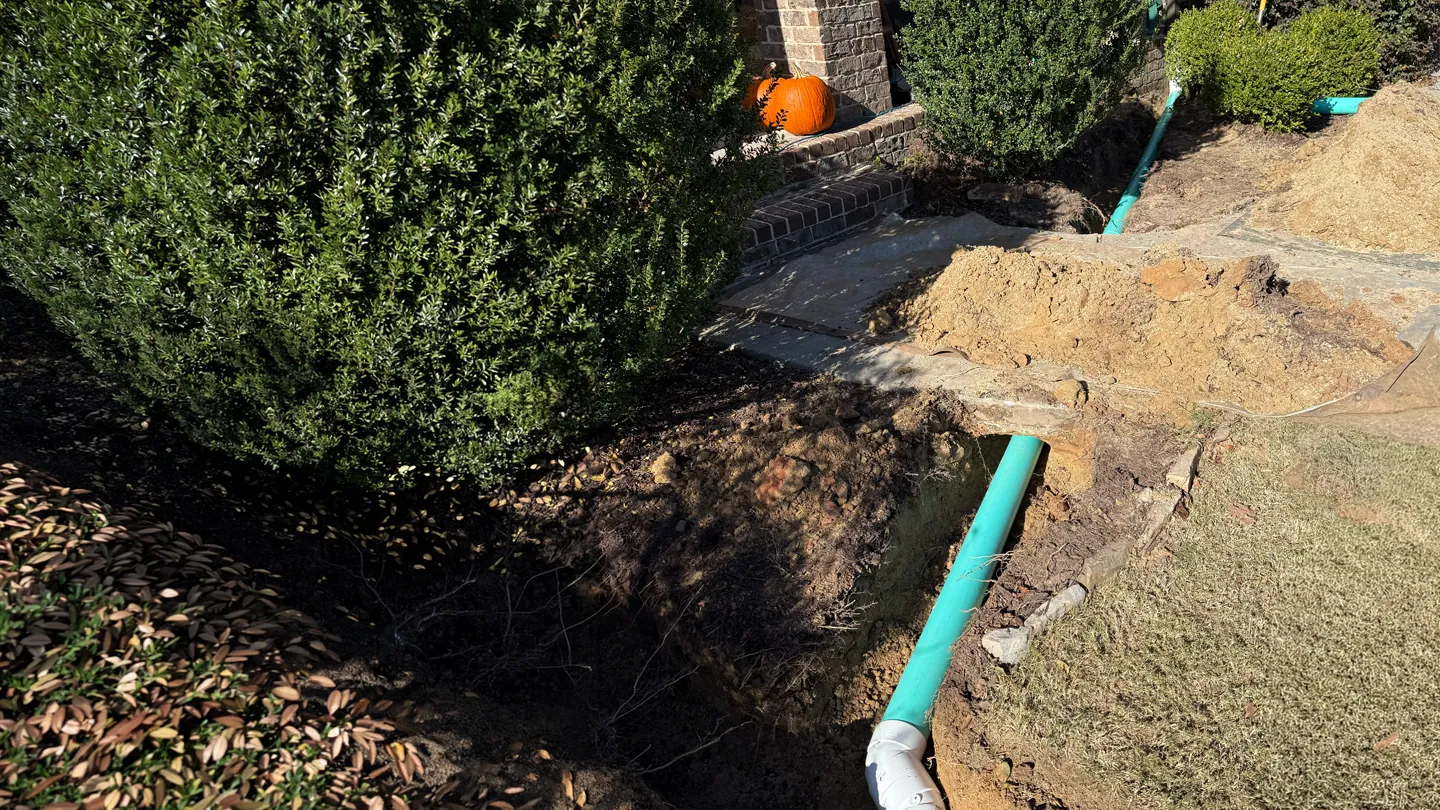
If you’re dealing with standing water in your yard, overflowing downspouts, erosion, or water collecting near your home’s foundation, you’ve probably wondered: How much does a professional yard drainage system cost?
The answer depends on much more than the length of pipe being installed.
In North Georgia, professional yard drainage projects can start around $5,000 for smaller, straightforward installations, while more extensive drainage systems commonly range from $7,500 to $15,000 or more. Larger projects involving extensive underground piping, grading, retaining walls, or decorative drainage features can exceed $20,000.
At Schmitt Waterproofing, we believe homeowners should understand what goes into a professional drainage estimate and why two contractors may recommend very different solutions for the same property.
Why Do Yard Drainage Costs Vary So Much?
Every property is different. The slope of the yard, soil conditions, roof size, amount of runoff, underground obstacles, and desired finished appearance all affect the design and installation cost.
A drainage system along one side of a home may be relatively straightforward. A property requiring multiple downspout connections, catch basins, extensive trenching, and a properly designed discharge location is a much larger undertaking.
The goal isn’t simply to move water. It’s to install a system designed to manage the expected volume of water and direct it safely away from the areas you’re trying to protect.
Let’s look at some of the factors that influence pricing.
1. Drainage Pipe Materials: Not All Pipes Are Created Equal
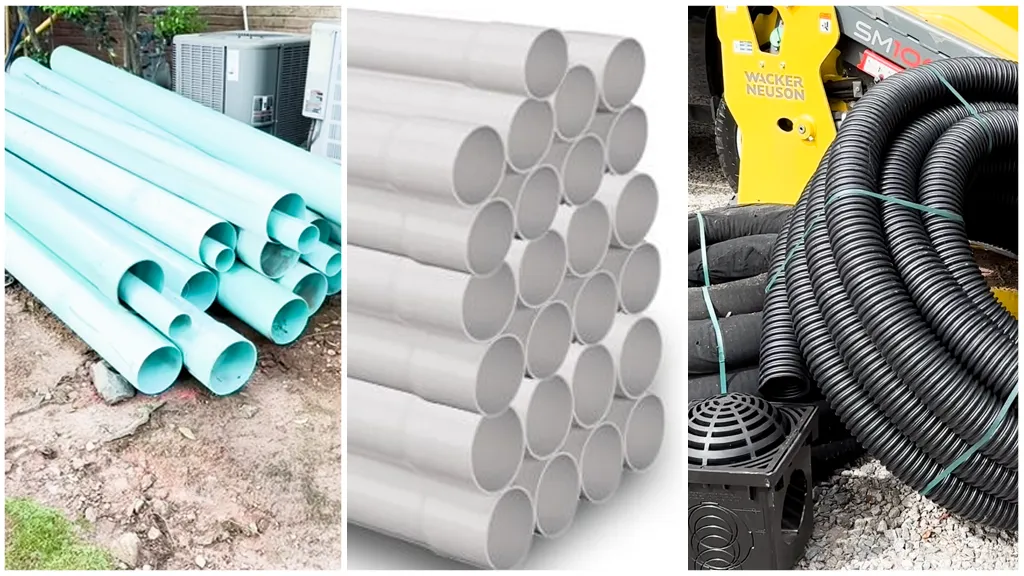
One of the biggest differences between drainage estimates is the type of pipe being installed. There are several drainage pipe options available, and they are not all equal in strength, durability, size,or intended application.
SDR-35 PVC Pipe
At Schmitt Waterproofing, we primarily use SDR-35 PVC pipe for our underground yard drainage systems.
SDR-35 is a rigid, smooth-interior pipe commonly used for underground gravity drainage applications. Its smooth interior helps water and debris move through the system, while its rigid construction provides dependable performance when properly installed and backfilled.
We prefer SDR-35 for many of our installations because we’re focused on building drainage systems intended to perform for years to come.
Schedule 20 and Other Thin-Wall Drainage Pipes
Some contractors use lighter-duty, thin-wall PVC drainage pipes, often referred to as Schedule 20.
These products can cost less than SDR-35, but their wall thickness, stiffness, and suitability for different burial conditions can vary.
Homeowners should ask what type of pipe is included in their estimate and why that material was selected.
Corrugated Drainage Pipe
Flexible corrugated pipe is another common option, particularly in lower-cost drainage installations.
Although corrugated pipe has appropriate uses, its ribbed interior can create more resistance to water flow and may allow debris to accumulate more readily than smooth-wall pipe.
Not all corrugated products are the same. Some are manufactured with smooth interiors and are engineered for demanding underground applications.
The important thing is understanding exactly which product is being installed rather than assuming all underground drainage pipes perform the same way.

2. Proper Drainage Design and Water Flow Calculations
One of the most important parts of a professional drainage installation happens before excavation begins.
A drainage system must be designed to handle the amount of water it is expected to receive.
Consider a home with multiple roof sections draining into several downspouts. During a heavy North Georgia rainstorm, thousands of gallons of water can flow from the roof into the underground drainage system.
A contractor needs to consider:
-
The square footage of roof area contributing water to each downspout.
-
The expected rainfall intensity and volume of runoff.
-
The number and size of downspouts connected to the system.
-
Additional surface water entering through catch basins.
-
The size and carrying capacity of the drainage pipe.
-
The available slope, or fall, between the collection points and discharge location.
For example, just one inch of rain falling on a 2,000-square-foot roof produces approximately 1,250 gallons of water before accounting for losses.
When several downspouts and surface drains are connected to the same underground pipe, properly sizing that system becomes especially important.
Why Proper Fall Matters
Water in a gravity drainage system relies on slope to move toward its discharge point.
Too little fall can result in slow-moving water, standing water inside the pipe, and an increased likelihood of sediment accumulation.
Improperly planned elevations can also create low spots or sections where water cannot drain effectively.
At Schmitt Waterproofing, we evaluate the property’s elevations and drainage conditions to determine an appropriate pipe layout, slope, and discharge location.
Simply installing a large pipe doesn’t automatically mean a drainage system will work correctly.
3. Catch Basins, Downspout Connections, and Fittings
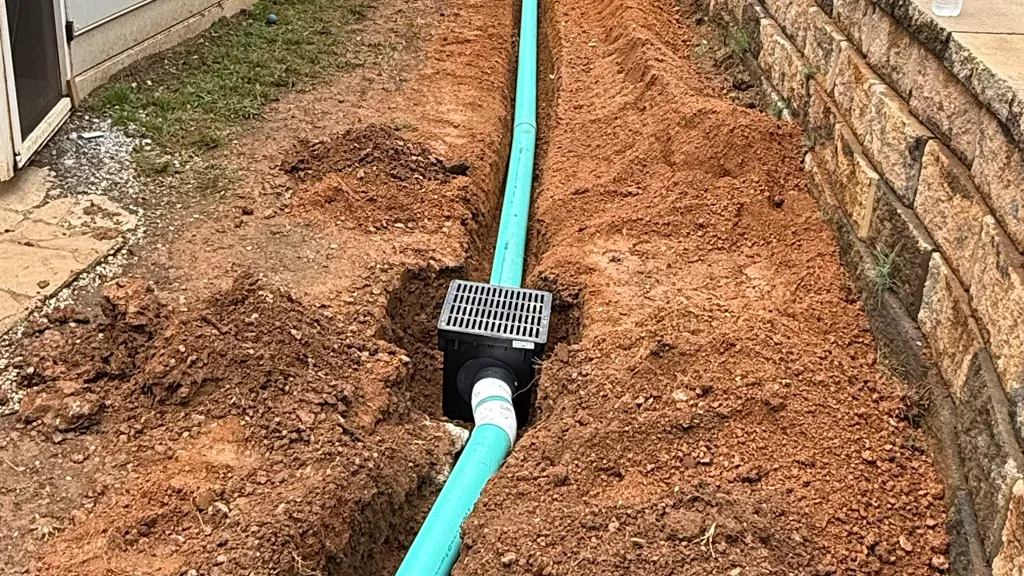
Another factor that can significantly affect cost is the number and type of drainage components needed.
A system collecting water from two downspouts is very different from one collecting water from eight downspouts and multiple low areas throughout the yard.
Depending on the property, components may include:
-
9-inch, 12-inch, or larger catch basins.
-
Underground downspout adapters and connections.
-
Cleanout access points.
-
PVC elbows, wyes, tees, and other fittings.
-
Pop-up emitters or other appropriate discharge outlets.
-
Channel drains for driveways, walkways, or hardscape areas.
These components add material and installation costs, but they also serve important purposes.
For example, including accessible cleanouts at downspout connections can make future maintenance easier without requiring the drainage system to be excavated.
The layout, number of connections, and overall complexity all influence the final estimate.
4. Excavation, Equipment, Labor, and Fuel
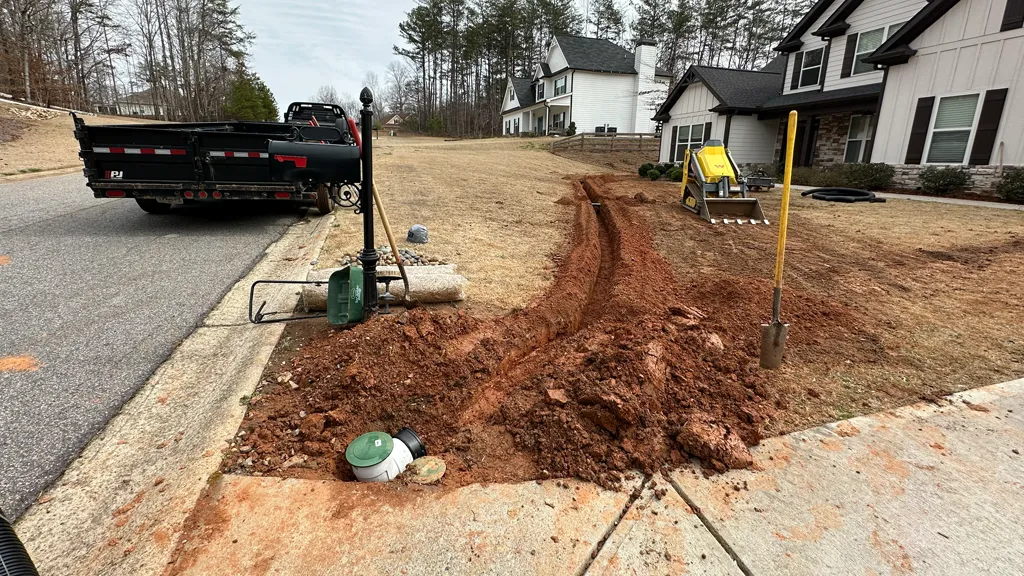
Installing an underground drainage system involves considerably more than digging a trench and placing pipe in the ground.
Professional installations require experienced labor, excavation equipment, transportation, fuel, and careful attention to the surrounding property.
North Georgia’s clay-heavy soil, rocks, tree roots, and changing elevations can make excavation particularly challenging.
A project may require compact excavation equipment, specialized trenching equipment, hand digging around utilities, or additional labor to work in areas with limited access.
Some properties allow equipment to move easily throughout the yard. Others have narrow gates, steep hillsides, established landscaping, or obstacles that require much of the work to be completed by hand.
These conditions affect both the amount of time required and the overall project cost.
The experience of the crew matters, too. Proper pipe installation, connections, bedding, backfilling, and attention to grade can make a substantial difference in how a drainage system performs over time.
At Schmitt Waterproofing, owner Josh Schmitt is personally involved in evaluating projects and overseeing installations. We believe having experienced leadership on-site helps ensure the system is installed according to the intended design.
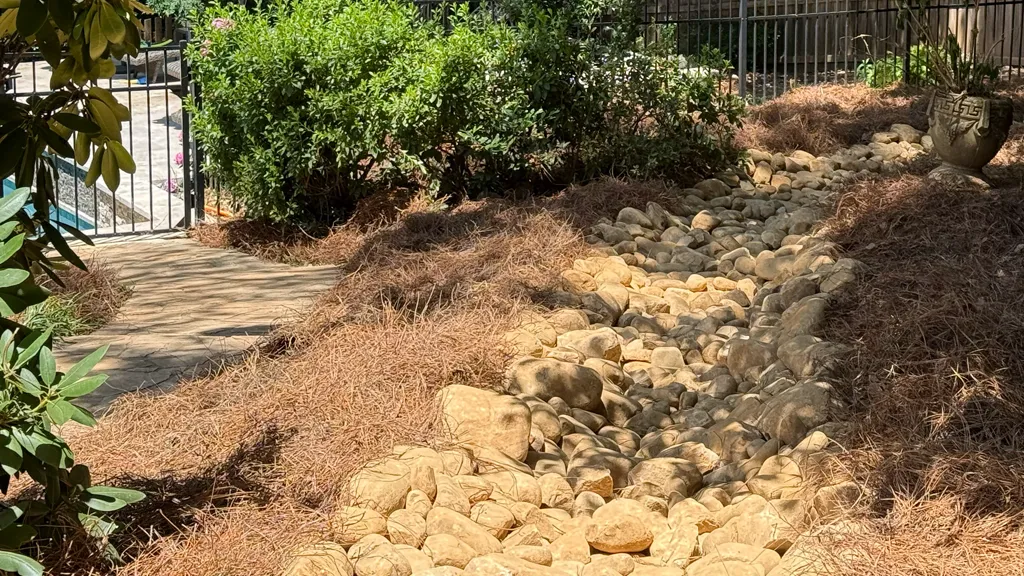
5. Drainage Stone, River Rock, and Decorative Materials
Not every drainage project involves simply burying PVC pipe and replacing the soil.
Some properties benefit from French drains, dry creek beds, river rock, riprap, or other stone features designed to collect, direct, or help control surface runoff.
The type of stone selected can affect the overall price considerably.
For example, clean washed drainage stone used around perforated piping serves a different purpose than decorative river rock used in a dry creek bed.
Decorative stone also comes in different sizes, colors, and grades, each with its own material and delivery costs.
Larger rock may be needed in areas with stronger water flow to help reduce erosion, while smaller decorative stone may be appropriate for certain landscaped areas.
A properly constructed dry creek bed may also require excavation, grading, landscape fabric or other separation materials, and careful placement of stone.
These features can improve both the function and appearance of a drainage project, but they add materials and labor beyond a basic underground piping system.
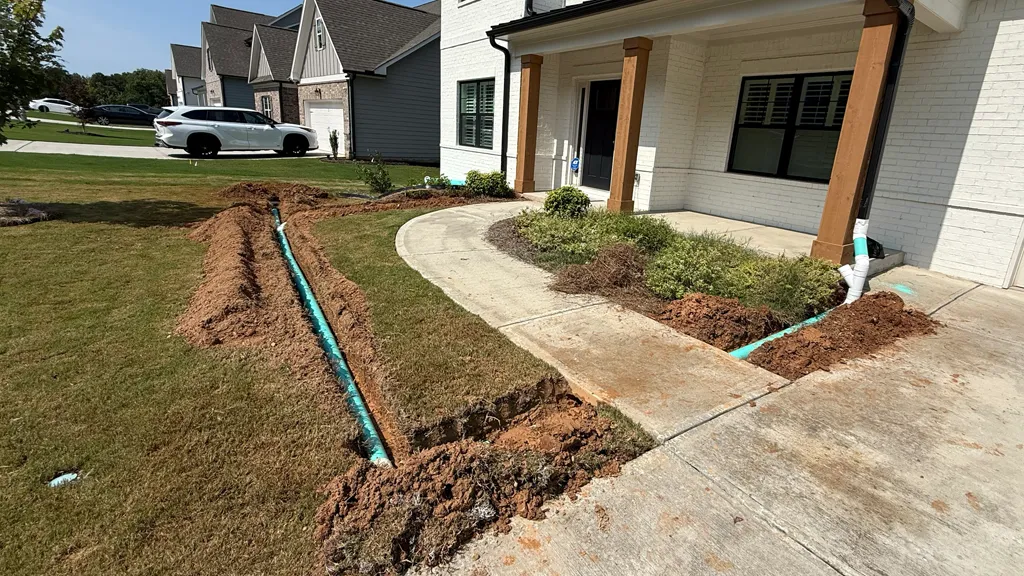
6. Sidewalks, Walkways, Driveways, and Other Obstacles
Existing hardscapes can also affect drainage installation costs.
If a drainage line must cross beneath a sidewalk, walkway, or driveway, the contractor must determine the appropriate installation method.
Depending on site conditions, this could involve tunneling beneath a walkway, removing and replacing a section of concrete, or rerouting the drainage system.
Each approach involves different labor, equipment, and restoration requirements.
Other obstacles, including irrigation lines, utility lines, fences, tree roots, and retaining walls, may also affect the installation process.
These are important considerations when comparing estimates because one proposal may include the necessary restoration work while another may not.
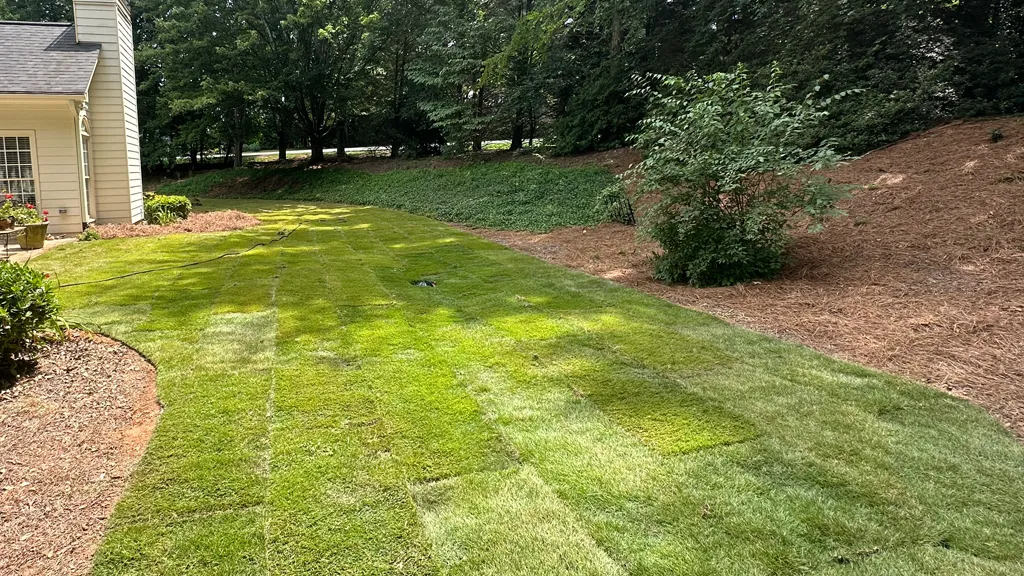
7. Grass Removal, Sod Replacement, and Final Yard Restoration
One of the most overlooked parts of a drainage estimate is what the property will look like when the installation is finished.
Excavating trenches inevitably disturbs portions of the yard.
Depending on the project and existing lawn conditions, restoration options may include:
-
Removing and reinstalling existing sod where feasible.
-
Backfilling and grading disturbed areas.
-
Applying grass seed and straw.
-
Installing new sod at an additional cost.
-
Adding decorative stone or other landscape finishes.
Removing existing sod with a sod cutter and reinstalling it can help preserve portions of the lawn, but successful reestablishment depends on the condition of the grass, weather, watering, and other factors.
New sod adds material and labor costs but may provide a more immediate finished appearance.
Before accepting a drainage estimate, homeowners should understand exactly what restoration work is included and what the finished area is expected to look like.
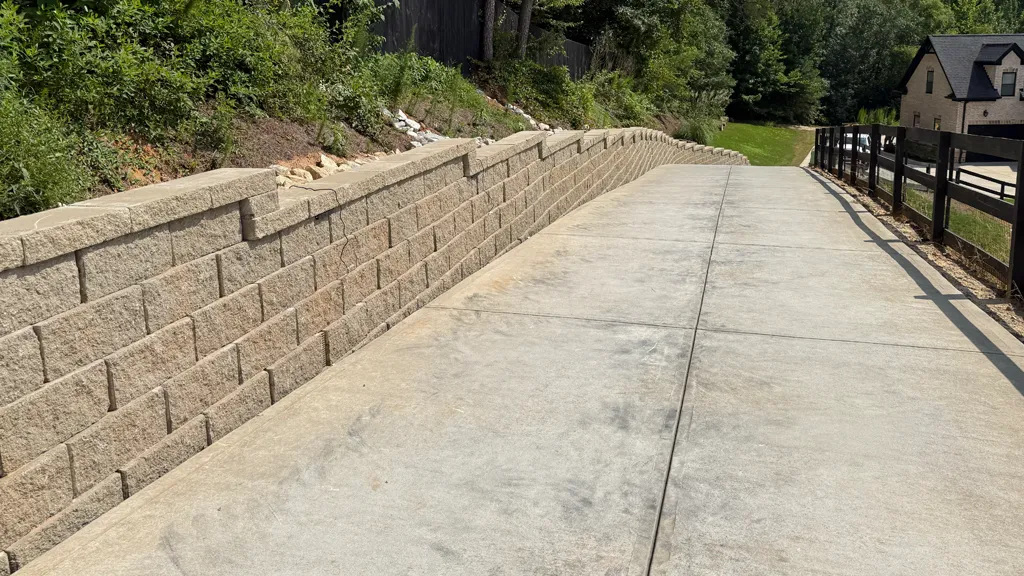
8. Retaining Walls, Grading, and Additional Drainage Features
Sometimes, underground drainage piping alone isn’t enough to address the property’s water problems.
A yard with significant elevation changes may require additional grading to direct surface water toward the collection system.
Other properties may benefit from retaining walls, swales, dry creek beds, or stone-lined drainage channels.
For example, a homeowner experiencing erosion along a steep side yard may need a combination of underground drainage and surface-water management.
A retaining wall or decorative stone pathway may also be incorporated into the overall project to help create a more functional landscape.
These improvements can significantly increase the scope and cost of a project, but they may be important to achieving the homeowner’s goals.
What Does Professional Yard Drainage Cost in North Georgia?
At Schmitt Waterproofing, our professional yard drainage installations typically start around $5,000, with pricing increasing based on the size, complexity, and specific needs of the property.
Smaller projects may involve installing an underground drainage system along one side of a home, connecting a few downspouts, and directing collected water to an appropriate discharge location.
More extensive installations involving multiple downspouts, catch basins, longer pipe runs, and additional grading commonly range from $7,500 to $15,000 or more.
Larger properties or projects requiring extensive excavation, erosion control, dry creek beds, retaining walls, or other landscape improvements can exceed $20,000–$30,000.
| Project Type | Typical Investment |
|---|---|
| Smaller, straightforward drainage projects | Starting around $5,000 |
| Moderate to extensive residential drainage systems | $7,500–$15,000+ |
| Large-scale drainage and erosion control projects | $15,000–$30,000+ |
These ranges are intended to help homeowners understand potential costs before scheduling an estimate. Every property is different, and the final price depends on the materials, design, accessibility, installation requirements, and desired finished appearance.
Our goal is to recommend a drainage solution appropriate for your property rather than a one-size-fits-all system.
Why the Cheapest Drainage Estimate Isn’t Always the Best Value
When comparing drainage estimates, it’s important to look beyond the total price.
A lower estimate may reflect a smaller scope of work, different materials, fewer drainage connections, less excavation, or limited yard restoration.
That doesn’t automatically mean the lower-priced contractor is doing something wrong. However, it does mean homeowners should understand exactly what they’re purchasing.
Ask what type of pipe will be installed, how the system will be sized, where the water will discharge, what restoration is included, and whether the contractor provides a workmanship warranty.
A drainage system is only as effective as its design and installation.
The goal should be to invest in a solution that addresses the actual drainage problem rather than simply choosing the lowest initial cost.
Our Approach at Schmitt Waterproofing
Schmitt Waterproofing is a locally owned drainage and waterproofing company based in Cumming, Georgia, serving homeowners throughout North Metro Atlanta and surrounding North Georgia communities.
We specialize in professionally installed yard drainage systems designed around the specific conditions of each property.
Our approach focuses on understanding where the water is coming from, determining how it should be collected, evaluating the available elevations, and identifying a suitable discharge location.
We prioritize quality materials, experienced installation, and clear expectations about the work being performed.
We also believe in being upfront about pricing. Not every property requires a large drainage system, but properly designed and installed solutions involve more than just the cost of pipe.
Our yard drainage installations include a one-year workmanship warranty, and we are happy to explain the proposed system and its components before work begins.
Request a Professional Yard Drainage Estimate
If you’re experiencing standing water, erosion, overflowing downspouts, or water collecting near your foundation, Schmitt Waterproofing can help evaluate your property and recommend an appropriate drainage solution.
We serve homeowners in Cumming, Alpharetta, Milton, Johns Creek, Roswell, Canton, Suwanee, Buford, and surrounding North Georgia areas.
Contact Schmitt Waterproofing at 404-268-1040 or visit schmittwaterproofing.com to request an estimate.
A properly planned drainage system is an investment in protecting your
property, controlling unwanted water, and reducing the risk of future drainage problems.
Frequently Asked Questions About Yard Drainage Costs
How much does a professional yard drainage system cost in North Georgia?
At Schmitt Waterproofing, professional yard drainage installations typically start around $5,000 for smaller, straightforward projects. More extensive residential drainage systems commonly range from $7,500 to $15,000 or more. Larger projects involving extensive excavation, erosion control, retaining walls, or decorative drainage features can exceed $20,000. The final cost depends on the property’s conditions and the scope of work.
Why do yard drainage estimates vary so much between contractors?
Drainage estimates can vary based on pipe materials, system design, labor experience, excavation methods, drainage components, and yard restoration. One contractor may propose a basic corrugated pipe installation, while another recommends a more comprehensive system using rigid SDR-35 PVC, properly sized catch basins, and accessible cleanouts. Comparing the actual scope of work and materials is just as important as comparing the total price.
Is SDR-35 PVC better than corrugated drainage pipe?
At Schmitt Waterproofing, we prefer SDR-35 PVC for many underground yard drainage installations because of its rigid construction and smooth interior, which promotes efficient water flow. Flexible single-wall corrugated pipe generally costs less but can be more susceptible to deformation and debris accumulation depending on installation conditions. Different pipe materials have appropriate applications, so proper selection and installation are important.
How do I know what size drainage pipe my property needs?
Proper drainage pipe sizing depends on the amount of water entering the system, the contributing roof and yard areas, rainfall intensity, pipe slope, and the number of connected downspouts and catch basins. A professional drainage contractor should evaluate these factors before recommending pipe sizes. Installing a larger pipe without considering the overall system design does not necessarily solve drainage problems.
Does installing a yard drainage system damage my lawn?
Installing underground drainage piping typically requires trenching, which temporarily disturbs portions of the lawn. Depending on the project, existing sod may be removed and reinstalled where feasible, or disturbed areas may be graded and finished with grass seed and straw. New sod installation may also be available as part of the project scope. Homeowners should confirm what restoration is included in their estimate.
Can a yard drainage system stop water from leaking into my basement or crawl space?
Not necessarily. While yard drainage systems are designed to manage surface water and roof runoff, they typically do not correct water intrusion through foundation walls or beneath basement slabs. Many basement leaks occur when groundwater creates hydrostatic pressure against the foundation, allowing water to enter through cracks, joints, or other vulnerable areas.
Exterior drainage may help when surface water is entering above the foundation wall or when improper grading directs water toward the home. However, below-grade water intrusion generally requires a dedicated waterproofing solution that addresses the actual entry point or manages groundwater at the foundation.
At Schmitt Waterproofing, we specialize in both yard drainage and basement and crawl space waterproofing. We can evaluate the conditions and recommend an appropriate solution based on where and how water is entering your home.
How long does a professionally installed yard drainage system last?
The lifespan of a yard drainage system depends on the materials used, installation quality, soil conditions, and ongoing maintenance. Properly installed rigid PVC drainage piping can provide decades of service under suitable conditions. Keeping catch basins, downspout connections, and discharge outlets clear of debris helps maintain system performance. Schmitt Waterproofing provides a one-year workmanship warranty on our yard drainage installations.