
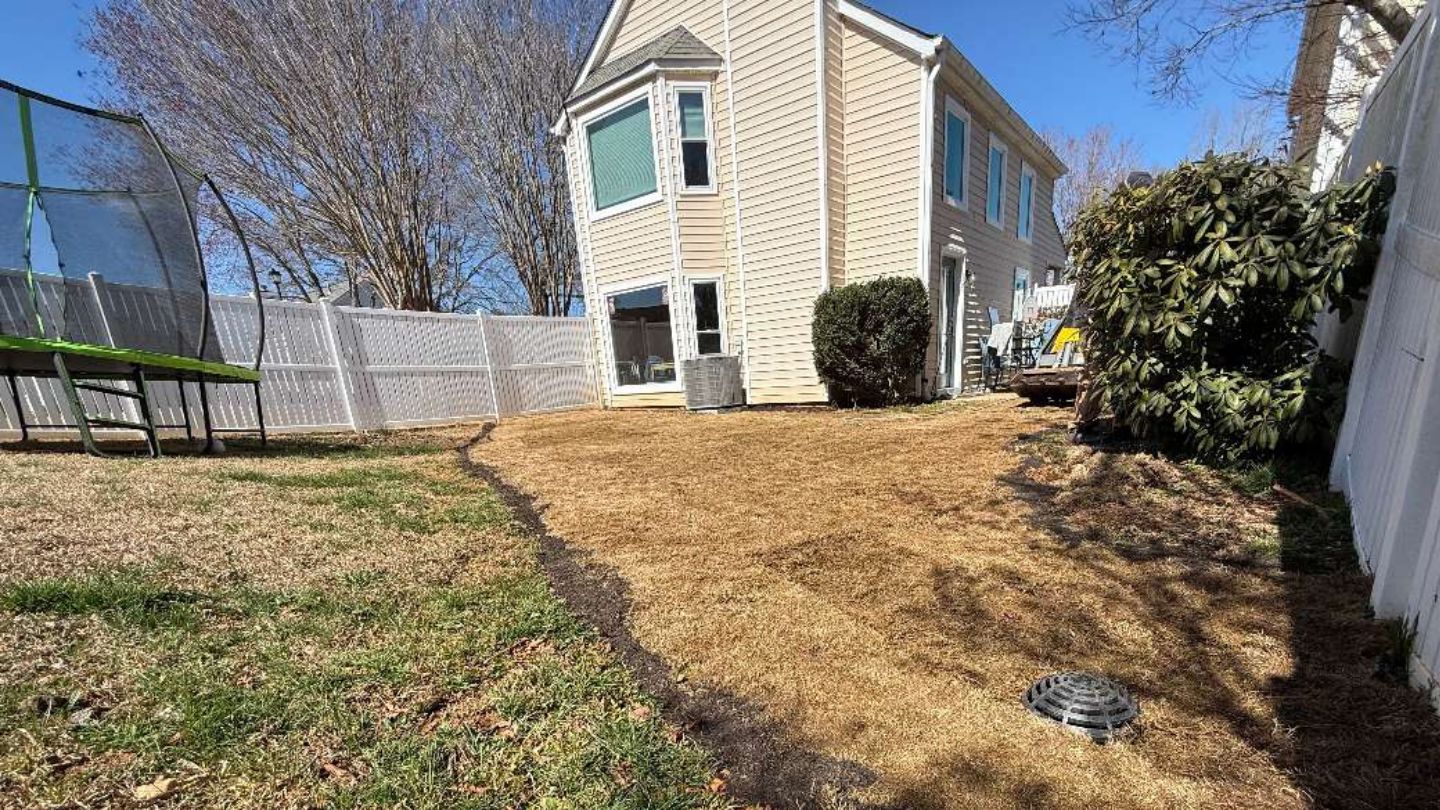
Standing water pooling in your yard after every rainstorm isn’t just an eyesore – it’s a warning sign that your soil isn’t handling water the way it should. For homeowners across North Georgia, particularly in Cumming, Alpharetta, and surrounding communities, persistent soggy patches, waterlogged roots, and foundation moisture problems often trace back to one root cause: the soil beneath your feet. Understanding soil types and how they control water movement is the first step toward solving drainage issues that threaten your property, your landscaping, and your home’s structural integrity.
Your yard’s soil composition—the specific blend of sand, silt, and clay it contains—directly affects whether water drains efficiently, collects on the surface, or moves toward your foundation. Because soil conditions vary between properties, an effective drainage solution should account for the yard’s slope, water-flow patterns, and surrounding landscape.
This guide breaks down the primary soil types found in North Georgia yards, explains how each one affects drainage performance, shows you how to identify what you’re working with, and covers the soil-specific drainage solutions that actually deliver lasting results.
Key Takeaways
- North Georgia soil types – especially the region’s heavy red clay – directly determine how water moves through your yard and whether it reaches your foundation.
- Clay soil retains water and causes pooling, while sandy soil allows rapid drainage but struggles with moisture retention.
- Proper soil assessment is the foundation of effective drainage system design and installation.
- Professional drainage solutions must be customized to match your specific soil characteristics for optimal performance.
- Understanding soil type prevents costly drainage mistakes, system failures, and long-term property damage
Major Soil Types Found in North Georgia Yards

The ground beneath your lawn isn’t uniform – it’s a complex mix of soil particles that varies from property to property, even within the same neighborhood. Grain size in soil categorizes types into sand, silt, and clay, and the proportions of these three components define your soil’s texture class and drainage behavior. Across Cumming, Alpharetta, and the broader North Georgia Piedmont region, four primary soil types dominate residential landscapes, and each one presents distinct challenges for yard drainage.
Soil type impacts how quickly water moves and drains in a landscape. Properties sitting on heavy clay experience completely different water flow patterns than those with loamy soil or sandy subsoils. The key to effective drainage lies in recognizing which soil you’re dealing with and understanding why it behaves the way it does during and after rainfall.
Here’s what each soil type means for your yard:
- Clay soil has tiny, compact particles that retain water, creating slow infiltration and surface pooling. It’s the most common drainage challenge in North Georgia.
- Loamy soil is a balanced mix of sand, silt, and clay that provides excellent drainage and moisture retention – often referred to as the “gardener’s dream.”
- Sandy soil consists of large, coarse particles that allow water to drain quickly and easily, but it retains little moisture and nutrients.
- Silt soil has a smooth, slippery texture when wet and retains moisture effectively, benefiting plant growth, but silt soil can become compacted easily, reducing drainage capacity.
Each of these different soils requires a tailored approach when designing drainage systems. What works in sandy soil will underperform in clay, and vice versa.
Clay Soil Challenges in Georgia Properties
Georgia’s famous red clay defines the Piedmont landscape. This heavily weathered soil gets its distinctive color from iron oxides left behind as parent rock – granite and schist – breaks down over centuries. The result is a dense, clay-rich soil with extremely fine particles that pack tightly together, leaving minimal pore space for water to pass through.
Clay soil can lead to waterlogging and poor drainage because its microscopic particles create such small gaps between them that water simply cannot percolate downward at a meaningful rate. After a heavy storm, excess water sits on the surface with nowhere to go, turning yards into temporary ponds and sending moisture laterally toward foundations, basement walls, and crawl spaces.
Soil compaction makes the problem worse. Clay soil compacts easily under foot traffic, reducing drainage efficiency even further. Construction activity, lawn mowers, and even regular walking paths compress clay particles together, eliminating the remaining air pockets that allow any water absorption at all. Compacted soils in clay-heavy yards can become nearly impermeable barriers.
The seasonal behavior of clay adds another layer of complexity. During wet seasons – spring and fall in North Georgia – clay swells as it absorbs moisture, blocking pore spaces and holding water near the surface. During dry spells, clay soil can crack and become hard, creating fissures that initially allow rapid water entry when rain returns but then seal shut as the clay rehydrates and swells again. This cycle puts constant stress on drainage systems and foundations alike. When clay expansion is accompanied by shifting soil or runoff along a slope, recognizing the warning signs that your yard may need a retaining wall can help determine whether additional structural support should be considered.
Despite these challenges, clay soil is rich in nutrients, providing fertile ground for plants – when drainage is properly managed. The issue isn’t fertility; it’s getting excess water away from where it causes damage.
How Soil Type Affects Your Yard’s Drainage Performance

Soil texture determines drainage rate and moisture retention capacity, which means your soil’s composition dictates not just whether you have drainage problems, but what kind of drainage systems will actually solve them. The relationship between soil permeability and system effectiveness is direct: install a drainage solution designed for the wrong soil type, and you’re wasting time and money.
In clay-heavy North Georgia yards, soil drainage performance is governed by how slowly water percolates through those dense, fine-particle layers. French drains installed in clay soil must account for this by using coarser aggregate backfill, deeper trench depths, and closer spacing between drain lines. The gravel and perforated pipe need to create an alternative pathway for water since the surrounding soil won’t absorb it fast enough on its own.
Yard grading projects face similar soil-dependent considerations. When clay soil dominates, grading must create steeper slopes to redirect excess water across the surface rather than relying on subsurface absorption. Swales and berms work with gravity to channel water away from structures, compensating for the soil’s refusal to let water drain quickly through it.
Loamy soil supports a wide variety of plants effectively and provides moderate drainage, but even loam can sit atop clay subsoil layers – a common scenario in North Georgia. Surface drainage may seem adequate until you realize that a buried clay pan is trapping water below, creating hydrostatic pressure against foundation walls. This is why understanding the full soil profile – not just the top few inches – matters for drainage design.
Sandy soil allows water to drain quickly and easily but creates its own set of problems. Excessive drainage in sandy soil can lead to nutrient leaching, erosion during heavy rains, and instability around drainage infrastructure. Sandy soil is prone to erosion during heavy rains, meaning drainage systems in sandy conditions must be stabilized to prevent pipe exposure or collapse. Because fast-moving runoff can gradually remove loose soil and expose landscaping or drainage components, understanding how to stop yard erosion before it damages your home is an important part of managing sandy or sloped properties.
Common Mistakes to Avoid When Planning Drainage
Poorly planned drainage projects fail more often because of soil-related oversights than any other factor. Here are the mistakes that lead to poor drainage outcomes. Since surface slope determines where rainwater travels, understanding why proper yard grading is essential for a healthy lawn and safe foundation can help property owners recognize why soil conditions and elevation must be evaluated together.:
- Installing one-size-fits-all drainage systems without soil assessment: A French drain design that works in loamy soil will underperform dramatically in heavy clay. Skipping soil evaluation means guessing – and guessing wrong leads to standing water, foundation damage, and costly reinstallation.
- Ignoring clay soil compaction when designing yard grading solutions: Grading a clay yard without addressing compaction creates a smooth but impermeable surface that sheets water directly toward structures. Compaction and soil structure can significantly affect drainage, and grading alone won’t fix compacted clay.
- Placing drainage systems at wrong depths for specific soil types: Drains installed too shallow in clay soil sit above the problem zone, while drains placed too deep in sandy soil may miss surface runoff entirely. Depth must match the soil profile.
- Failing to account for seasonal soil behavior changes in the North Georgia climate: Clay swells and shrinks with moisture cycles, silt compacts under repeated saturation, and sandy soil erodes during intense summer storms. A system designed for average conditions may fail during peak events.
- Neglecting filter fabric and proper aggregate in clay environments: Fine particles from clay and silt migrate into drainage gravel over time, clogging pipes and reducing drainage efficiency. Without filtration barriers, even well-designed systems degrade.
Identifying Your Soil Type and Drainage Needs
Before choosing a drainage solution, it helps to understand the general characteristics of the soil throughout your property. Soil texture affects how quickly water enters the ground, how long moisture remains near the surface, and whether runoff travels toward foundations, basement walls, crawl spaces, or low areas in the yard. However, soil type is only one part of the evaluation. Yard slope, soil compaction, roof runoff, downspout placement, landscaping, and underground obstructions may also contribute to drainage problems.
Recognizing soil by texture: Soil can provide basic clues about its composition when it is slightly damp. Sandy soil generally feels coarse and gritty because it contains larger particles. Silt tends to feel smooth or powdery, while clay usually feels sticky and can hold its shape when pressed. Loamy soil combines sand, silt, and clay, creating a softer texture with a more balanced ability to absorb and retain moisture.
These observations can help homeowners recognize broad soil characteristics, but they cannot reveal the complete soil profile. A yard may have several inches of loose topsoil covering a dense clay layer that prevents water from moving farther into the ground. Soil can also vary between the front yard, backyard, landscaped beds, and areas disturbed during construction.
Watching how water behaves: One of the most useful ways to recognize a drainage concern is to observe the property during or shortly after rainfall. Water that remains in the same location for an extended period may indicate compacted soil, a low spot, an improper slope, or soil that absorbs water very slowly. Runoff traveling toward the home may point to a grading or downspout-discharge problem rather than soil composition alone.
Homeowners should also watch for erosion channels, exposed roots, washed-out mulch, consistently soft ground, or sections of the lawn that remain wet longer than surrounding areas. Indoors, damp basement walls, moisture along the wall-floor joint, crawl-space humidity, musty odors, and visible water entry may indicate that exterior drainage conditions are affecting the structure.
Considering soil compaction: Soil may drain poorly even when its natural composition would normally allow adequate water movement. Construction equipment, repeated foot traffic, lawn machinery, and vehicles can compress the soil and reduce the open spaces through which water would otherwise travel. Compacted areas often shed water across the surface, directing runoff toward lower elevations or nearby structures.
Clay-heavy soil is especially vulnerable to compaction because its fine particles fit tightly together. Once compacted, the ground may remain saturated near the surface or behave almost like a solid barrier during heavy rainfall. Loosening the upper surface may provide limited improvement in landscaped areas, but it will not correct significant grading problems or deeper drainage conditions.
Knowing when professional evaluation is appropriate: Persistent standing water, recurring erosion, foundation moisture, basement leaks, crawl-space dampness, or water collecting near retaining walls should receive professional attention. These symptoms may involve multiple contributing factors that cannot be determined from surface soil observations alone.
A drainage professional can evaluate where the water originates, how it moves across the property, and where it can be redirected safely. Depending on the findings, the appropriate solution may involve yard grading, a French drain system, a dry creek bed, catch basins, downspout extensions, basement waterproofing, crawl-space repair, or a combination of compatible measures. Identifying the cause before installation helps prevent unnecessary work and reduces the likelihood of moving water from one problem area to another.
Soil-Specific Drainage Solutions for North Georgia Homes
An effective drainage plan must respond to the property’s soil conditions, elevation, runoff patterns, and proximity to the foundation. North Georgia’s clay-dominant ground often absorbs water slowly, which means drainage systems must collect and redirect excess water rather than depend entirely on natural infiltration. Sandy, silty, and loamy soils behave differently and require their own installation considerations.
French drain systems in clay soil: French drains provide an alternative path for water that cannot move efficiently through dense ground. A typical system uses a properly sloped trench containing perforated pipe, washed gravel, and filter fabric. The pipe collects water and carries it toward a suitable discharge point, while the surrounding gravel creates space for water to enter the system.
In clay-heavy yards, placement is especially important because the surrounding soil may release water very slowly. The drain must intercept water where it regularly collects or travels instead of being installed according to a general layout. Proper filter fabric can help limit the movement of fine clay particles into the gravel and pipe, reducing the potential for sediment buildup. The trench depth, pipe slope, and discharge location must be selected according to the property’s conditions.
Yard grading for surface runoff: Yard grading reshapes the ground to establish a consistent slope that moves surface water away from foundations and other vulnerable areas. This is particularly important in clay soil because rainfall may travel across the surface when it cannot soak into the ground quickly.
Effective grading requires more than filling an obvious low spot. The entire path of the water must be considered, including where runoff begins, how it crosses the yard, and where it will go after leaving the corrected area. Poorly planned grading can transfer water toward a neighboring section of the property, a retaining wall, a driveway, or another structure. A properly planned slope directs runoff toward an appropriate drainage route without creating a new area of erosion or standing water. Understanding how to grade a yard for proper drainage step by step also helps explain how slope, runoff direction, and suitable discharge areas work together to prevent recurring water accumulation.
Catch basins and downspout extensions: Roof runoff can overwhelm the soil near a foundation, especially when downspouts release large amounts of water beside the home. Downspout extensions help carry this water farther from the structure, while catch basins collect surface runoff from low areas and connect it to underground drainage pipes.
These components may be used independently or incorporated into a broader yard drainage system. Their effectiveness depends on proper placement, adequate pipe slope, and a suitable outlet. Simply extending a downspout may not resolve the problem if the discharge point remains within a low or poorly drained portion of the yard.
Dry creek beds: A dry creek bed can provide a defined route for surface runoff while complementing the surrounding landscape. It is generally most appropriate where water naturally flows across the property during rainfall. The channel helps guide that runoff toward a safer destination while reducing uncontrolled soil erosion.
A dry creek bed should follow the property’s natural drainage pattern and must be sized for the amount of runoff it is expected to manage. Decorative stone alone will not resolve the problem if the channel lacks sufficient depth, slope, or a suitable endpoint.
Drainage considerations for other soil types: Sandy soil allows water to move quickly but may be more vulnerable to erosion during intense rainfall. Drainage installations in these conditions must prevent loose soil from washing into pipes or away from surrounding areas. Silty soil can retain moisture and become compacted, so filtration and runoff control are important when installing drainage components.
Loamy soil generally offers more balanced drainage, but it can still develop standing-water problems when the property has improper grading or when loam rests above a dense clay layer. For this reason, the visible surface soil should not be the only factor used to determine the drainage approach.
Connecting yard drainage with structural protection: Exterior drainage problems can contribute to basement leaks, crawl-space moisture, soil erosion, and hydrostatic pressure around the foundation. When water continues to affect the structure, yard drainage may need to be combined with basement waterproofing, an interior drainage system, a sump pump, foundation crack repair, or crawl-space waterproofing.
The goal is not simply to remove water from one visible low spot. A complete drainage plan should control where water collects, establish a reliable path away from vulnerable areas, and protect the home from recurring moisture problems. Matching the solution to the property’s actual conditions creates a more dependable result than relying on a standard system for every yard.
Building a Drainage Plan Around Your Soil

Soil composition plays a major role in how water moves across and beneath a property. By considering soil texture, compaction, slope, and runoff patterns together, homeowners can better understand why water collects and which drainage approach may provide dependable protection for their yards, landscaping, and foundations.
Schmitt Waterproofing evaluates each property before recommending a suitable yard drainage system. Depending on the source and movement of water, the solution may include a French drain system for subsurface moisture, a dry creek bed for surface runoff, or a downspout extension to carry roof water away from the foundation. If you need experienced yard drainage contractors in Milton, contact us to discuss the drainage concerns affecting your property.
Frequently Asked Questions
What soil type is most common in the Cumming, Georgia area and how does it affect drainage?
The Cumming area sits in North Georgia’s Piedmont region, where heavily weathered red clay soil dominates. Clay soil has very slow drainage, causing waterlogging in yards after rainfall. Its tiny, dense particles retain water instead of allowing it to percolate downward, which leads to surface pooling, soggy lawns, and moisture intrusion risks for foundations and basements. Most drainage projects in this area must be specifically designed to overcome clay’s extremely low permeability.
How do I know if my yard’s drainage problems are caused by soil type or other factors?
Standing water may result from dense soil, improper grading, short downspout discharge, compacted ground, or subsurface obstructions. Because several conditions can contribute to the same symptoms, a professional inspection is the most reliable way to identify the source and recommend an appropriate drainage solution.
Can French drains work effectively in Georgia’s clay soil?
Yes. A French drain can perform effectively in clay soil when its location, depth, materials, slope, and discharge point are selected for the property’s conditions. Proper filter fabric and washed gravel also help prevent fine clay particles from entering and restricting the drainage system.
Should I amend my soil before installing a yard drainage system?
Soil amendments can complement drainage installations but rarely replace them in heavy clay. Adding organic matter – compost, leaf mold, or aged material – improves soil structure by increasing soil aggregation and creating pore spaces for better water absorption. This supports healthy plant growth and helps plant roots establish more effectively. However, for significant drainage issues in clay or compacted soils, engineered drainage systems are necessary. Your drainage professional can advise on whether amendments should be incorporated as part of the overall project.
How does seasonal weather in North Georgia affect different soil types and drainage?
North Georgia’s heavy rainfall and clay-dominant soil can cause water to collect in low areas and around foundations. Dry periods may harden the ground, while repeated rainfall can saturate it and slow absorption. Drainage systems should therefore be designed for the property’s soil, slope, and typical stormwater patterns.
What’s the difference between surface drainage and subsurface drainage for different soil types?
Surface drainage – including yard grading, swales, and berms – moves water across the ground’s surface away from structures. It’s especially important in clay soil where water won’t penetrate the surface easily. Subsurface drainage – French drains, perforated pipe systems, and interior basement drains – intercepts water below ground and channels it to discharge points. In clay and poorly drained soils, most properties need both approaches working together. Sandy soil may primarily need surface management to control erosion, while clay-heavy properties almost always require subsurface systems to manage the water that surface grading alone cannot handle.