

Water collecting around your home’s foundation is one of the most common causes of erosion, standing water, and moisture issues in North Georgia homes. In many cases, improperly draining downspouts allow large amounts of roof runoff to collect near the foundation, increasing the risk of drainage and water intrusion problems over time.
Because Johns Creek and the surrounding North Georgia area have heavy clay soil that drains slowly, proper drainage becomes especially important. This blog covers common warning signs that your downspouts may not be draining properly and when it may be time to consider improvements to your drainage system.
Key Takeaways
- Standing water near your home after rainfall may indicate your downspouts are not draining properly
- North Georgia clay soil holds moisture longer, increasing the risk of erosion and water buildup near the foundation
- Improper roof runoff drainage can contribute to soggy yards, washout, and moisture problems around basements and crawl spaces
- Buried downspout drainage systems are often a more effective long-term solution than temporary above-ground extensions
- Proper drainage planning should account for grading, discharge location, erosion control, and the overall layout of the property
Warning Signs Around Your Foundation
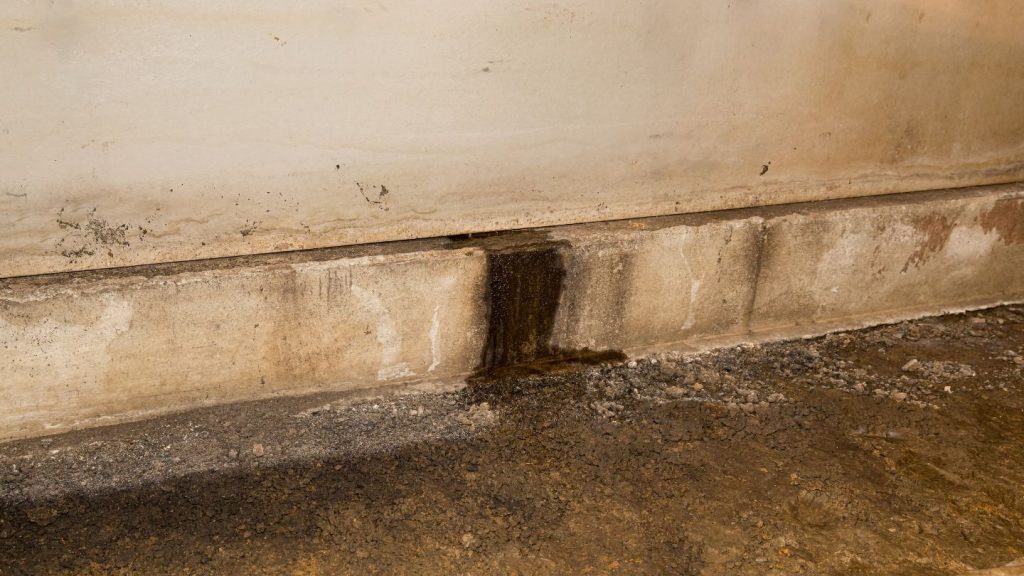
Water pooling near the foundation after rain is one of the clearest signs that roof runoff may not be draining far enough away from the home. When large amounts of water repeatedly discharge in the same area, the surrounding soil can become oversaturated and begin causing issues around the structure.
Some common warning signs include:
- Standing water near foundation walls after rainfall
- Soil erosion or washout near downspouts
- Mulch displacement in flower beds
- Soggy areas that remain wet long after storms pass
- Water staining or discoloration near the base of exterior walls
- Muddy or sunken areas developing in the yard
North Georgia’s clay-heavy soil drains much slower than sandy soil and tends to hold moisture for extended periods. This can allow water to remain trapped around the foundation longer, increasing hydrostatic pressure against basement or crawl space walls.
Basement and Crawl Space Moisture Issues
Moisture issues inside the home can sometimes be related to poor exterior drainage conditions. When roof runoff is allowed to collect too close to the structure, the surrounding soil becomes saturated and can place additional pressure against foundation walls.
Signs of excess moisture may include:
- Musty odors in basements or crawl spaces
- Damp walls or flooring after rain
- Efflorescence (white mineral deposits) on concrete or block walls
- Mold or mildew growth
- Condensation on basement walls or windows
- Water intrusion around cracks or wall penetrations
It is important to understand that not all basement leaks are caused by drainage issues alone. Water intrusion can occur through foundation cracks, wall penetrations, construction joints, or other foundation-related issues. Proper diagnosis is important before determining the correct repair approach.
Yard Drainage and Erosion Problems
Poorly managed roof runoff can also create problems throughout the yard and landscaping. Concentrated water discharge in one area often leads to erosion, washed-out mulch beds, damaged grass, and standing water.
Common drainage-related yard issues include:
- Erosion channels forming near downspouts
- Washed-out pine straw or mulch beds
- Standing water in low areas of the yard
- Dead or stressed vegetation
- Muddy areas that stay saturated after rain
- Water flowing back toward the home due to improper grading
Over time, these conditions can worsen and create larger drainage problems around the property.
Proper Downspout Drainage for North Georgia Homes
In many North Georgia neighborhoods, simple above-ground downspout extensions are not ideal long-term solutions. They can create tripping hazards, interfere with landscaping, violate HOA guidelines, and often contribute to erosion where water exits the pipe.
At Schmitt Waterproofing, we primarily install buried downspout drainage systems designed to move roof runoff safely away from the home while minimizing erosion and protecting the surrounding property. These systems are typically installed using underground piping with proper slope and discharge planning based on the property’s grading and drainage conditions.
Because every property drains differently, there is no universal “correct” extension length. The goal is to control where water flows, reduce water buildup near the foundation, and discharge runoff in a way that works with the natural grading of the yard.
In some situations, additional drainage improvements such as catch basins, swales, grading corrections, retaining walls, or waterproofing repairs may also be necessary depending on how water is entering or collecting around the home.
Professional Drainage Assessment
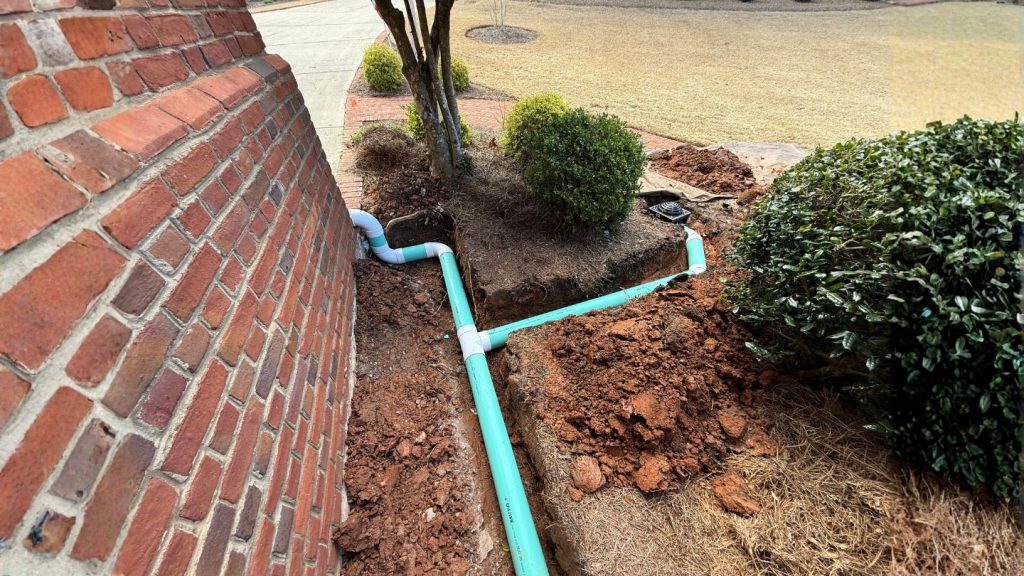
Proper drainage design involves much more than simply adding pipe to the end of a gutter downspout. Factors such as yard slope, discharge elevation, soil conditions, roof runoff volume, and existing drainage patterns all affect how a system should be installed.
A professional drainage assessment can help identify:
- Areas where water is collecting near the home
- Improper grading that directs water back toward the structure
- Erosion-prone discharge areas
- Existing drainage failures or clogged systems
- Whether buried downspout drainage would improve runoff management
- Additional drainage or waterproofing improvements that may be needed
At Schmitt Waterproofing, we evaluate each property individually to determine the most effective drainage solution for the specific conditions present at the home.
Protecting Your Home from Water Damage
Addressing drainage issues early can help reduce the risk of erosion, standing water, and moisture-related problems around your home. Properly managing roof runoff helps protect your foundation, landscaping, crawl space, and basement from long-term water exposure.
Schmitt Waterproofing provides professional yard drainage in Johns Creek and throughout North Georgia, including buried downspout drainage systems, grading improvements, retaining walls, crawl space repair and encapsulation, and basement waterproofing solutions designed specifically for local soil and drainage conditions.
If you are experiencing standing water, erosion, or moisture issues around your home, contact Schmitt Waterproofing to schedule a professional drainage assessment.
Frequently Asked Questions
Do buried downspout lines help reduce water buildup around the home?
Yes. Properly installed buried downspout drainage systems can help move roof runoff away from the foundation and reduce water accumulation near the home. Proper discharge location and grading are important to prevent erosion and standing water.
Can poor downspout drainage contribute to basement or crawl space moisture?
In some cases, yes. Excess water collecting near the foundation can increase hydrostatic pressure against the basement or crawl space walls. However, not all water intrusion issues are caused by drainage alone, and proper diagnosis is important before determining the correct repair.
Why is drainage especially important in North Georgia?
North Georgia’s clay-heavy soil absorbs water slowly and tends to hold moisture longer than sandy soil. This can allow water to remain near the foundation for extended periods and increase the risk of erosion, settlement, and moisture-related issues.
Are above-ground downspout extensions a permanent solution?
In many cases, no. Above-ground extensions can create tripping hazards, interfere with landscaping, violate HOA guidelines, and cause erosion at discharge points. Buried drainage systems are often a more effective long-term solution for managing roof runoff.
When should I contact a drainage professional?
You should consider having your property evaluated if you notice standing water near the home, erosion, soggy areas that do not dry properly, water intrusion in the basement or crawl space, or signs that runoff is flowing back toward the structure.