
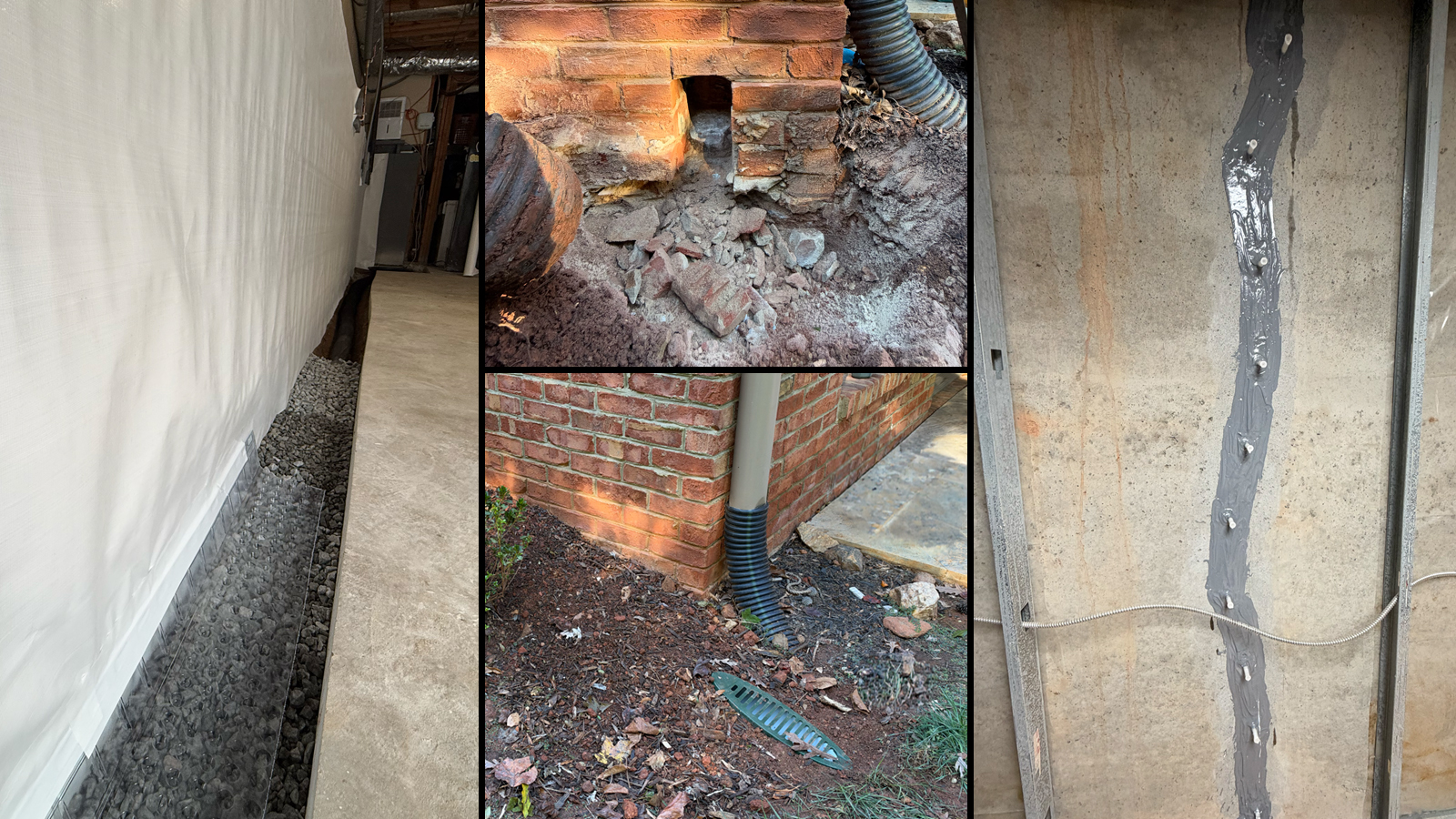
If you’ve discovered water entering your basement, one of your first questions is probably: How much does professional basement waterproofing cost?
The answer depends on where the water is entering, the type of foundation your home has, and the repairs necessary to address the problem.
In North Georgia, professional basement waterproofing repairs can start around $1,750 for a leaking foundation crack, while smaller interior drainage systems with a primary sump pump typically start around $6,500. Full-basement interior waterproofing installations commonly cost $15,000–$20,000 or more, depending on the scope of work.
At Schmitt Waterproofing, we believe homeowners deserve to understand their options before investing in a waterproofing solution.
Not every basement leak requires an interior drainage system. Some problems can be resolved with a targeted foundation repair, while others require a more extensive system to collect and remove groundwater.
The most important step is understanding the source of the water and selecting a repair appropriate for the problem.
Why Do Basement Waterproofing Costs Vary So Much?
No two basement waterproofing projects are exactly alike.
A single crack in a poured concrete foundation is very different from a basement experiencing groundwater seepage along multiple foundation walls.
The type of foundation also plays a major role in determining which waterproofing methods are appropriate.
Homes throughout North Georgia commonly have poured concrete or concrete block foundations. Each can experience water intrusion, but they may require different repair methods.
Other factors that affect pricing include basement size, foundation wall height, accessibility, the length of drainage needed, exterior discharge requirements, and whether the basement is finished or unfinished.
At Schmitt Waterproofing, we offer several waterproofing solutions rather than recommending the same system for every basement.
1. Interior Basement Waterproofing Systems
Starting Price: Approximately $6,500 with a Primary Sump Pump
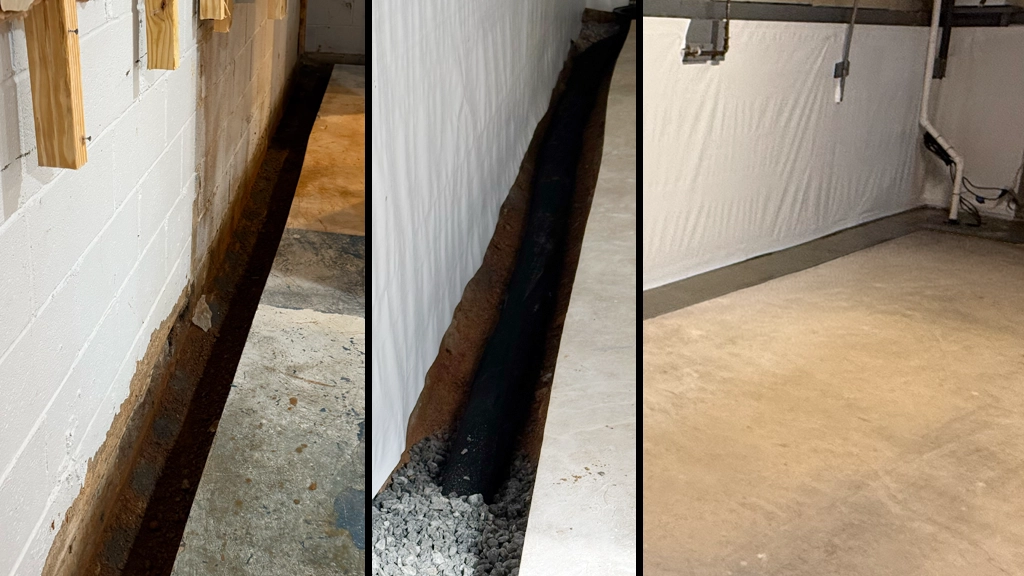
Interior basement waterproofing systems are designed to collect groundwater entering around or beneath the foundation and redirect it away from the basement before it accumulates on the floor.
These systems are particularly effective when water is entering along the joint where the basement floor meets the foundation wall, through portions of a block foundation, or from beneath the concrete slab.
How Does an Interior Waterproofing System Work?
At Schmitt Waterproofing, our interior sub-floor drainage systems are installed beneath the basement’s concrete floor, typically along the affected foundation walls.
The installation process generally includes cutting and removing a section of the concrete floor, excavating the underlying soil, and installing drainage components to collect incoming groundwater.
Depending on the foundation type and installation requirements, we use one of two drainage configurations:
- Pipe and gravel drainage systems: Perforated drainage piping and drainage gravel are installed beside the foundation footing to collect groundwater and direct it toward the sump basin.
- Specialized drainage track systems: A specialized drainage track is installed on top of the foundation footing to collect and redirect water entering at the foundation wall and floor area.
The appropriate method depends on the home’s foundation construction, footing conditions, and source of water intrusion.
Collected water is directed to a sump basin, where a primary sump pump removes it through a dedicated discharge line.
Once the drainage components are installed, a gravel base is added, and the concrete floor is restored.
Our waterproofing systems are designed around the basement’s actual drainage requirements, including the foundation footing configuration, rather than relying on a single installation method for every home.
What Affects the Cost of an Interior Waterproofing System?
Our $6,500 starting price generally represents a smaller, straightforward installation along a limited section of the basement.
Larger projects can be significantly more expensive.
Some of the primary pricing factors include:
- Total linear footage of sub-floor drainage.
- Foundation type and footing configuration.
- Concrete cutting, excavation, and restoration requirements.
- Sump basin and primary pump installation.
- Distance and complexity of the exterior discharge line.
- Available access and finished basement conditions.
- Additional drainage components or system features.
For example, a basement requiring drainage along one affected wall will generally cost less than a basement requiring extensive drainage along multiple foundation walls.
A more comprehensive, full-basement interior waterproofing system commonly costs $15,000–$20,000 or more, depending on the size of the basement, drainage requirements, equipment, and installation conditions.
These are general planning figures. Every property requires an individual evaluation to determine the appropriate scope of work.
See our Duluth basement waterproofing case study for an example of a project that combined a sub-floor drainage system, sump pumps, and a wall vapor barrier.
Should You Add a Battery Backup Sump Pump?
Typical Additional Cost: $1,000–$1,500 When Installed with a New System
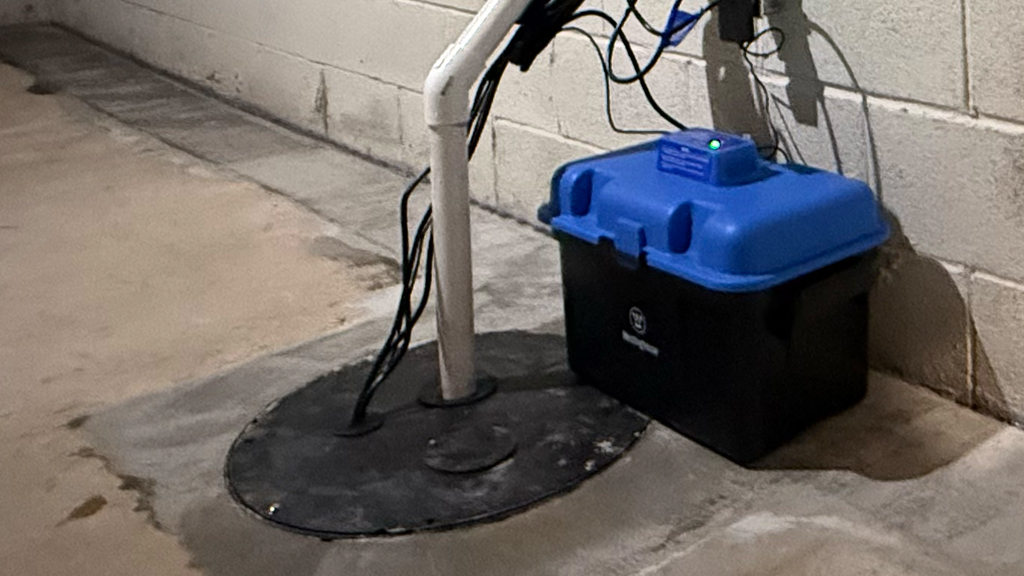
A primary sump pump relies on household electrical power. Unfortunately, severe storms that produce heavy groundwater can also cause power outages.
A battery backup sump pump provides a secondary means of removing water when the primary pump loses power or cannot operate.
At Schmitt Waterproofing, we recommend homeowners consider this additional protection when installing an interior drainage system.
Adding the backup during the original installation typically costs less than returning later to modify an existing setup.
Battery backup systems are optional and are priced separately from the starting cost of the primary drainage and sump pump installation.
Basement Wall Vapor Barriers
Pricing: Additional Cost Based on Wall Length and Installation Conditions
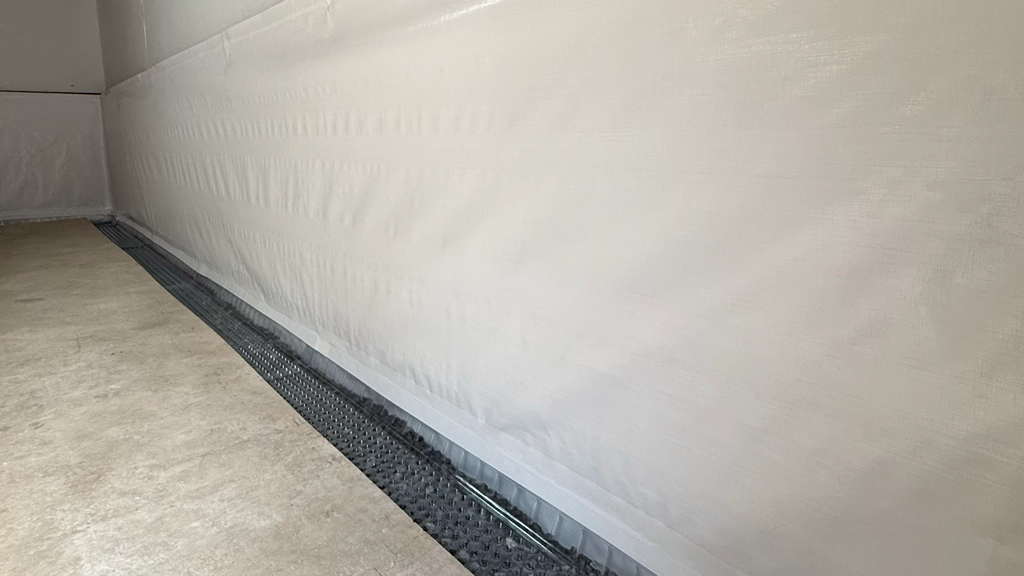
Basement wall vapor barriers may be incorporated into a new interior waterproofing system when additional moisture management is appropriate.
Concrete and masonry foundation walls can allow moisture vapor to migrate into basement spaces, contributing to damp conditions and elevated humidity.
A properly installed wall vapor barrier helps reduce moisture vapor transmission from the foundation wall into the basement.
When installed in conjunction with an interior drainage system, the barrier can also be incorporated into the drainage design to help manage water moving down the interior face of the foundation wall.
At Schmitt Waterproofing, basement wall vapor barriers are offered as an addition to our interior waterproofing systems, not as a standalone service.
The cost depends on several factors, including the total length and height of the foundation walls, accessibility, wall conditions, and whether the basement is finished or unfinished.
Because these variables can significantly affect installation requirements, we provide project-specific pricing rather than advertising a fixed starting price.
2. Polyurethane Foundation Crack Injection
Starting Price: Approximately $1,750
One of the most common causes of basement water intrusion in poured concrete foundations is a crack allowing groundwater to pass through the wall.
Fortunately, not every leaking foundation crack requires an extensive waterproofing system.
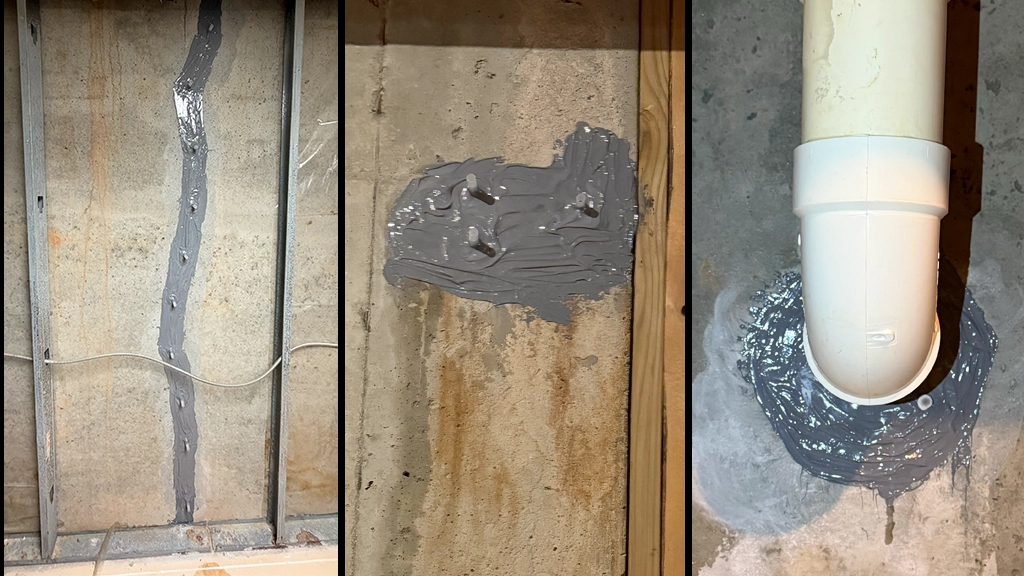
At Schmitt Waterproofing, we specialize in low-pressure polyurethane injection to repair leaking cracks, utility penetrations, and honeycombed areas in poured concrete foundation walls.
How Does Polyurethane Injection Work?
Polyurethane injection involves preparing the affected area, installing surface-mounted injection ports, and injecting specialized polyurethane resin into the crack or void.
The material travels into the foundation wall and reacts with moisture, expanding to fill pathways through which water can enter.
Once cured, the polyurethane creates a flexible waterproof seal within the repaired area.
Unlike a surface coating, this process is intended to seal the water-entry pathway through the concrete.
What Types of Leaks Can Be Repaired?
Polyurethane injection may be appropriate for:
- Vertical or diagonal cracks in poured concrete walls.
- Water leaking around sewer or water line penetrations.
- Honeycombing or poorly consolidated areas of poured concrete.
- Other accessible, non-structural foundation defects suitable for injection.
This service is specifically intended for poured concrete foundation walls, not concrete block foundations.
Our Cumming foundation crack injection case study shows how a targeted injection and grading correction addressed water entering a finished basement.
What If There Are Multiple Cracks?
Our starting price for a polyurethane injection repair is approximately $1,750, depending on the size and condition of the affected area.
When multiple cracks or penetrations can be repaired during the same visit, additional repairs may cost less per location because equipment, materials, and labor are already mobilized.
The final estimate depends on the number of affected areas, crack lengths, accessibility, and necessary preparation.
Polyurethane injection addresses water intrusion. It is not a substitute for structural foundation reinforcement when significant wall movement or structural instability is present.
Carbon Fiber Crack Stitching and Reinforcement
Starting Additional Cost: Approximately $500 with a Qualifying Injection Repair
Some poured concrete foundation cracks may benefit from additional reinforcement beyond waterproof sealing.
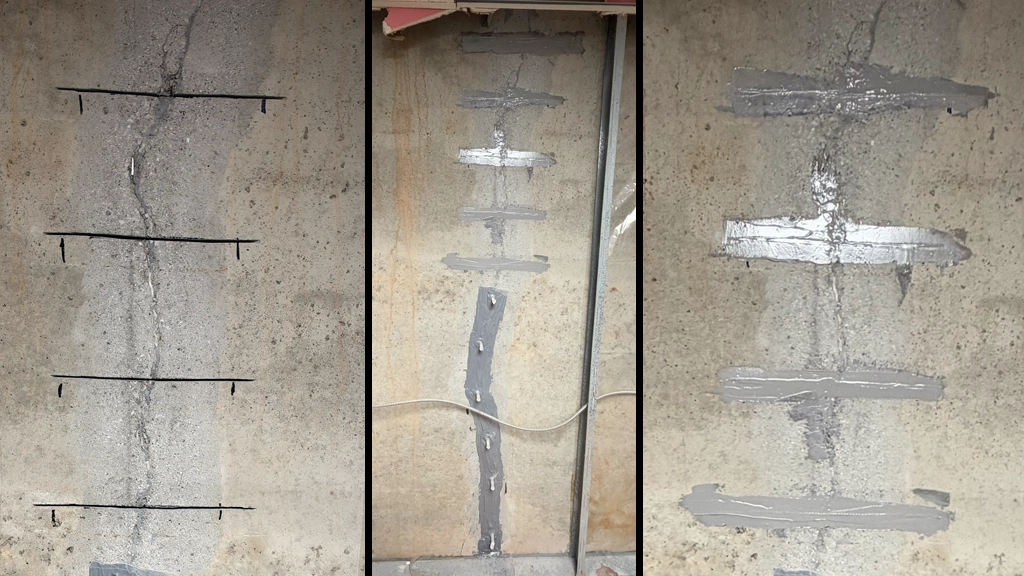
At Schmitt Waterproofing, we offer carbon fiber crack stitching as an optional addition to qualifying polyurethane foundation crack injection repairs.
Carbon fiber stitching involves bonding high-strength reinforcement across an existing crack to help resist additional separation or movement.
While polyurethane injection is intended to stop water intrusion, carbon fiber stitching serves a different purpose: reinforcing the cracked concrete.
Not every foundation crack requires stitching.
The decision depends on the crack’s characteristics, the condition of the wall, and whether additional reinforcement is appropriate.
Carbon fiber crack stitching typically starts around $500 when performed in conjunction with an eligible polyurethane injection repair.
This is an additional cost, not a standalone structural foundation repair price.
For foundations experiencing significant bowing, horizontal cracking, displacement, or other concerning structural movement, evaluation by a qualified structural engineer may be necessary before selecting a repair.
3. Exterior Finger Space Drain Repairs
Starting Price: Approximately $3,500
Some basement leaks originate from a problem homeowners may not even realize exists: the finger space behind a brick veneer exterior.
This condition can occur in homes with poured concrete foundation walls and brick veneer construction.
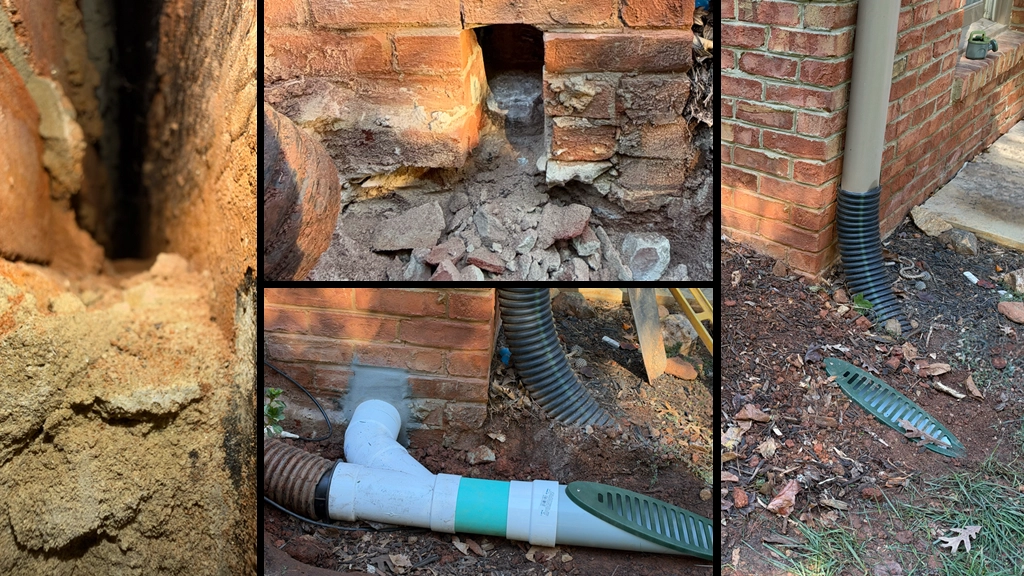
The finger space is the narrow cavity associated with the brick veneer and foundation wall. Water can travel downward through this area and eventually enter the basement near the foundation.
Because the water may appear inside at the end of a foundation wall or near the floor, homeowners sometimes assume they need a traditional interior waterproofing system.
However, if the finger space is the actual source, a specialized exterior repair may be more appropriate.
How Does a Finger Space Drain Repair Work?
Schmitt Waterproofing installs custom exterior finger space drainage repairs designed to intercept water traveling through the affected cavity and redirect it away from the foundation.
The repair typically involves excavating the affected exterior foundation area, accessing the finger space, and installing a drainage outlet connected to underground piping.
This allows collected water to discharge to a suitable exterior location.
What Affects the Cost?
Our finger space repairs generally start around $3,500, but pricing depends on site conditions.
Factors affecting the estimate include the depth of excavation, access to the affected foundation area, surrounding landscaping, and the distance needed to reach an appropriate discharge point.
Additional underground piping or trenching can increase the overall price.
Schmitt Waterproofing’s finger space drain repair is specifically designed for homes with poured concrete foundation walls and brick veneer construction. This repair is not offered for concrete block foundations or other wall construction types.
We evaluate the foundation construction and accessible conditions to determine whether this repair is appropriate.
In our Roswell finger space repair case study, we repaired the leak from outside and improved downspout drainage.
How Much Should You Budget for Basement Waterproofing in North Georgia?
The following prices provide general starting points for the waterproofing services offered by Schmitt Waterproofing.
| Waterproofing Service | General Starting Cost |
|---|---|
| Smaller interior drainage system with primary sump pump | $6,500 |
| Comprehensive full-basement interior waterproofing system | Commonly $15,000–$20,000+ |
| Battery backup sump pump added during installation | Additional $1,000–$1,500 |
| Basement wall vapor barrier with interior drainage system | Custom add-on pricing |
| Polyurethane crack, penetration, or honeycomb injection | $1,750 |
| Carbon fiber crack stitching with qualifying injection | Additional $500 |
| Exterior finger space drain repair | $3,500 |
These figures are intended to help homeowners establish realistic expectations. They are not fixed quotes, and not every property will qualify for the starting price.
The appropriate solution depends on the source of water intrusion, foundation construction, access, and the scope of repairs needed.
Does a Finished Basement Cost More to Waterproof?
In many cases, yes.
Finished basements often have drywall, framing, insulation, flooring, and other materials covering the foundation walls or concrete slab.
These materials may need to be removed to expose the affected foundation before the problem can be properly evaluated or repaired.
At Schmitt Waterproofing, we require the necessary drywall and other finished materials to be removed before inspecting or repairing concealed foundation conditions.
For interior drainage installations, additional access may be required along the foundation wall to accommodate concrete cutting and excavation.
Homeowners should also understand that restoring finished interior materials, such as drywall, trim, and flooring, is separate from our waterproofing installation unless specifically included in an agreement.
This is an important consideration when comparing waterproofing estimates.
Does Every Basement Leak Require an Interior Drainage System?
Absolutely not.
This is one of the most important things we want North Georgia homeowners to understand.
A complete interior drainage system can be an excellent solution for ongoing groundwater intrusion, particularly when hydrostatic pressure contributes to water entering along the foundation wall and floor joint.
However, it is not necessarily the best solution for every leak.
If a poured concrete wall has an isolated crack allowing water to enter, a properly performed polyurethane injection may correct that specific defect without requiring excavation of the basement floor.
If water is entering through the finger space behind brick veneer on a poured concrete foundation, a targeted exterior finger space repair may be more appropriate.
If groundwater is entering along multiple areas of the foundation or beneath the slab, an interior drainage system may be the more effective approach.
Our goal is not to sell every homeowner a complete waterproofing system. It’s to recommend an appropriate repair for the actual water intrusion problem.
That distinction can make a significant difference in the overall cost of protecting your basement.
Can Yard Drainage Fix a Leaking Basement?
Not necessarily.
Yard drainage systems are designed to manage surface runoff and redirect collected water away from areas of the property.
Although improving exterior drainage can reduce unnecessary water accumulation around the foundation, it generally does not seal an existing crack, defective joint, or other below-grade foundation opening.
Many below-grade basement leaks occur when groundwater creates hydrostatic pressure, allowing water to enter through vulnerable areas of the foundation.
There are exceptions, such as surface water entering at an above-grade opening or flowing toward a lower-level entrance.
However, homeowners should not assume that burying downspouts or installing yard drainage piping will resolve an existing basement leak.
A proper evaluation is necessary to determine whether the problem requires exterior drainage improvements, foundation waterproofing, or a combination of approaches.
Why Choose Schmitt Waterproofing for Basement Waterproofing?
When comparing basement waterproofing contractors, price is important, but so is understanding exactly what you’re purchasing.
Different contractors may recommend different methods based on their services, products, and the conditions they identify.
At Schmitt Waterproofing, we provide several different repair methods because basement water problems do not all originate from the same source.
Owner-Operated and Personally Involved
Schmitt Waterproofing was founded in 2017 and is based in Cumming, Georgia.
Owner Josh Schmitt personally evaluates projects and remains actively involved in the installation process.
Rather than working with one person during the estimate and an entirely different team during construction, homeowners benefit from direct involvement by the person responsible for the proposed solution.
Customized Waterproofing Solutions
We don’t believe every leaking basement needs the same system.
Our services include interior sub-floor drainage systems, sump pumps, polyurethane foundation crack injection, exterior finger space repairs, and carbon fiber crack stitching.
We also offer basement wall vapor barriers as an addition to qualifying interior waterproofing installations.
Offering multiple repair methods allows us to recommend a solution based on the foundation type, water intrusion conditions, and specific needs of the homeowner.
Professional Materials and Installation
Waterproofing performance depends on more than the product being installed.
Proper preparation, drainage layout, discharge planning, foundation conditions, and installation methods all affect long-term results.
We focus on dependable materials, careful installation, and clear communication about what the repair is designed to accomplish.
Schmitt Waterproofing is an Emecole Certified Contractor, and we bring our experience in foundation waterproofing and drainage to every project.
Clear Pricing and Written Warranties
We believe homeowners should understand the proposed scope of work, the estimated cost, and the warranty associated with their repair.
Our applicable service warranties include:
- Interior sub-floor drainage systems: Lifetime transferable system warranty.
- Polyurethane crack injection repairs: 10-year transferable warranty.
- Finger space drain repairs: 5-year transferable warranty covering water intrusion through the repaired finger space.
Sump pumps and related mechanical components carry separate manufacturer warranties. Warranty coverage depends on the written agreement and its applicable terms, including applicable maintenance requirements.
We want homeowners to make informed decisions based on the actual repair being proposed rather than choosing solely on price.
Frequently Asked Questions About Basement Waterproofing Costs
How much does basement waterproofing cost in North Georgia?
Basement waterproofing costs vary significantly depending on the type of repair required. At Schmitt Waterproofing, polyurethane crack injection repairs start around $1,750, exterior finger space drain repairs start around $3,500, and smaller interior drainage systems with a primary sump pump start around $6,500. Comprehensive full-basement waterproofing installations commonly cost $15,000–$20,000 or more.
Is an interior waterproofing system always necessary for a leaking basement?
No. An isolated foundation crack or qualifying finger space leak may be resolved with a targeted repair. Interior drainage systems are generally more appropriate when groundwater intrusion affects larger sections of the foundation or occurs along the wall-floor joint or beneath the slab.
How much does it cost to install a sump pump and drainage system?
At Schmitt Waterproofing, smaller interior sub-floor drainage installations with a primary sump pump typically start around $6,500. The final price depends on drainage length, concrete removal and restoration, discharge requirements, and the basement’s accessibility. Larger, full-basement systems commonly cost $15,000–$20,000 or more.
Is a battery backup sump pump worth the additional cost?
A battery backup sump pump provides an additional layer of protection if the primary pump loses electrical power or experiences certain operating failures. Because heavy rainfall and power outages can occur together, we recommend considering a backup system when installing new interior drainage. Adding one during the original installation typically costs an additional $1,000–$1,500.
Can polyurethane injection repair leaks in concrete block walls?
No. Schmitt Waterproofing’s polyurethane crack injection service is intended for suitable leaks in poured concrete foundation walls, including cracks, penetrations, and honeycombed areas. Concrete block foundations have different construction characteristics and may require an interior drainage system or another appropriate solution.
What is the difference between polyurethane injection and carbon fiber crack stitching?
Polyurethane injection is designed to seal water-entry pathways through poured concrete foundation cracks. Carbon fiber crack stitching provides additional reinforcement across qualifying cracks. These methods serve different purposes and may be combined when appropriate. At Schmitt Waterproofing, carbon fiber crack stitching starts around $500 as an add-on to a qualifying polyurethane injection repair.
Can a basement wall vapor barrier stop an active foundation leak?
A basement wall vapor barrier can help manage moisture vapor and, when properly integrated into an interior drainage system, help direct water toward the drainage components. However, it is not a standalone repair for an active foundation leak. Schmitt Waterproofing offers wall vapor barriers only in conjunction with new interior waterproofing system installations.
Does basement waterproofing require removing drywall?
If drywall or other finished materials conceal the affected foundation, those materials must be removed sufficiently to expose the area before we can evaluate or perform the repair. Finished basement conditions may also increase the overall project cost because access and subsequent interior restoration must be considered.
How do I know whether my basement needs crack injection or an interior drainage system?
The answer depends on where water is entering. An isolated leak through a poured concrete crack may be appropriate for polyurethane injection. Water entering repeatedly along a wall-floor joint, through multiple areas, or beneath the slab may require interior drainage. Evaluating the accessible foundation conditions helps determine the appropriate repair.
Request a Professional Basement Waterproofing Estimate
If you’re experiencing water entering your basement, Schmitt Waterproofing can help evaluate the accessible conditions and recommend an appropriate repair.
We serve homeowners throughout North Georgia, including Cumming, Alpharetta, Milton, Johns Creek, Roswell, Canton, Buford, Suwanee, Gainesville, and surrounding communities.
Whether your basement requires a targeted foundation crack injection or a more extensive interior waterproofing system, our goal is to provide a professional solution tailored to your home.
Call Schmitt Waterproofing at 404-268-1040 or use our contact form to request an estimate.